Iran Strikes Israeli Nuclear Site, Escalating War
Iran has directly struck a facility near Israel's suspected nuclear weapons program in Deona, marking a significant escalation in the ongoing war. This retaliatory attack, which injured over 30 people, raises grave concerns about nuclear safety and the potential for wider conflict. Iran also tested its long-range missile capabilities with an attempted strike on the U.S. base at Diego Garcia.


Iran Strikes Israeli Nuclear Site in Escalation of War
In a dramatic escalation of the ongoing conflict, Iran launched a missile strike on a facility near Deona, Israel, a town closely linked to Israel’s suspected nuclear weapons program. This attack, occurring just hours after former US President Donald Trump expressed a desire to reduce American involvement in the war, marks a potentially dangerous new phase. The strike on Deona, which injured over 30 people, is significant because it directly targeted a location associated with Israel’s most sensitive security assets. This is the first time Iran has explicitly targeted such a site, raising serious concerns about the security of Israel’s skies and the potential for uncontrolled explosions at nuclear facilities.
Concerns Over Nuclear Safety and Retaliation
Security analyst Megan Suckliffe described the situation as “extremely concerning from a public safety perspective.” She explained that a strike on facilities believed to house parts of Israel’s nuclear arsenal increases the risk of triggering a nuclear weapon. “At that point, we’re talking about essentially somehow a secondhand nuclear weapons use in the context of an escalating war in the Middle East,” Suckliffe stated, calling it a “truly, it is an extremely terrifying situation.”
Iran claimed its attack was in retaliation for an earlier strike on its nuclear enrichment facility at Natanz. However, Israel’s military denied responsibility for the Natanz attack, and the Pentagon offered no comment. The International Atomic Energy Agency (IAEA) reported no release of radioactive material after the strike on Natanz. The information surrounding these events is difficult to verify due to Iran’s secretive nature regarding its nuclear program.
Natanz Facility’s Role and Challenges of Destruction
Natanz is considered a central site for Iran’s uranium enrichment program, alongside the Fordo plant. These facilities are crucial for producing enriched uranium needed for centrifuges. While Iran has other research and development locations, Natanz and Fordo are key to its capacity for rapid uranium enrichment. Targeting these facilities, especially their hardened underground sections, is extremely challenging. Suckliffe noted that these below-ground structures, built with meters of concrete, are difficult to destroy completely from the air. Often, the goal is to seal off access rather than obliterate them.
The effectiveness of such strikes in setting back a nuclear program is debated. While they can restrict access, they also risk hardening the resolve of the targeted nation and potentially leading to the dispersal of operations. Suckliffe suggested that Iran might interpret these strikes as further evidence of why nuclear weapons are necessary for deterrence.
Iran’s Long-Range Missile Capabilities Tested
Adding another layer to the escalating conflict, Iran also demonstrated its long-range missile capabilities by attempting to strike the U.S. military base on Diego Garcia in the Indian Ocean, nearly 4,000 kilometers away. Although both missiles missed their target, the attempt stretched the understanding of Iran’s missile capabilities. It suggests Iran could potentially threaten mainland European countries if the conflict draws in more parties. This demonstrates Iran’s willingness to use such munitions if hostilities escalate further.
A Growing Appetite for Strikes and Global Economic Risks
The past 24 hours indicate a growing appetite for air strikes targeting various locations in Iran by Israel and the United States. These strikes have repeatedly targeted nuclear and naval facilities. Iran, in turn, has shown a consistent willingness to respond, even at significant cost to its territory. Past responses, like attacks on oil and gas facilities in Qatar and Saudi Arabia, have already led to significant production cuts. Suckliffe warned that if Iran scales up its response, the impact on the global economy could be “absolutely deleterious.”
Looking Ahead: Goals and Escalation
The goals of this campaign remain a key point of observation. The U.S. aims to eradicate Iran’s conventional military capabilities and its nuclear weapon development potential. Israel’s strategy appears to focus on creating an environment conducive to regime change. However, quantifying success in these areas is difficult. The potential for further escalation is high, especially as the U.S. surges Marines to the region. Suckliffe believes that the day’s events, particularly Iran’s active engagement with Israel’s nuclear facilities, represent a “major inflection point” and one that will be remembered as the conflict unfolds.
Source: Nuclear facility strikes: A new phase of the Iran war? | DW News (YouTube)

Related Articles


Gulf States Demand Seat at Table on Iran’s Nuclear Future
Gulf states are demanding a seat at the table for any U.S.-Iran talks regarding Iran's nuclear future. This move reflects a growing assertiveness and a desire to shape regional security directly. It signals a potential shift towards more inclusive diplomatic efforts in the Middle East.


Israelis Forge Resilience Amidst Constant Bomb Shelter Drills
Life in Israel is a blend of resilience and constant vigilance, with many families adapting to frequent bomb shelter drills and even sleeping in makeshift shelters. Despite ongoing missile attacks, Israelis strive to maintain normalcy, though businesses face disruption and emotional fatigue is a growing concern.

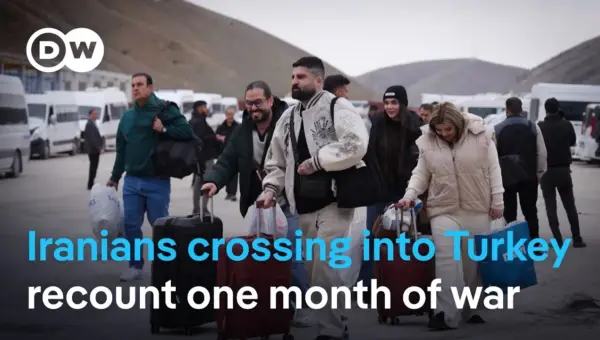
Iran War Exodus: Refugees Flee to Turkey Amidst Bombings
A train from Tehran brings refugees to Turkey, fleeing daily bombings and economic collapse. Many express deep fear for loved ones left behind, while some hold onto national pride and hope for victory. The conflict's impact is also felt economically in Turkey, with rising gas prices.