Iran Strikes F-35: Stealth Secrets Exposed, Global Standing Falters
Iran claims to have captured footage of hitting a U.S. F-35 fighter jet, potentially revealing the stealth aircraft's vulnerabilities. This incident, coupled with diplomatic challenges, raises concerns about America's global standing and military effectiveness.


Iran’s Bold Move: An F-35 Hit and the Fallout
In a stunning development, Iran has released footage claiming to show its air defense forces hitting a U.S. F-35 fighter jet. This event, if confirmed, marks a significant moment, as it’s reportedly the first time a fifth-generation stealth fighter has been filmed being struck. While the jet reportedly landed safely, the incident has raised serious questions about the F-35’s vaunted stealth technology and America’s standing on the world stage.
Stealth No More? The F-35’s Vulnerability Revealed
The F-35 fighter jet is built on the promise of stealth, meaning it’s designed to be invisible to enemy radar. However, the F-35’s advanced systems can also be detected by heat, a method known as Infrared Search and Track (IRST). Iran claims its IRST system locked onto the F-35, capturing detailed information about its heat signature, speed, and altitude. This data, according to experts, is like obtaining an “infrared fingerprint” of one of America’s most advanced warplanes.
This captured information is incredibly valuable. It could be shared with allies like Russia and China, helping them develop better ways to detect and target F-35s. This means pilots might have to fly more cautiously, avoiding certain speeds and altitudes, making them less effective in combat. In essence, a key advantage of the F-35—its invisibility—could be significantly weakened.
America’s Global Standing: A Humiliating Few Weeks
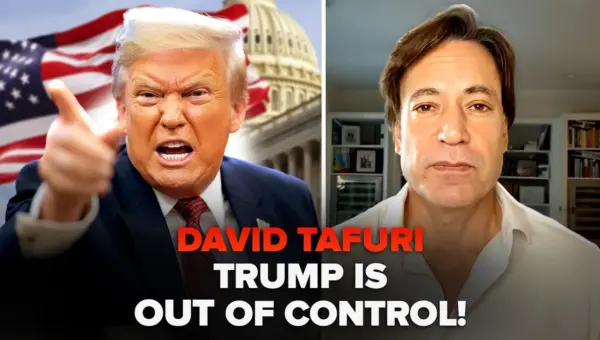
The F-35 incident comes at a time when the United States is already facing international scrutiny. The narrative presented is one of Donald Trump being pressured by Israeli Prime Minister Benjamin Netanyahu, while simultaneously antagonizing the international community he now needs for support. This has led to a perception of weakness and embarrassment on the global stage.
Past actions, like making light of Pearl Harbor with the Prime Minister of Japan or harsh interactions with reporters, are cited as examples of Trump alienating potential allies. Now, when seeking help for critical issues like escorting ships through the Strait of Hormuz, the international community seems unwilling to assist, remembering years of perceived bullying.
The Human Cost: Civilian Casualties and Targeted Journalists
Beyond the military implications, the situation has a devastating human cost. Reports indicate that ongoing strikes across the region have injured over 18,000 civilians, with tens of thousands of structures damaged. The targeting of journalists, such as British reporter Steve Sweeney, is also highlighted as a grave concern, suggesting a disregard for international safety and press freedom.
The analysis suggests that the current administration is being drawn into a wider global conflict, with actions that appear reckless and counterproductive. The stated goal of making America stronger seems to be undermined by these events, leading to a situation where everyone, including the U.S., Israel, and Iran, is losing.
Why This Matters
The potential compromise of F-35 stealth technology is a major concern for U.S. military superiority. If America’s most advanced aircraft can be tracked and potentially targeted more easily, it changes the dynamics of future conflicts. This could force costly upgrades or a complete rethinking of air combat strategy.
Furthermore, the perceived diplomatic missteps and the human toll of the ongoing conflict damage America’s reputation and influence. Allies may become hesitant to support U.S. initiatives, and adversaries could be emboldened. The erosion of trust and the escalation of regional tensions create a more unstable global environment.
Historical Context and Future Outlook
The F-35 program itself has been a massive investment, with stealth being its cornerstone. The idea that its vulnerabilities could be exposed by a rival nation is a stark reminder that technological advantages are often temporary. History shows that adversaries are constantly working to counter even the most advanced systems.
Looking ahead, this incident could lead to increased military spending on countermeasures and intelligence gathering. It also highlights the complex and often contradictory nature of international relations, where perceived slights can have long-term consequences. The ability of the U.S. to regain the confidence of its allies and project strength without resorting to further escalation will be crucial in the coming months and years.
Source: Trump just screwed us all over (YouTube)

Related Articles


Iran Targets US With Cyberattacks, Escalating Digital Warfare
Iran is increasingly using cyberattacks to challenge the U.S., as seen in a recent hack of the FBI director's account. Experts say this is a strategic shift due to Iran's limitations in conventional warfare. The U.S. needs to strengthen its digital defenses, focusing on encryption and cloud computing, rather than solely relying on traditional security measures.


Iran Hacks FBI Chief, Exposing U.S. Cyber Vulnerabilities
A recent hack of FBI Director Kash Patel's personal email by an Iran-linked group highlights Iran's growing cyber threat to the U.S. Experts explain how simple security oversights are exploited, emphasizing the need for basic defenses like two-factor authentication to protect against propaganda and potential infrastructure attacks.

Trump Halts Iran Strikes Amid Stalled Diplomacy
President Trump announced a pause on planned strikes against Iran, citing productive talks, though Iran denies negotiations occurred. Reports also suggest a potential U.S. ground operation on Iran's Hark Island. The situation raises concerns about international support for Ukraine and potential shifts in U.S. foreign policy.