Iran Strait of Hormuz Blockade Threatens Global Oil Prices
Iran's Revolutionary Guard has issued warnings against ships passing through the Strait of Hormuz, a critical global oil chokepoint. This potential blockade threatens to disrupt 20% of the world's crude oil flow, potentially spiking energy prices and fueling global inflation. Experts warn of significant market reactions and widespread economic consequences.

Iran Escalates Tensions, Threatens Strait of Hormuz Passage
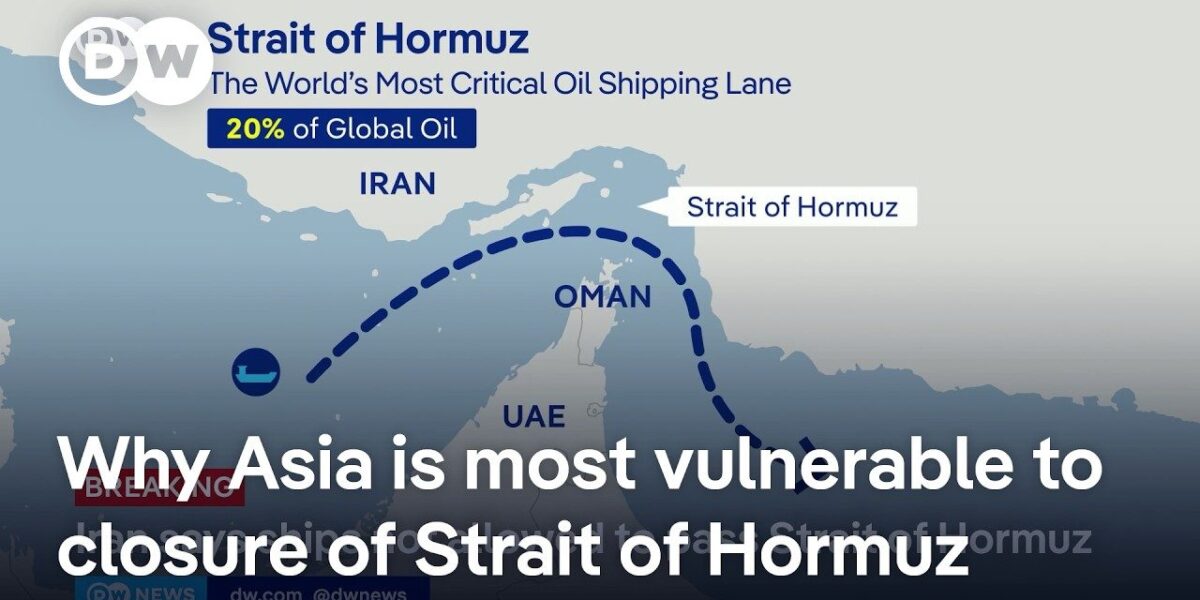
In a significant escalation of regional tensions, Iran’s Revolutionary Guard has reportedly issued radio transmissions warning ships that passage through the vital Strait of Hormuz is prohibited. The alert, flagged by the European Union’s naval mission tasked with safeguarding international shipping, signals a potential major disruption to global energy supplies. The Strait of Hormuz, a narrow waterway connecting the Persian Gulf to the open ocean, is a critical chokepoint through which approximately 20% of the world’s crude oil flows daily. This strategic passage is indispensable for major oil-producing nations in the Gulf, including Saudi Arabia and the United Arab Emirates.
Economic Chokepoint: The Global Impact of Hormuz Disruption
Stephen Beardsley, from DW’s business team, elaborated on the profound economic implications of any interference with shipping in the Strait of Hormuz. “The Straight of Hormos is a geographical choke point and obviously an economic choke point in global energy shipments,” Beardsley stated. He emphasized that the disruption would not solely affect crude oil and its derivatives but also natural gas, a significant portion of which originates from Qatar. The primary destinations for shipments traversing the strait are in Asia, meaning countries like China, South Korea, and India would be particularly vulnerable to shortages.
Tankers Diverted as Insurers Raise Red Flags
In response to the escalating threats and uncertainty, maritime vessels are already altering their routes. Beardsley explained the immediate practical impact: “Tankers will either hang out on the ocean seas, they’ll most likely seek port to be honest, right? When it’s un when there’s uncertainty, because it’s such a narrow choke point… the better thing is to wait in port until something happens or to not enter in the first place.” This cautious approach is further reinforced by the insurance industry. “Insurers are already jacking up prices, cancelling policies, basically saying this is not for us to cover. Tankers get the message they’re not going to do it,” Beardsley added, indicating a clear signal to the shipping industry to avoid the perilous waterway.
Market Turmoil Expected: Oil Prices Poised for Sharp Rise
The financial markets are bracing for significant volatility as traders digest the news. Beardsley anticipates a sharp increase in oil prices when markets open, particularly on Sunday US time. “We expect that prices will rise and sharply and that is because again this is a choke point because tankers are already avoiding it and because markets have already been eyeing this for a while,” he explained. While oil markets have recently seen some slack with supply exceeding demand, leading to benchmarks like Brent hovering around $60 a barrel, this situation is expected to change dramatically. The premium added due to geopolitical risk has already pushed prices into the low $70s, and the current events, described as a “very broad attack” and more significant than previous incidents, are poised to drive prices substantially higher. The uncertainty surrounding the future of Iran’s regime and its approach to oil exports, coupled with the potential removal of Iran as a significant global supplier, will be factored into market pricing.
Broader Economic Ripples: Inflationary Pressures Mount
The ramifications extend far beyond crude oil prices, threatening to exacerbate global inflation. “Oil is still the lifeblood of the global economy. It’s incredibly important for producing, for shipping, for the cost of labor. People who drive to work every day, they’re going to feel what happens to gas prices,” Beardsley noted. Even for consumers not directly reliant on Hormuz-shipped oil, global price increases will be felt. The reduction in available oil on the market, if demand remains constant, inevitably leads to higher prices. Beardsley also highlighted potential responses from OPEC, which is scheduled to meet, and the secondary effects on economies like Russia, whose oil revenues could see a significant boost. Furthermore, threats from Houthi rebels in Yemen to disrupt shipping in the Red Sea, while primarily affecting general cargo, could add another layer of inflationary pressure, particularly for Europe, compounding existing tariff uncertainties.
Uncertainty Reigns: The Duration of the Impact
The ultimate duration and severity of the impact remain highly uncertain. Beardsley concluded that it is “impossible to say” how long the effects will be felt. The extent of damage to oil facilities, the capacity of Iran to export, and the policies of any potential new regime are all unknown variables. “We just don’t know what’s going to happen in terms of what their capacity is, what if there was a new regime, what its stance towards oil exports would be. We’ll have to see,” he stated, underscoring the fluid and unpredictable nature of the unfolding crisis.
Source: Iran says ships not allowed to pass through Strait of Hormuz | DW News (YouTube)

Related Articles
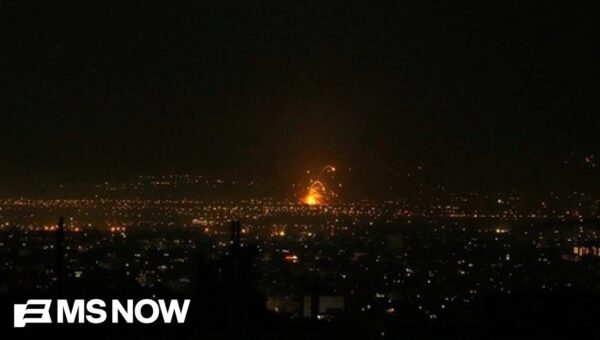
Trump’s Shifting Iran Stance: From Dealmaker to War Talk
President Trump's rhetoric on Iran has undergone a significant shift, contrasting his past calls for diplomacy with recent threats of military action. This shift follows a period of escalating tensions, withdrawal from the Iran nuclear deal, and renewed indirect negotiations.
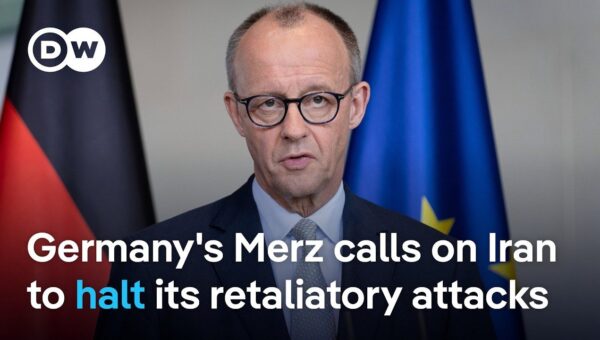
Germany on US-Israel Strikes: No “Lecturing” Partners
Germany's Chancellor Scholz calls on Iran to end its attacks and nuclear program but refrains from "lecturing" US-Israel on international law regarding recent strikes. Berlin increases security for Jewish institutions amid fears of retaliation.

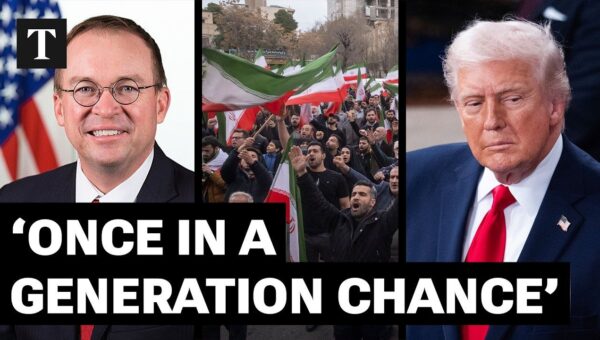
Trump Saw Iran Strike as ‘Too Good to Pass Up,’ Says Ex-Chief of Staff
Former White House Chief of Staff Mick Mulvaney revealed that the Trump administration viewed the strike on Iran not as a planned initiative, but as a unique opportunity that was "too good to pass up." He discussed the confluence of factors leading to the decision and drew parallels to past interventions, suggesting a preference for targeted actions over prolonged conflicts. The potential economic impact, particularly on oil prices, was also a key consideration.