Iran Standoff Risks Economic ‘Armageddon’ as Deadline Looms
As a critical deadline looms, escalating tensions between the U.S. and Iran threaten global economic stability. President Trump's ultimatum regarding the Strait of Hormuz, coupled with Iran's refusal to yield, points towards potential infrastructure attacks and severe market disruption. Investors face heightened risks of soaring energy prices, inflation, and a global economic shock.

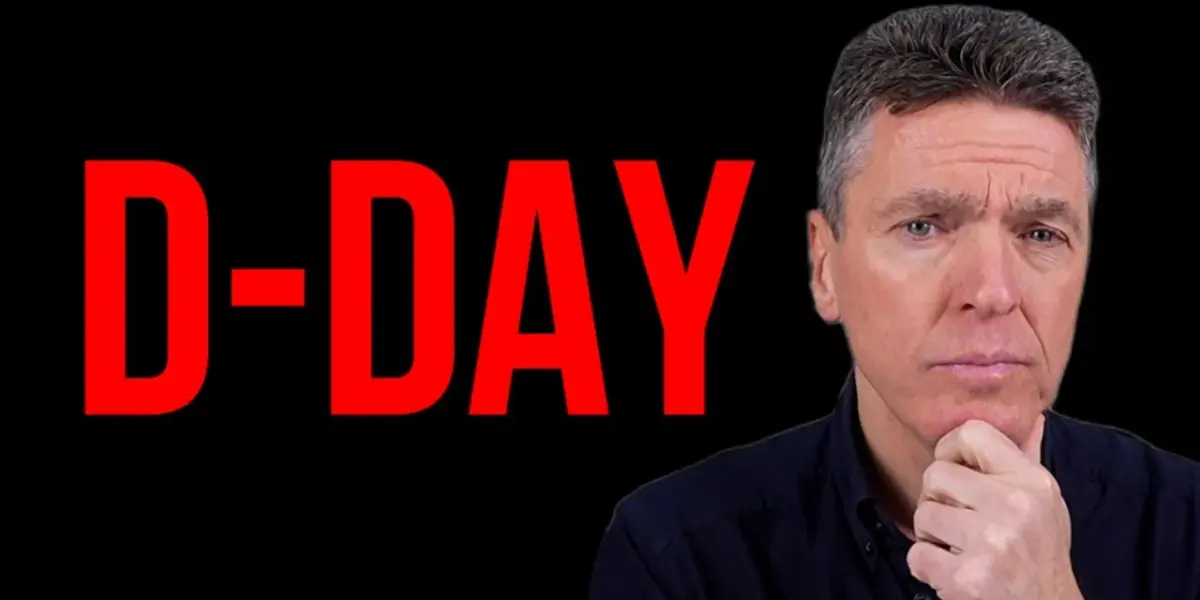
Iran Standoff Risks Economic ‘Armageddon’ as Deadline Looms
Global markets face extreme volatility as a critical deadline approaches in the escalating tensions between the United States, Israel, and Iran. President Donald Trump has issued a stark ultimatum: Iran must reopen the Strait of Hormuz within hours or face severe consequences, including targeted attacks on its core infrastructure.
Trump’s ‘Demolition Day’ Threat
The deadline, set for midnight Eastern Time on Tuesday, April 7th, marks a pivotal moment. Trump has warned of “demolition day” if Iran fails to unconditionally restore global shipping and energy exports through the vital Strait of Hormuz. This is not mere political posturing; Trump’s rhetoric has intensified, specifically threatening to target bridges, power generation facilities, and other critical economic systems. He stated on Truth Social that “Every bridge in Iran will be decimated by midnight Eastern time. Every power plant will be out of business, burning, exploding, never to be used again.” This represents a direct threat to Iran’s fundamental economic infrastructure.
Israel Issues Civilian Warnings
Adding to the pressure, Israel has issued direct warnings to Iranian civilians, advising them to avoid rail networks and stay away from train stations. Reuters reported that these warnings suggest Israel may be preparing to strike infrastructure vital to Iran’s domestic economy. Rail networks are crucial for transporting goods, fuel, and industrial materials across the large nation. Overnight strikes reportedly targeting government-linked infrastructure and potential pro-chemical facilities further indicate a strategy to cripple Iran’s economy from within.
Iran’s Unyielding Stance
Iran has rejected a 45-day ceasefire proposal and has put forward its own conditions, reportedly including sanctions relief and sovereignty guarantees. Crucially, Iran is not backing down. For the Iranian leadership, particularly the Islamic Revolutionary Guard, this situation is about regime survival. They view the broader objective of the U.S. and Israel as regime change, a prospect they consider an existential threat. This deep-seated fear means Iran is unlikely to comply with the demands, leading to a complete geopolitical standoff.
Economic Ramifications: Beyond Oil
The Strait of Hormuz is a critical chokepoint, handling approximately 20% of global oil and gas supplies. However, its disruption impacts far more than just fuel prices. The waterway also carries liquefied natural gas (LNG), prochemicals, aluminum, fertilizer components like ammonium nitrate, and industrial gases such as helium. Disrupting this route will inevitably lead to increased costs for a wide range of industrial inputs, feeding into global supply chains. This could cause prolonged disruption lasting months, not just days or weeks.
Soaring Energy Prices and Inflation
Oil prices, currently trading just above $110 per barrel, could surge dramatically if the situation escalates. Projections of $120, $140, or even $160 per barrel are becoming realistic, with an extreme scenario potentially reaching $200 per barrel. Such price hikes directly fuel inflation across the global economy, impacting transportation, manufacturing, agriculture, and energy production. Natural gas prices are also rising, increasing electricity costs, particularly in Europe, which has become more reliant on LNG imports after reducing its dependence on Russian gas. These rising costs for businesses and consumers will likely slow economic growth.
Risk of Retaliation and Wider Conflict
Iran has a history of retaliating against perceived threats, having previously targeted oil facilities in Saudi Arabia and disrupted shipping routes. If Iran’s infrastructure is attacked, a swift and significant response is likely. This could involve strikes on oil and gas facilities throughout the region, further disrupting exports and potentially drawing multiple countries into the conflict. At that point, the situation would transform from a regional dispute into a global energy crisis.
Market Volatility and ‘Black Wednesday’ Scenario
The potential global chain reaction is immense. An escalation in the next 24 hours could trigger stock market crashes, surging energy prices, spiking inflation, and severely strained supply chains. Crucially, markets appear to have not yet fully priced in this risk. While commodity prices are reacting, equity markets remain relatively stable. A major escalation could rapidly change this, leading to a sudden global economic shock event, akin to what has been termed a ‘Black Wednesday’ scenario.
What Investors Should Know
The current situation presents a high-stakes geopolitical standoff with significant potential economic fallout. Investors should monitor developments closely, particularly the actions taken by the U.S. and Iran as the deadline passes. Key areas to watch include oil and gas prices, inflation data, and the performance of equity markets. The interconnectedness of global supply chains means that disruptions in the Strait of Hormuz will have far-reaching consequences. While specific investment advice cannot be given, understanding these potential risks is crucial for navigating the current market environment.
The Path Forward
The critical question remains: will President Trump follow through on his threats? Will Israel escalate further? Or will a last-minute de-escalation occur? As all sides currently hold their positions, the risk of major escalation remains exceedingly high. The coming hours are decisive, with the potential for profound economic and geopolitical consequences if the situation deteriorates.
Source: D-Day (YouTube)

Related Articles
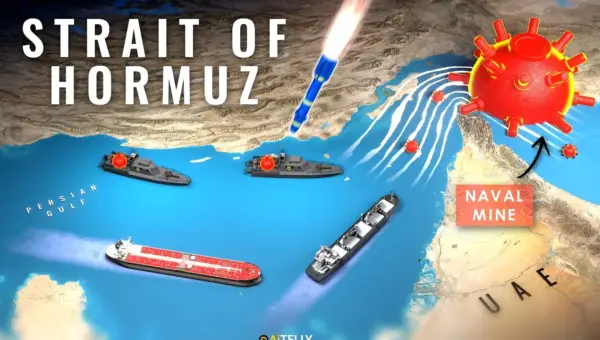
US Strikes Iran’s ‘Mosquito Fleet’ to Secure Oil Lanes
Iran's use of naval mines and fast attack boats in the Strait of Hormuz prompted a decisive US response. The US employed a preemptive strategy, striking mine-laying ships and storage facilities with precision-guided missiles and bombs.
Iran’s Strait of Hormuz Trap: How the US Fights Back
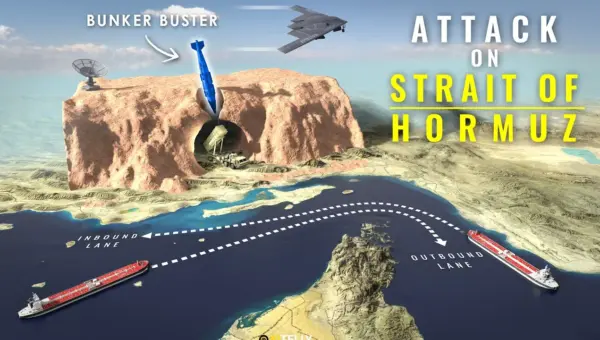
Iran's strategy to control the Strait of Hormuz involves using islands as bases for anti-ship missiles and launching swarm attacks with small boats. The US counters with advanced defense systems, surveillance drones, and powerful bunker-buster bombs, highlighting the ongoing tension in this vital global shipping lane.
A-10 Warthog Defies Retirement in Hormuz Strait
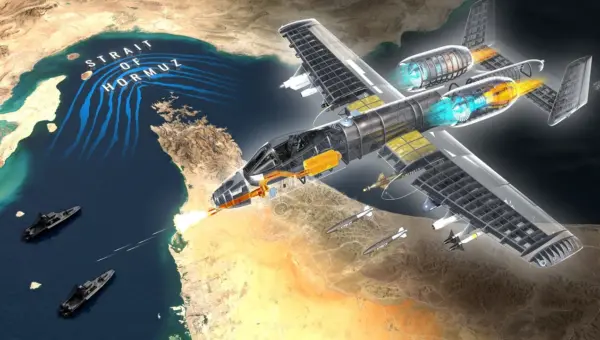
The U.S. Air Force's plan to retire the A-10 Thunderbolt faces a challenge in the Strait of Hormuz. Its unique design, built for low-and-slow flight and extreme durability, makes it essential for countering small boats and drones in the narrow waterway. The Warthog's ruggedness and specialized firepower prove its continued value.