Iran Spies Target US Tech Secrets
Iranian agents are accused of stealing trade secrets from U.S. tech giants like Google. This sophisticated espionage costs the U.S. billions annually and could provide Iran with a technological advantage. Experts say catching these spies requires advanced data monitoring and understanding their methods.


Iran Spies Target US Tech Secrets
Iranian agents are accused of stealing trade secrets from major American tech companies, including Google. This case highlights a serious form of espionage that costs the U.S. billions each year and could give Iran a technological edge. The U.S. Department of Justice announced charges against two sisters, identified as the Gun, Dolly sisters, for their alleged roles in this scheme.
How the Spies Operated
According to officials, these individuals were hired by the tech companies themselves. This allowed them to gain access to sensitive information from within the company. They allegedly exploited the trust placed in them to steal trade secrets. The goal was to pass this valuable information back to the Iranian regime. Investigators believe they tried to hide their tracks to avoid detection.
The Scale of the Problem
Experts suggest this type of espionage is a significant threat. It’s not just about stealing data; it’s about gaining a competitive advantage. When Iran gets trade secrets, it doesn’t have to spend time and money on research and development. This allows them to develop new technologies much faster. The financial cost to the U.S. is estimated to be between $130 billion and $500 billion annually. This makes economic espionage a major concern.
Detecting and Catching Spies
Catching spies like these involves understanding how companies manage their data. Tech giants like Google use systems to track who accesses what information and when. By monitoring data access, companies can identify unusual activity. If someone tries to access data they shouldn’t, it can raise a red flag. This practice, known as compartmentalization in intelligence circles, helps limit the damage if one person is compromised.
The Role of Family Ties and Training
In this specific case, the father of the accused sisters is reportedly connected to the Iranian regime. This connection may have played a role in their recruitment and training. Experts suggest that individuals involved in such operations might receive specialized training. This training could include techniques to bypass security systems, such as taking pictures of computer screens instead of downloading files. Such methods are designed to avoid leaving a digital trail.
Espionage vs. Terrorism
It’s important to distinguish between different types of intelligence work. Espionage, like stealing trade secrets, is typically carried out by a different kind of individual than those involved in terrorism. While both are threats, they usually require different motivations and skill sets. The FBI and CIA handle these threats separately. It’s rare for individuals involved in economic espionage to switch to acts of terrorism, though not impossible.
Global Impact and Future Concerns
This incident raises concerns about the security of American technological innovation. If foreign powers can easily obtain advanced technology, it could shift the global balance of power. It also impacts the competitiveness of U.S. companies. The ability of Iran to quickly develop new technologies without its own research could have significant geopolitical consequences. The ongoing stability of the Iranian government and the role of its Islamic Revolutionary Guard Corps (IRGC) in receiving this intelligence are key questions.
Historical Context
Espionage has been a tool of nation-states for centuries. The United States has a history of dealing with foreign spies, including the infamous case of Robert Hanssen, a former FBI agent who spied for the Soviet Union and later Russia. The methods of espionage have evolved with technology, moving from physical documents to digital data. However, the core objective – gaining an advantage over rivals – remains the same.
Future Scenarios
One scenario is that increased security measures will be put in place by tech companies, making it harder for spies to operate. Another possibility is that Iran, or other nations, will find new ways to exploit vulnerabilities. The U.S. will likely continue to rely on both technological monitoring and human intelligence to counter these threats. The effectiveness of these efforts will determine the future of technological security.
Source: How many spies does Iran have inside the United States? | CUOMO (YouTube)

Related Articles


G7 Allies Clash Over Iran War Strategy, Urge Focus on Russia
G7 foreign ministers met in Paris, revealing deep divisions over the U.S. war with Iran. European allies urged the U.S. to pressure Russia, linking its actions to the conflict and fearing support for Ukraine will wane.


Iran Blocks China Ships, Exposing Beijing’s Weak Grip
Iran's recent decision to block Chinese ships at the Strait of Hormuz is exposing the limits of Beijing's influence in the Middle East. This action is causing delays and cancellations for Chinese manufacturers, turning a perceived geopolitical win into an economic strain.

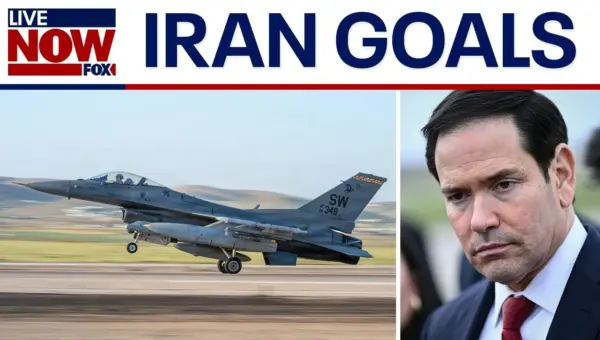
Rubio: US Can Achieve Iran War Goals Without Troops
Senator Marco Rubio outlined a strategy to counter Iran without deploying U.S. ground troops, focusing on weakening the regime and enhancing maritime security. He also criticized Cuba's economic system and expressed concerns about West Bank violence.