Iran Sends Hardliners to Talks; War’s End Nears?
Iran has sent its top hardliners to negotiations, signaling a critical phase in the ongoing conflict. Experts believe the war is nearing its end, with the U.S. holding significant leverage, including the ability to seize Iran's vital oil export terminal, Kharg Island.


Iran Sends Hardliners to Talks; War’s End Nears?
The ongoing conflict with Iran has entered a critical two-week period, marked by the dispatch of hardened negotiators from Tehran to the bargaining table. Experts suggest this signals a potentially decisive phase, with the United States holding significant leverage, including the ability to cut off Iran’s economic lifeline.
General Keith Kellogg, former U.S. Special Envoy and Co-Chair of AFPI’s Center for American Security, believes the war is nearing its conclusion. “We’re in a two-week period that’s going to be really interesting to watch,” Kellogg stated. He pointed to the four key figures involved in Iran’s decision-making: the Supreme Leader Khamenei, the leader of the parliament, the commander of the Revolutionary Guards Corps, and the Foreign Minister. Kellogg identified the Foreign Minister, Ramchi, as a particularly tough negotiator. “He wrote a book about bargaining, and you’re going to see something like a rug merchant… go into a bazaar and negotiate,” Kellogg explained, comparing Ramchi to someone who wrote “The Art of the Deal.” This suggests a complex negotiation ahead, pitting seasoned Iranian hardliners against U.S. representatives.
The U.S. has made its stance clear: Iran will not be allowed to keep enriched uranium. There is a possibility the International Atomic Energy Agency (IAEA) could become involved to ensure this without deploying U.S. troops. Kellogg emphasized that the U.S. still holds the cards. “At the end of two weeks, we can cut off their lifeline, we can seize Kharg Island which 90% of their oil comes through,” he said. Kharg Island is Iran’s primary oil export terminal. Additionally, the U.S. could seize islands in the Strait of Hormuz, which are crucial for command and control. Kellogg noted that the current discussions are not about regime change, but about Iran’s actions and its nuclear program.
What Investors Should Know
The current situation suggests a potential de-escalation or a decisive end to the conflict, which could impact global energy markets and geopolitical stability. The U.S. strategy appears to focus on leveraging economic pressure rather than prolonged military engagement.
Key Negotiation Points and U.S. Leverage
- Enriched Uranium: The U.S. is firm that Iran cannot possess enriched uranium.
- Kharg Island: Seizing this island, Iran’s main oil export hub, is a significant potential move.
- Strait of Hormuz: Control over key islands in this vital waterway could be asserted.
- Negotiating Teams: Iran is sending experienced, hardline negotiators, while the U.S. team includes Vice President, Steve Witkoff, and Jared Kushner.
Kellogg indicated that the bulk of the military action may be over, with limited targets left for bombing. “When you look at the target list… and the amount of sorties and bombs dropped, I think you’re basically bombing railroad cars now. You don’t have anything left to bomb,” he stated. The ultimate threat, according to Kellogg, lies in cutting off Iran’s economic lifeline by taking Kharg Island. “He has the capacity to do that. They cannot defeat our military. Our military’s proven itself that there’s nothing that can stop them at all,” he added.
The Iranian negotiating team, including Supreme Leader Khamenei and Foreign Minister Ramchi, are described as hard-liners who have been part of the revolution for 47 years. They are expected to drive a tough bargain. Kellogg suggested that the Iranians might realize that continuing a conflict with President Trump is not in their long-term interest. “The last thing he could do is take their economic lifeline. And I’m sure he’s willing to do that,” Kellogg said, referring to President Trump’s willingness to take decisive action.
“Our negotiators will make sure they understand that, and the hard-lines have to say, well, I understand that. I think one thing they do understand is real politics, and right now we’re in real politics.”
Iran’s initial list of demands, including continued control over the Strait of Hormuz and acceptance of its right to enrich uranium, has been met with skepticism. These demands are seen as unrealistic given Iran’s position after the recent conflict. Kellogg drew parallels to historical conflicts, like the Roman destruction of Carthage, suggesting a precedent for decisive action.
The question of whether calling for a ceasefire surrendered U.S. leverage is addressed by Kellogg’s view of President Trump’s negotiation style. “There’s one thing he does, he talks to everybody, adversaries, friends. You name it, he talks to them.” This approach, combined with the demonstrated military strength, suggests that the U.S. is not conceding ground but rather setting the stage for a final resolution. Kellogg believes the Iranian negotiators are dealing with a U.S. president unlike any they have encountered before, which he considers a mistake on their part.
Market Impact and Long-Term Implications
The resolution of this conflict, whether through a negotiated settlement or further decisive action, will have implications for global oil prices and international relations. A swift and decisive end could lead to market stability. However, the hardline stance of the Iranian negotiators introduces uncertainty. Investors should monitor developments closely, particularly any actions taken regarding Kharg Island or the Strait of Hormuz, as these could directly affect energy supply chains.
Kellogg compared the current situation to Sherman’s march during the American Civil War, emphasizing a strategic approach to cripple the adversary’s ability to wage war. He highlighted the impressive capabilities of the U.S. military, noting that Russian and Chinese equipment provided to Iran has not deterred American forces. “So I would say that the war’s almost over. There’s very few targets to be hit,” Kellogg concluded. The final step, he suggested, would be to deprive Iran of its economic lifeline by taking Kharg Island, effectively ending the conflict.
Source: Lt Gen Kellogg: Iran is sending ‘hardcore guys’ to negotiate (YouTube)

Related Articles

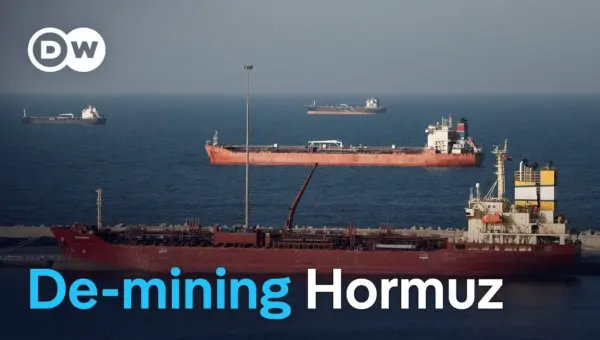
US Warships Clear Strait of Hormuz Amid Mine Threats
US warships are reportedly sweeping the Strait of Hormuz for mines amid escalating tensions with Iran. While the US claims progress, experts note a lack of dedicated mine-clearing vessels in the region and question the current mine threat. The situation's resolution may depend on ongoing peace negotiations.
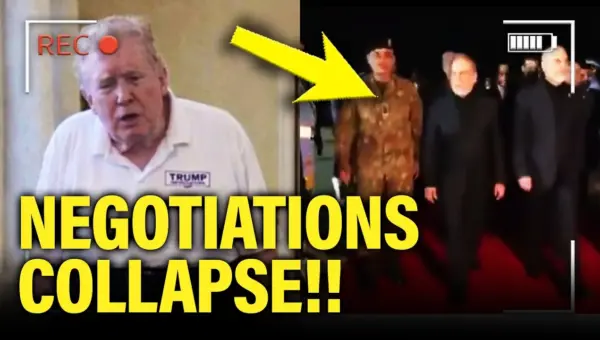
US-Iran Talks Collapse: Trump’s Dealmaking Falters
Recent U.S.-Iran negotiations in Pakistan have collapsed, with both sides blaming the other for changing the framework and imposing demands. The failure raises concerns about renewed conflict and highlights deep-seated mistrust.

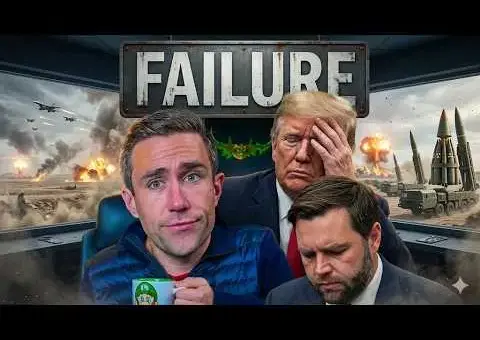
Iran Talks Collapse: No Deal on Nuclear or Strait Fees
International talks aimed at halting Iran's nuclear program have collapsed, with negotiators returning home without a deal. Key disagreements over uranium enrichment and control of the Strait of Hormuz remain unresolved, raising concerns about regional stability and oil prices.