Iran Regime Shows Resilience Amidst Intense Strikes
Despite facing significant military actions and the assassination of senior officials, the Iranian regime remains functional due to its robust institutional structure, according to experts. Analysts and activists express concern over potential U.S. disinterest in the conflict and the humanitarian toll on Iranian civilians.

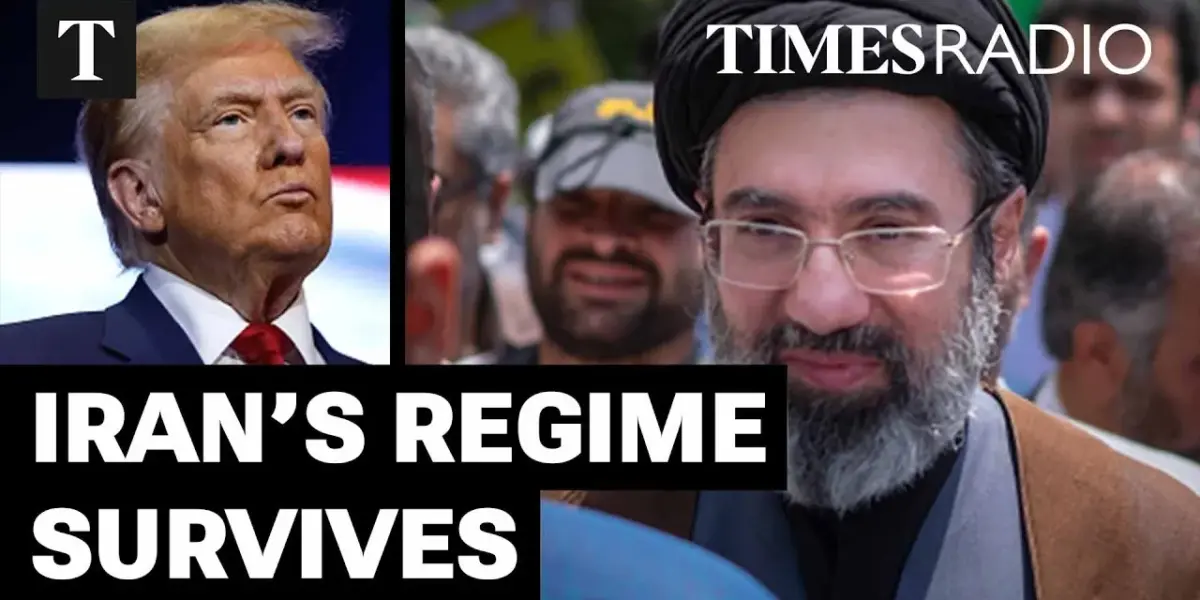
Iran Regime Remains Functioning Despite Heavy Blows, Experts Say
The Iranian regime, despite facing significant military actions and the assassination of senior officials, shows no immediate signs of collapse. Experts and analysts suggest that the Islamic Republic’s complex institutional structure provides a robust foundation, enabling it to withstand substantial pressure and replace key personnel.
Strategic Objectives and Existential Threats
Professor Meir Litvak, a scholar of Middle Eastern history and Iranian studies at Tel Aviv University, outlined the primary objectives of the involved parties. For the Iranian government, the paramount goal is survival, which they equate with victory, believing that time and history are ultimately on their side. This perspective is rooted in the ideology of many religious movements, which anticipate the eventual triumph of Islam.
Conversely, the United States and Israel aim to dismantle the current Islamic regime in Iran. Their hope is that a successor government would adopt a less adversarial stance, potentially ushering in a new era of regional relations. Israel, in particular, views Iran as an existential threat, citing its repeated calls for the elimination of the state of Israel and its strategic positioning through proxies like Hezbollah.
“Israel regards Iran as an existential threat… by because Iran and we have to remember that is the only country in the world that has repeatedly and officially called for the elimination of Israel as a state of the Jewish people.”
US Involvement and Leadership Aspirations
The prospect of U.S. President Donald Trump influencing the selection of Iran’s next leader has been met with skepticism. Professor Litvak described such ambitions as “farfetched,” suggesting that without a ground invasion, Iran is unlikely to accept such blatant foreign interference in its domestic affairs. He posited that Trump might be hoping for a complete capitulation akin to Germany in 1945, a scenario he deems highly improbable.
Resilience of the Islamic Republic’s Institutions
Professor Litvak emphasized the deep-seated nature of the Islamic Republic’s political system. “The system seems to be pretty resilient,” he stated, pointing to the numerous interconnected institutions—security, governance, and social—that form a solid base for the regime. Even when significant blows are dealt, such as the loss of senior officers, replacements are readily found, indicating operational continuity.
The coordination between Iran and Hezbollah in launching missiles, and the swift election of a successor to the Supreme Leader following his death, were cited as evidence that the regime’s institutions continue to function effectively. Professor Litvak noted the absence of signs typically associated with regime collapse, such as bank runs or widespread looting, which signify a loss of control.
“We do not see signs of let’s say people running to the banks. We do not see sign of the signs let’s say of looting which means loss of control. Therefore the regime is still functioning.”
Plausible Endgame Scenarios
Regarding the potential outcomes of the ongoing conflict, Professor Litvak leans towards a negotiated settlement rather than a major regional escalation. He believes that factors such as Trump’s impatience, his tendency to shift focus, and the economic pressure from rising oil prices—exacerbated by attacks on Gulf countries—will compel a resolution.
While acknowledging that escalation is already occurring, he suggests that further involvement from Arab countries would likely be symbolic. The most significant potential for escalation, in his view, would be if the Houthis in Yemen joined the fight, although he does not believe this would fundamentally alter the overall picture. Therefore, a settlement, the nature of which remains uncertain, appears to be the more likely scenario.
Humanitarian Concerns and Fear for Civilians
Daniela Seperi, a journalist and human rights activist with Iranian heritage, shared a more personal and harrowing account from Berlin. She described the immense psychological toll of communication blackouts and the difficulty in reaching family members, recounting a recent call from a relative attempting to flee amidst the chaos.
Seperi painted a grim picture of the situation on the ground in Iran, with civilians caught “between the bombs from the outside and the bullets from the inside.” She highlighted the presence of checkpoints and arbitrary arrests, particularly targeting individuals documenting or celebrating attacks. The fear of a regime seeking revenge on its own people if the conflict ends prematurely, before the regime’s collapse, is a significant concern.
“The people in Iran are really caught in between these different parties… and the my biggest fear, the worst thing that could happen is that Donald Trump stops this war or loses interest into this war before the regime collapses and then the people are left behind in Iran with a regime that is seeking revenge from their own people in Iran.”
Disillusionment with International Intervention
Seperi expressed a sense of disillusionment regarding the motivations of international actors. She believes that neither the U.S. nor Israel is genuinely concerned with the welfare of the Iranian people, but rather with pursuing their own geopolitical interests. The civilians, she stressed, are the ones paying the price, including political prisoners whose situations are described as dire.
She detailed chaotic conditions within prisons, including reports of guards withholding food and violent suppression of escape attempts. The lack of transparency from the regime regarding the fate of political prisoners adds to the anxiety of their families.
Skepticism Towards U.S. Leadership Plans
Regarding U.S. statements about influencing Iran’s leadership, Seperi voiced strong skepticism. While acknowledging the desire for self-determination among Iranians, she finds the idea of the U.S. holding such power deeply unsettling, especially given the perceived volatility of U.S. policy.
She expressed concern that any U.S.-backed leadership might consist of individuals from within the existing system, potentially hardliners with a more palatable image for the West, rather than representing the desire of the Iranian people for a complete systemic change. The targeting of individuals who have since been killed further complicates this outlook.
The Path Forward
The discussion concluded with reflections on the potential for U.S. disinterest in the conflict, leaving Iran fragmented and in a worse state. The initial intentions behind the strikes and the ultimate goals of President Trump remain subjects of confusion and concern, particularly the fear that the U.S. might disengage once its objectives are perceived as met, regardless of the consequences for the Iranian populace.
The broad geographical impact of the conflict, affecting numerous countries, underscores its escalating regional significance. Front-page news highlights President Trump’s assertive comments on influencing Iran’s leadership, further emphasizing the complex and unpredictable nature of the current geopolitical landscape.
Source: Iran Latest: ‘There Are No Signs Of Regime Collapse’ | Prof. Meir Litvak (YouTube)

Related Articles


Trump Ousts DHS Secretary Kirstjen Nielsen Amid Immigration Crackdown
Homeland Security Secretary Kirstjen Nielsen has been fired by President Trump, citing "unfortunate leadership failures." Nielsen will move to a new role as Special Envoy for the Shield of the Americas. The move comes as the U.S. faces escalating conflict in the Middle East, with Iran preparing for potential ground invasion.

Iran Accused of Spying on UK Jewish Community
Four individuals have been arrested in the UK on suspicion of spying for Iran, with intelligence suggesting a focus on the Jewish community. This development occurs amid a concerning global rise in antisemitism, which experts link to the conflation of pro-Palestinian sentiment with anti-Jewish hatred.
Trump’s Iran Strategy Echoes Iraq War’s Perilous Path
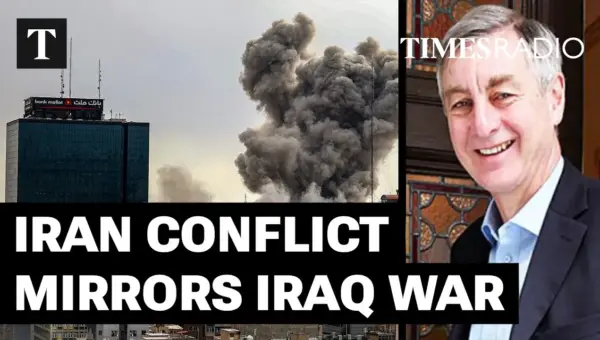
Donald Trump's approach to Iran is drawing stark comparisons to the lead-up to the Iraq War, raising concerns about unclear objectives and potential long-term chaos. Britain's hesitant stance and criticisms of leadership add to the geopolitical uncertainty, with significant global economic repercussions looming.