Iran Regime Change: Experts Warn of Complex Challenges
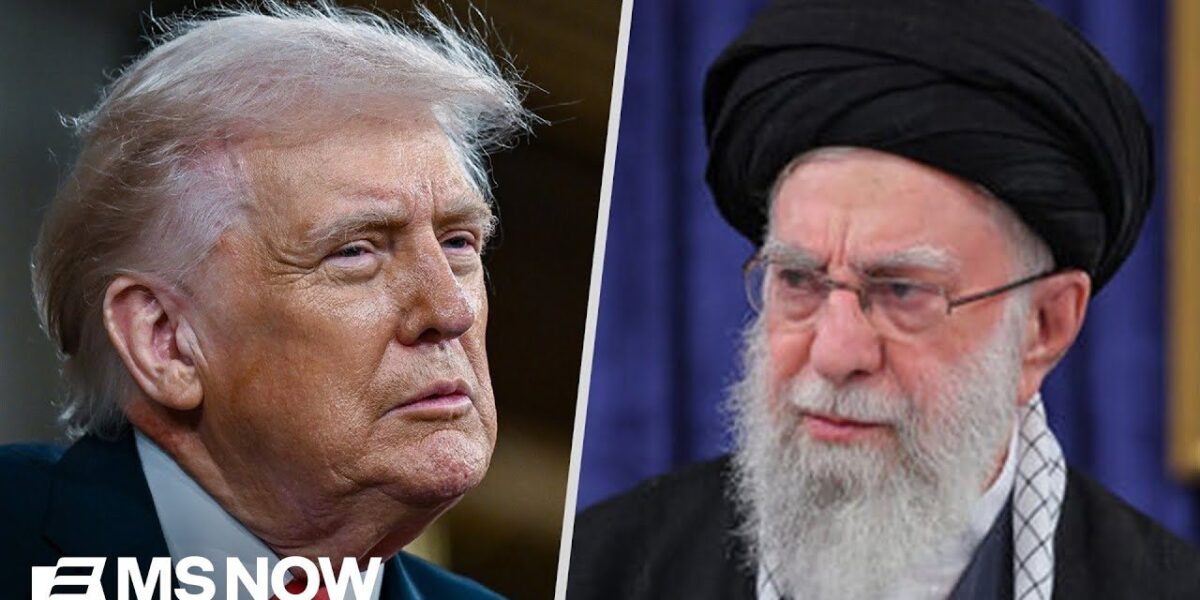
Experts warn that regime change in Iran is far from simple, citing the country's complex social fabric, robust security forces, and the potential for widespread chaos. The discussion highlights the significant risks of U.S. casualties and the lack of a clear, viable replacement leadership.

US Policy and Potential Casualties Highlighted
In the wake of heightened tensions and potential military actions involving Iran, a recent discussion featuring General (Ret.) Gary Harrell and Ayman Mohyeldin has shed light on the complexities and significant risks associated with the idea of regime change in Iran. President Trump’s public statements acknowledged the potential for American casualties, a point General Harrell emphasized as a critical reminder of the realities of war. “Whenever you put America’s sons and daughters in harm’s way, you better be understanding of the potential risk for death and injury,” Harrell stated, underscoring the gravity of deploying military forces.
The discussion also touched upon the necessity of congressional debate before committing U.S. forces. “Congress represents the American people and the American people should have a say in whether or not their sons and daughters are put in harm’s way,” was a key takeaway, highlighting democratic principles in matters of war and foreign intervention.
Questions Surrounding Iran’s Leadership
Reports regarding the potential death of Iran’s Supreme Leader, Ayatollah Ali Khamenei, were also a significant part of the conversation. While unconfirmed by major news outlets and refuted by Iranian officials, the possibility was explored. General Harrell noted that open-source intelligence suggested Iran had been preparing for strikes and had contingency plans for leadership succession. “The Supreme Leader has delegated some responsibilities for people who can carry on the regime after him, that the IRGC has done the same thing,” he explained, indicating a level of preparedness within the Iranian regime.
The Arduous Path to Regime Change
Both experts expressed strong reservations about the feasibility of a swift or easy regime change in Iran. Mohyeldin pointed to Iran’s vast population of 90 million and its diverse ethnic and political landscape, coupled with a formidable security apparatus estimated at over half a million personnel. “Populations of 90 million people that are very diverse, like the ones you find in Iran, just don’t suddenly rise up and establish a new leadership and a new regime with the size of the security force that Iran has,” he argued.
Drawing parallels to the experience in Iraq, General Harrell cautioned against the potential for chaos following the collapse of a regime. “Regime change is very ugly. I have experienced it a couple of times in Iraq. And it is not easy to execute a regime change and have a new leadership step forward,” he stated. He further elaborated on the challenges, recalling the disbandment of the Iraqi military and civil service after Saddam Hussein’s fall, which left millions unemployed and resentful.
Iran’s Resilience and Succession Planning
Ayman Mohyeldin provided further insight into Iran’s strategic planning, detailing how the regime’s power is diffused across various centers, including the Revolutionary Guard, the military, the judiciary, and clerical bodies. He referenced past incidents, such as an Israeli attack that killed senior members of the Revolutionary Guard, where the regime was able to replenish its ranks and launch a counteroffensive within 48 hours. This demonstrated a capacity to absorb shocks and maintain operational continuity.
Mohyeldin also highlighted the regime’s suppression of internal uprisings, noting that local Iranian forces, rather than external intervention, were used to quell protests. This suggests a strong internal control mechanism, further complicating any external push for regime change. “Unless you have a plan to say to the command and control of every rank and file unit, the regime is done, hand over your weapons, you are in a very dangerous situation,” he warned.
The Limits of Air Power in Regime Change
The effectiveness of air power as a sole instrument for regime change was also critically examined. Historical examples, including the aerial campaign against Slobodan Milosevic, were cited as evidence that air power alone has not historically been sufficient to topple a regime. “Historically, air power has never been enough to cause a regime change,” Mohyeldin asserted.
The Void of a Viable Replacement
A significant concern raised was the lack of a clear and viable replacement leadership for the Iranian regime. Mohyeldin questioned whether any Iranian figure or group possesses the necessary organizational infrastructure and widespread support to effectively govern the country in the event of a collapse. “Is there anyone on the ground who’s going to be able to do that in Iran?” he asked, expressing skepticism about the ability of any single individual or group to command the respect of millions across Iran’s diverse population.
General Harrell echoed these sentiments, noting that even with U.S. forces on the ground in Iraq, identifying suitable leaders was challenging. He suggested that regional allies, while potentially benefiting from chaos in Iran, are unlikely to actively assist in establishing a new government within the country. “All of those nations, partners of ours, would see a chaos situation in Iran as being to their advantage,” he commented, but added, “I’m not sure we’re going to see the kind of stepping forward to create any kind of government capability within Iran itself.”
Regional Allies and European Stance
The discussion also touched upon the anticipated role of regional allies and European nations. It was noted that countries like France have indicated they would not be involved in military action. The Gulf states, while potentially benefiting from instability, are already dealing with the repercussions of regional conflict. General Harrell pointed out that Iran’s recent attacks on Bahrain, the UAE, Qatar, Kuwait, Jordan, and Saudi Arabia would likely preclude these nations from aiding in Iran’s transition, and in fact, they might see internal chaos as advantageous.
Looking Ahead: The Unanswered Questions
The conversation concluded with a clear consensus that while military actions might be contemplated, the prospect of achieving a stable and democratic regime change in Iran through such means is fraught with immense difficulty. The lack of a clear succession plan within Iran, the potential for widespread chaos, the limited efficacy of air power for this purpose, and the absence of a universally recognized and supported alternative leadership group leave significant unanswered questions about the practicalities and consequences of pursuing regime change. The path forward remains uncertain, with the potential for protracted instability and unintended consequences being paramount concerns.
Source: Ayman breaks down why regime change in Iran won’t be as easy as Trump thinks (YouTube)

Related Articles

Trump Warns of More US Deaths in Escalating Conflict
Former President Donald Trump issued a somber warning on Truth Social, stating that further U.S. service member deaths are "likely" as geopolitical tensions escalate. He condemned Iran's former supreme leader, Ayatollah Ali Khamenei, and vowed retribution for fallen soldiers.


Gulf States Caught in US-Iran Crossfire, Seek Stability
Gulf states are caught in the escalating US-Iran conflict, facing violations of sovereignty and national security threats. Leaders express a strong desire for stability and economic prosperity, contrasting with the unfolding scenes of regional instability.


Geopolitical Turmoil Bolsters Bitcoin Amidst ETF Inflows
Geopolitical tensions and strong Bitcoin ETF inflows are creating a resilient market. Analysts point to exhausted sellers and the potential for capital rotation into crypto, while regulatory clarity on the Clarity Act could unlock significant institutional investment.