Iran on the Brink: Mysterious Explosions, Covert Operations, and Mounting Tensions Signal Potential for Regional War
Iran is grappling with a multi-faceted crisis marked by mysterious explosions, significant military buildups from both Iranian and U.S. forces, and a resurgence of anti-government protests. These developments, including speculative Russian aircraft movements, suggest a covert war is escalating, with the Iranian regime and international powers bracing for potential conventional conflict. The situation is highly volatile, indicating the region is on the precipice of an unprecedented confrontation.

Iran on the Brink: Mysterious Explosions, Covert Operations, and Mounting Tensions Signal Potential for Regional War
As of February 22nd, Iran finds itself embroiled in a rapidly escalating crisis, characterized by a series of mysterious explosions, significant military movements by both Iranian and international forces, and a resurgence of widespread anti-government protests. The confluence of these events has led many observers to suggest that a covert war is already underway, with the specter of conventional conflict looming large over the Persian Gulf region. The situation is described as intensely volatile, with the Iranian regime seemingly bracing for an unprecedented confrontation.
Mysterious Explosions Rock Iranian Infrastructure
The past few weeks have seen an unsettling pattern of unexplained blasts across Iran, culminating in a fresh wave of “massive explosions” reported on February 22nd. Eyewitness accounts and visual evidence, including multiple smoke columns, pointed to significant incidents in areas such as Pirand in northern Iran and at a reported missile base belonging to the Islamic Revolutionary Guard Corps (IRGC) in Corbod. These incidents were not isolated; reports indicated at least seven distinct smoke columns in Pirand alone, suggesting widespread impact across multiple targets.
Despite the visual evidence of large-scale destruction and fires, Iranian authorities have consistently attributed these events to mundane causes, primarily “gas leaks.” However, this explanation has been met with widespread skepticism by international analysts and observers. Critics argue that the frequency, geographical spread, and strategic nature of the affected sites – including military and industrial facilities – are inconsistent with accidental gas leaks. Instead, the consensus among many outside observers is that these explosions are indicative of a sophisticated, ongoing covert operation designed to “soften up” critical Iranian infrastructure.
The strategy of “softening up a target” involves systematically degrading an adversary’s capabilities and morale through clandestine means before any overt military engagement. This could involve sabotage, cyberattacks, or targeted strikes by unknown actors, all executed in a manner that allows for plausible deniability. Historically, Iran has experienced similar waves of unexplained incidents, particularly concerning its nuclear program and military installations, with fingers often pointed towards regional rivals like Israel or Western intelligence agencies. The current series of explosions fits this pattern, raising questions about the identity and objectives of those orchestrating these attacks, and further fueling the narrative of a deepening shadow war.
Russian Aircraft Movements Fuel Evacuation Speculation
Adding another layer of complexity to the unfolding crisis are the observed movements of two Russian Il-76 transport aircraft, identified as belonging to the Russian Ministry of Emergency Situations. These planes were reportedly seen rushing into Iranian airspace, flying southbound past Tehran towards an unknown destination. One of the aircraft was noted for intermittently turning its transponder on and off, a tactic often employed to obscure flight paths and intentions.
The presence of such specialized Russian aircraft has ignited speculation regarding their purpose. Analysts suggest several possibilities: they could be transporting critical supplies or personnel, or, more alarmingly, they might be pre-staging for the evacuation of Russian officials, scientists, or even high-ranking Iranian leadership. Reports indicated that these aircraft might have first landed at Sharjah International Airport in the UAE, potentially as a forward operating base for future evacuation efforts from the broader Middle East, as regional tensions continue to mount between Iran and the United States.
Russia maintains significant strategic interests in Iran, ranging from military cooperation and arms deals to nuclear energy partnerships and shared geopolitical objectives in the Middle East, particularly in Syria. The potential evacuation of Russian personnel would signify a profound shift in the regional threat assessment, indicating that Moscow anticipates a significant escalation, possibly involving conventional military strikes. Such a move would underscore the gravity of the situation and signal a heightened state of alert among key international players with stakes in the region.
Protests Reignite Across Iran
Amidst the external pressures and covert operations, Iran’s internal landscape remains highly volatile, marked by a dramatic resurgence of anti-government protests. After a period of relative calm, mass demonstrations erupted anew across several Iranian cities overnight on February 22nd. Footage from locations such as the University of Technology in Tehran and Ferdowsi University of Mashhad showed students and civilians taking to the streets, clashing with security forces, and chanting powerful anti-regime slogans.
Chants of “Death to Khamenei” – referring to Supreme Leader Ali Khamenei – and “Palavi will return” were heard, reflecting both the deep-seated resentment against the current clerical establishment and a yearning for a return to a pre-revolutionary, monarchical system. The reappearance of these protests is particularly remarkable given the brutal crackdown on previous demonstrations. In January, the transcript notes an assertion that 32,000 people were killed in cold blood by the Islamic dictatorship, a figure that, if accurate, highlights the extreme risks faced by those who dare to challenge the regime. The bravery and resilience of these protesters, returning to the streets despite such severe repression, underscore the profound internal discontent and the enduring desire for freedom and systemic change.
The regime’s response to internal dissent has historically been swift and harsh, employing its various security apparatuses, including the IRGC, Basij militia, and conventional police forces, to quell unrest. However, the sustained nature of the protests, even after significant bloodshed, demonstrates the deep fissures within Iranian society. The confluence of external threats and internal rebellion presents an unprecedented challenge to the stability and legitimacy of the Islamic Republic, potentially exacerbating the regime’s vulnerabilities and complicating its ability to respond effectively to external pressures. The renewed protests serve as a powerful reminder of the complex, multi-layered crisis gripping Iran, where domestic grievances intertwine with regional and international power struggles.
Iranian Regime Braces for All-Out War
In response to the escalating threats, the Iranian government has reportedly undertaken significant measures to prepare for a potential large-scale conflict. Supreme Leader Ali Khamenei has reportedly delegated sweeping authority to National Security Chief Ali Larijani, entrusting him with oversight of core security, military, and diplomatic matters, a move that effectively eclipses the role of President Ebrahim Raisi. This centralization of power suggests a regime preparing for wartime decision-making and streamlined command.
Furthermore, Khamenei has reportedly ordered the development of detailed succession plans in case senior leaders are eliminated, indicating a profound concern about targeted strikes against the regime’s top echelons. Concurrently, the Iranian military has been placed on high alert, repositioning critical missile systems, including its Russian-supplied S-300 surface-to-air missile (SAM) sites. These strategic deployments, particularly towards the Iraqi border, are likely aimed at intercepting potential Israeli or American airstrikes, which would almost certainly traverse Iraqi airspace to reach targets within Iran.
The IRGC has also initiated a massive movement of troops and heavy military equipment towards the Iraqi border, further bolstering its defensive posture. This deployment serves a dual purpose: to enhance air defense capabilities and to project force against any ground incursions or to interdict supply lines that might be used by adversaries. In the Persian Gulf, the Islamic regime has been observed flexing its naval capabilities, showcasing its fleet of fast boats, which it claims are capable of engaging and sinking U.S. naval vessels. While these fast boats represent an asymmetric threat, capable of swarm tactics and delivering anti-ship missiles, their effectiveness against the technologically superior U.S. Navy remains highly contentious. Nevertheless, their deployment signals Iran’s intent to defend its maritime interests and potentially harass enemy shipping in the vital waterways of the Gulf.
Internally, the regime is also preparing to contain domestic unrest, acknowledging the potent threat posed by the resurgent protests. This comprehensive mobilization – encompassing leadership restructuring, military repositioning, and internal security measures – paints a clear picture of a nation bracing for an all-out conflict, unlike anything it has experienced in decades. The actions reflect a deep-seated belief within the regime that war is not just imminent, but perhaps inevitable, and that preparations must be made for every contingency, including the potential loss of its most senior leaders.
US Military Enhances Regional Presence
In parallel with Iran’s defensive preparations, the United States military has significantly ramped up its presence and readiness in the Middle East. A “massive United States Air Force airbridge” has been observed, involving dozens of airlifters continuously moving additional air defense assets and munitions into the region. This sustained logistical effort underscores a concerted drive to ensure that U.S. and allied forces possess the necessary capabilities to respond to any eventuality, from defensive postures to potential offensive operations.
Further signaling a heightened state of readiness, U.S. officials have reportedly begun relocating hundreds of military personnel from bases in Qatar. This move, reported by ABC News, is standard operating procedure before a potential conflict, aimed at minimizing casualties by moving non-essential personnel to safer areas while retaining a core operational presence to manage critical systems, particularly air defense. Such pre-emptive relocations are often indicative of an impending military action or a significant escalation of tensions, where the risk to personnel becomes unacceptable.
The U.S. military presence in the Middle East serves multiple strategic objectives, including deterring aggression, protecting vital shipping lanes, and supporting regional allies. The current buildup is widely interpreted as a clear message to Iran that any aggressive actions will be met with a robust response. The repositioning of air defense assets, combined with the evacuation of personnel, suggests that the U.S. is not only preparing for potential strikes against Iran but also fortifying its own positions against possible retaliatory attacks. This intricate dance of military maneuvers by both sides amplifies the sense of an impending confrontation, with each move carefully calculated to gain a strategic advantage or to signal resolve.
The Path to War: An Unfolding Crisis
The situation in Iran is a complex and dangerous tapestry woven from internal dissent, covert external operations, and overt military posturing. The mysterious explosions, the speculative Russian aircraft movements, the re-energized protests, the Iranian regime’s comprehensive war preparations, and the increased U.S. military footprint all point towards a region on the brink. The perception that a covert war is already well underway, potentially as a prelude to conventional air strikes, adds a chilling dimension to the crisis.
The coming days and weeks are likely to be critical, as the international community watches anxiously for further developments. The stakes are incredibly high, not just for Iran and its immediate neighbors, but for global energy markets and international stability. The potential for miscalculation, or a rapid escalation from covert actions to open warfare, remains a grave concern. As the shadows of conflict lengthen over Iran, the world holds its breath, hoping for a de-escalation that, at this moment, appears increasingly elusive.
Source: Explosions RIP Through Iran – Dictator Prepares For COLLAPSE (YouTube)

Related Articles


Trump: Iran Strikes Ahead of Schedule, Expects ‘Great Deal for World’
Three U.S. service members have been killed amid escalating conflict with Iran, President Trump confirmed. He stated that strikes are ahead of schedule, with senior Iranian leaders killed, and expressed optimism for a "great deal for the world" despite ongoing talks with Iranian officials.
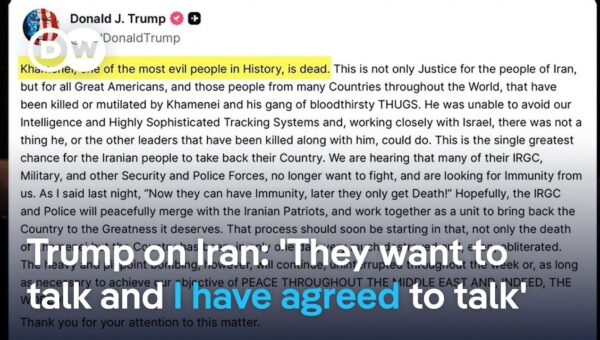
Trump Agrees to Talks with Iran After Major Strikes
President Donald Trump has agreed to talks with Iran's leadership following coordinated strikes that reportedly killed key figures, including the Supreme Leader. While Trump claims significant military successes, U.S. strategy remains unclear, and public opinion shows limited support for the actions amid rising American casualties.


Trump’s Putin Stance: US Strategy and Global Implications
Analysis suggests Donald Trump's approach to the Ukraine war involves pressuring Kyiv, but US involvement is crucial for resolution. China's influence and the 'MAGA' agenda's geopolitical implications are key factors.