Iran Nuclear Talks: US Envoy Seeks Deal Amid Conflict Fears
US and Iranian negotiators are meeting in Geneva for critical talks on Iran's nuclear program amid escalating tensions and threats of military action. The discussions, involving senior US envoys, aim to avert conflict, but significant disagreements over uranium enrichment levels persist, raising fears of a broader regional confrontation.

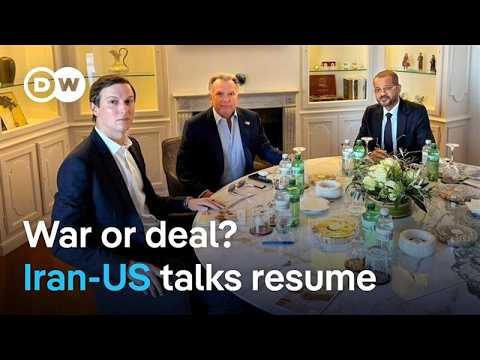
US, Iran Negotiators Meet in Geneva Amid Escalating Tensions
Geneva, Switzerland – United States and Iranian negotiators convened today in Geneva for a critical round of talks aimed at resolving disputes over Iran’s nuclear program. The discussions come as President Donald Trump maintains his assertion that Iran seeks to develop nuclear weapons, a claim vehemently denied by Tehran, which insists its nuclear activities are solely for peaceful purposes. The high-stakes negotiations are taking place against a backdrop of escalating rhetoric, with President Trump having previously threatened military action against Iran should a diplomatic solution not be reached.
High-Level Diplomatic Push to Avert Military Conflict
Iran’s delegation arrived in Switzerland with the stated objective of preventing further conflict with the United States. The urgency of the situation was underscored by President Trump’s hints at possible military action during his State of the Union address. However, Vice President Mike Pence later confirmed that senior US officials, including envoy Steve Witkoff and President Trump’s son-in-law Jared Kushner, would represent the administration in Geneva, signaling a concerted effort to pursue a peaceful resolution. “The principle is very simple. Iran cannot have a nuclear weapon,” stated a White House official, adding, “If they try to rebuild the nuclear weapon, that’s that causes problems for us. And in fact, we’ve seen evidence that they have tried to do exactly that.”
Stalemate Over Uranium Enrichment Levels
Prior to the Geneva talks, five previous rounds of negotiations between Iran and the US had failed to yield an agreement. Iran’s Foreign Minister emphasized his nation’s commitment to peaceful nuclear technology, stating, “We are ready to answer questions. We are ready to remove concerns but we are not ready to give up our right for peaceful use of nuclear technology. This is what we are uh what we demand. Uh so I believe that tomorrow in Geneva there is every possibility to come to a to an agreed solution which is fair and balanced.”
However, deep divisions remain, particularly concerning the extent of Iran’s uranium enrichment. According to Shani Vzanes, DW’s Middle East analyst, the gap between the two nations’ positions is significant. “The Americans basically say zero enrichment. The Iranians are saying they’re willing to make some compromises.” Vzanes noted the complexity of the situation, with much occurring through back channels, leaving observers with limited concrete information. The US insistence on “zero enrichment” contrasts with Iran’s willingness to potentially accept enrichment levels as low as 3.6%, a level previously permitted under the Joint Comprehensive Plan of Action (JCPOA) negotiated during the Obama administration, from which the Trump administration later withdrew.
Broader US Objectives and Iranian Aspirations
The core of the current negotiations, Vzanes suggested, hinges on understanding the United States’ ultimate goals for Iran. “The very fact that they are having talks, you know, and they’re stalling and they’re still at the table with the the Americans, that’s already an achievement,” she commented, referring to Iran’s perspective. Iran’s primary hope from these talks is the removal of sanctions, which would aid in stabilizing its regime. The critical question remains whether the US seeks merely to curb Iran’s nuclear ambitions or aims for a more comprehensive overhaul, including the removal of the regime itself, its ballistic missile program, and a fundamental shift in regional power dynamics.
“Almost Unachievable Goal” of Obliterating Iran’s Nuclear Program
The presence of Jared Kushner and Steve Witkoff in Geneva, described as practical and solution-oriented individuals and close allies of President Trump, may signal a desire to deescalate. “They seem to be the least interested in letting this escalate to a war,” Vzanes observed. She added that Trump’s own acknowledgment that the goal of “completely obliterating the Iranian nuclear plan” is “an almost unachievable goal” could suggest a search for an off-ramp from potential conflict.
Regional Repercussions and European Concerns
The stakes for Iran and the wider Middle East are immense. Iran has warned that any attack, even a limited one, would be met with a full-scale response, potentially drawing in regional proxies like Hezbollah in Lebanon, Iraqi militias, and the Houthis in Yemen. This prospect deeply concerns several of America’s Gulf allies. “This all upheaval is something that some of of America’s closest allies in the Gulf are very much afraid of and this is also one of the reasons that the Americans are very hesitant,” Vzanes explained.
From a European perspective, the situation is viewed with significant apprehension. Ellie Garin Maya, Deputy Director of the European Council on Foreign Relations, described the US approach as “extremely risky.” She warned that a failure to achieve a breakthrough in Geneva could lead to a “new military conflict in the Middle East, perhaps uh you know, bigger than anything we’ve seen in the last uh 15 years in this part of the world.” The proximity of Iran to Europe means that any conflict would have direct repercussions for European security.
Europe’s Limited Role and Evacuation Warnings
Garin Maya lamented Europe’s current absence from the diplomatic and de-escalation efforts, noting that roles previously held by European powers are now being filled by countries like Saudi Arabia, Qatar, and Turkey. However, she suggested that Europe could align with these regional partners to manage the fallout of any potential US strikes and help prevent a broader conflict. The rising number of countries urging their citizens to leave Iran immediately signals a heightened perception of imminent conflict risk. This includes potential scenarios involving Israeli retaliatory strikes if Iran targets Israel, and US advisories for downsizing embassy staff in the region due to fears of Iranian counter-strikes.
Uncertainty Over US Objectives and Potential Outcomes
The ultimate objectives of the US remain unclear, with shifting rationales for potential military action ranging from curbing the nuclear program to addressing human rights concerns or focusing on Iran’s missile capabilities. “It’s all over the place at the moment in terms of objectives,” Garin Maya stated. While the US military has presented President Trump with a range of strike options, the European position, she indicated, would likely favor highly restricted strikes targeting capabilities posing a risk to global security, such as nuclear and missile programs. Nevertheless, a significant Iranian retaliation is anticipated regardless of the type of US action taken.
Looking Ahead: A Critical Juncture
The coming hours and days will be crucial in determining whether diplomacy prevails or if heightened tensions spill over into military confrontation. Both sides express a desire for a resolution, yet the wide divergence in their red lines makes a peaceful outcome challenging. The international community, particularly European nations, will be closely monitoring the situation, seeking any indication of de-escalation or a clear path toward averting a wider conflict in the Middle East.
Source: Obliterating Iran's nuclear program is 'an almost unachievable goal’ (YouTube)

Related Articles


Air Travel Chaos Erupts as Gulf Conflict Shuts Skies
Tens of thousands of passengers are stranded as the conflict in the Persian Gulf forces widespread airspace closures, disrupting global air travel. A tourist in Israel described witnessing air strikes and the desperate search for escape routes amidst rapidly changing travel options.

Senator Coons Questions Trump’s Iran Strategy After Troop Deaths
Senator Chris Coons has sharply criticized President Trump's strategy in Iran following the deaths of three U.S. service members. Coons questioned the intelligence regarding Iran's nuclear proximity and the lack of clear strategy and congressional debate for the "war of choice."

Nuclear Expert Debunks Trump’s Iran Bomb Timeline
Nuclear security expert Joe Cirincione refutes claims that Iran was two weeks from a nuclear bomb, stating the process would take months. He analyzes recent strikes on Iran's nuclear facilities, arguing military solutions are insufficient and diplomacy with inspectors is key.