Iran Nuclear Talks Resume Amid Domestic Unrest and Strategic Ambiguity
Renewed nuclear talks between the U.S. and Iran are underway amidst escalating domestic protests in Iran and a complex display of strategic ambiguity by both nations. While Iranian officials express optimism for a diplomatic solution, U.S. envoys voice puzzlement over Tehran's negotiating stance, even as both countries engage in significant military preparations.

US-Iran Nuclear Diplomacy Faces Complex Landscape of Domestic Protests and Military Posturing
As renewed nuclear talks between Iran and the United States are set to commence, the diplomatic arena is fraught with a complex interplay of domestic unrest within Iran and a delicate strategic ambiguity employed by both Washington and Tehran. While Iranian officials have expressed cautious optimism regarding a potential diplomatic solution, statements from U.S. representatives reveal a degree of perplexity over Iran’s negotiating stance, even as both nations engage in significant military preparations.
Domestic Unrest Simmers as Protests Reignite
The resumption of nuclear talks is occurring against a backdrop of renewed protests within Iran. Students have taken to the streets for a second consecutive day, engaging in clashes with government forces. Footage circulating online depicts pro- and anti-government demonstrators confronting each other at a rally in Tehran. This event marks the first significant display of defiance since a crackdown on widespread demonstrations last month, which saw thousands killed.
These internal protests highlight the significant domestic pressure on the Iranian regime. According to Benam Ben Taleblu, a senior fellow at the Foundation for Defense of Democracies, the government is under immense strain, having been compelled to use force against what he describes as the largest anti-regime uprising in the 47-year history of the Islamic Republic. Taleblu posits that neither reform nor economic concessions can appease large segments of the population who feel alienated from the state. He identifies a profound chasm within Iran, contrasting a government deeply opposed to the U.S. and Israel with a population that is largely pro-American and pro-Israeli. Furthermore, he notes the irreconcilable differences between the state’s ideology of Islamism and the population’s core belief in nationalism.
The recent student protests, occurring on university campuses in major cities like Tehran and Mashhad, are seen as a testament to the bravery of Iranian dissidents. Despite the previous crackdown and loss of life, these individuals continue to demonstrate, signaling to both the regime and the international community that they will not be deterred.
Mixed Signals Emerge from Diplomatic Front
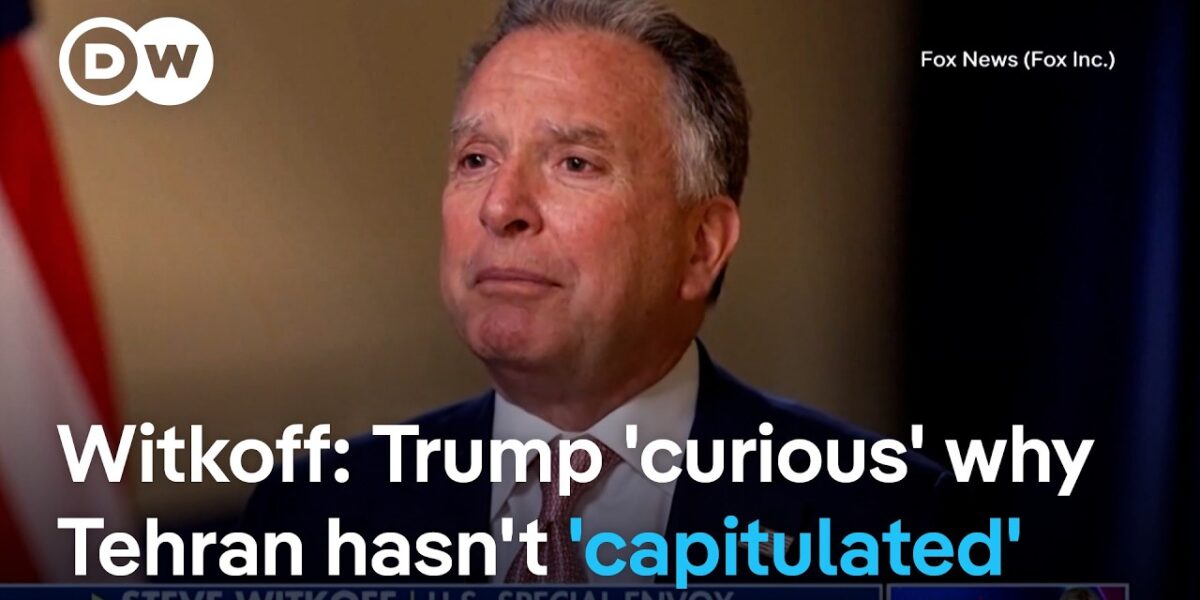
On the diplomatic front, Iranian officials have offered signals of hope. Iran’s Foreign Minister, speaking to CBS News, indicated a “good chance” for a diplomatic solution with Washington. However, this optimism is juxtaposed with remarks from White House envoy Steve Wicker, who, in an interview with Fox News, conveyed President Donald Trump’s curiosity as to why Tehran had not yet “capitulated.”
Wicker expressed a sense of puzzlement, questioning why Iran, under significant pressure from U.S. naval power in the region, had not come forward with assurances of its peaceful intentions regarding nuclear weapons and presented concrete proposals. “It’s curious as to why they haven’t capitulated? Why under this sort of pressure with the amount of um uh sea power, naval power that we have over there, why they haven’t come to us and said, ‘We profess that we don’t want to be we don’t want a weapon. So, here’s what we’re prepared to do.’ And yet it’s hard to to sort of get them to that place,” Wicker stated.
Analysis: Strategic Ambiguity and the Art of Negotiation
Benam Ben Taleblu offered a critical analysis of the U.S. approach, suggesting that the Trump administration is pursuing “all options at once and cultivating uh strategic ambiguity.” He observed that Wicker’s expressed “puzzlement, if not frustration,” over Iran’s perceived lack of capitulation, inadvertently serves as an advertisement for the Iranian government’s revolutionary ideology. This ideology, Taleblu explains, is rooted in the principle of “never giving in.”
According to Taleblu, Iran excels at brinkmanship and bluffing, and in the current negotiating sphere, Washington may have adopted a process that favors Tehran’s tactics rather than leveraging the significant pressure it has built. He expressed skepticism about the existence of a diplomatic or nuclear “offramp” to the current crisis, noting that President Trump’s red lines, drawn in January, extended beyond the nuclear and missile programs to include Iran’s domestic situation.
Divergent Paths: Rhetoric vs. Reality
While both Tehran and Washington outwardly express a desire for a diplomatic outcome, their actions suggest a readiness for conflict. Taleblu points out that both sides are physically preparing for military engagement. The U.S. is adjusting its military architecture and force posture in the Middle East, while Iran is hardening select nuclear, missile, and military sites and rebuilding its missile program. This divergence between diplomatic rhetoric and military posturing creates a volatile environment, signaling a lack of fear regarding a potential limited or wider regional war.
Assessing a Deal: What Constitutes Success?
The question of what constitutes a successful deal for the U.S. remains central. To be considered superior to the Joint Comprehensive Plan of Action (JCPOA) abandoned by the Trump administration in 2018, any new agreement would need to address Iran’s remaining nuclear capabilities. While the U.S. has, at least temporarily, halted Iran’s enrichment capacity, the regime retains the technical know-how.
A comprehensive strategy, as outlined by Taleblu, would involve Iran relinquishing its remaining nuclear capabilities, allowing the International Atomic Energy Agency (IAEA) full access, and dismantling its atomic infrastructure. Furthermore, it would necessitate capping, limiting, and rolling back Iran’s long-range strike capabilities, particularly its ballistic missile program. Ultimately, the goal would be an agreement that prevents the Islamic Republic from acting aggressively both domestically and abroad. Taleblu acknowledges this as a “tall order,” especially at this late stage, which contributes to the increasingly kinetic nature of the situation, despite the Foreign Minister’s cautiously positive commentary.
The Supreme Leader’s Stance
Taleblu emphasizes the paramount importance of the Supreme Leader’s pronouncements. In contrast to the Foreign Minister’s conciliatory remarks, Supreme Leader Ali Khamenei’s recent speeches have focused on themes of “martyrdom” and historical analogies, rather than flexibility. This ideological framing, Taleblu suggests, indicates a deep-seated resistance to concessions, further complicating the prospects for a diplomatic breakthrough.
The ongoing situation underscores the intricate challenges facing U.S.-Iran relations. The combination of internal dissent, the strategic complexities of nuclear negotiations, and the ever-present threat of military escalation creates a high-stakes environment where diplomatic progress remains uncertain.
Source: Nuclear talks to resume: Prospects for a US-Iran diplomatic solution | DW News (YouTube)

Related Articles


Trump: Iran Strikes Ahead of Schedule, Expects ‘Great Deal for World’
Three U.S. service members have been killed amid escalating conflict with Iran, President Trump confirmed. He stated that strikes are ahead of schedule, with senior Iranian leaders killed, and expressed optimism for a "great deal for the world" despite ongoing talks with Iranian officials.
Trump Agrees to Talks with Iran After Major Strikes
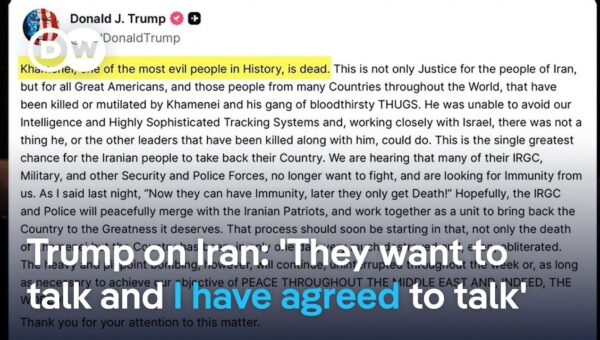
President Donald Trump has agreed to talks with Iran's leadership following coordinated strikes that reportedly killed key figures, including the Supreme Leader. While Trump claims significant military successes, U.S. strategy remains unclear, and public opinion shows limited support for the actions amid rising American casualties.
Iran’s Escalation: Strategic Strikes and Shifting Alliances
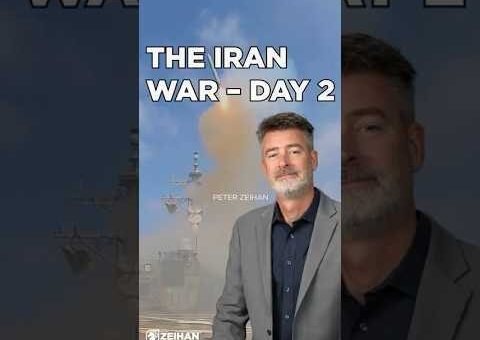
Iran launched over 700 drones and missiles in a major overnight assault, with 90% intercepted by defenses. The strikes targeted multiple regional locations, including Israel, but resulted in minimal casualties and did not achieve significant strategic damage due to dispersed targeting. A notable shift sees Saudi Arabia now willing to assist following impacts on its territory.