Iran Missiles Target Remote US-UK Base in New Escalation
Iran has demonstrated an expanded missile reach by launching ballistic missiles towards the remote U.S.-U.K. base at Diego Garcia, located thousands of kilometers away. Experts suggest this attack reveals Iran's capabilities may surpass previous assessments, while also highlighting the potential for further escalation and the strategic importance of financial sanctions as a de-escalation tool.

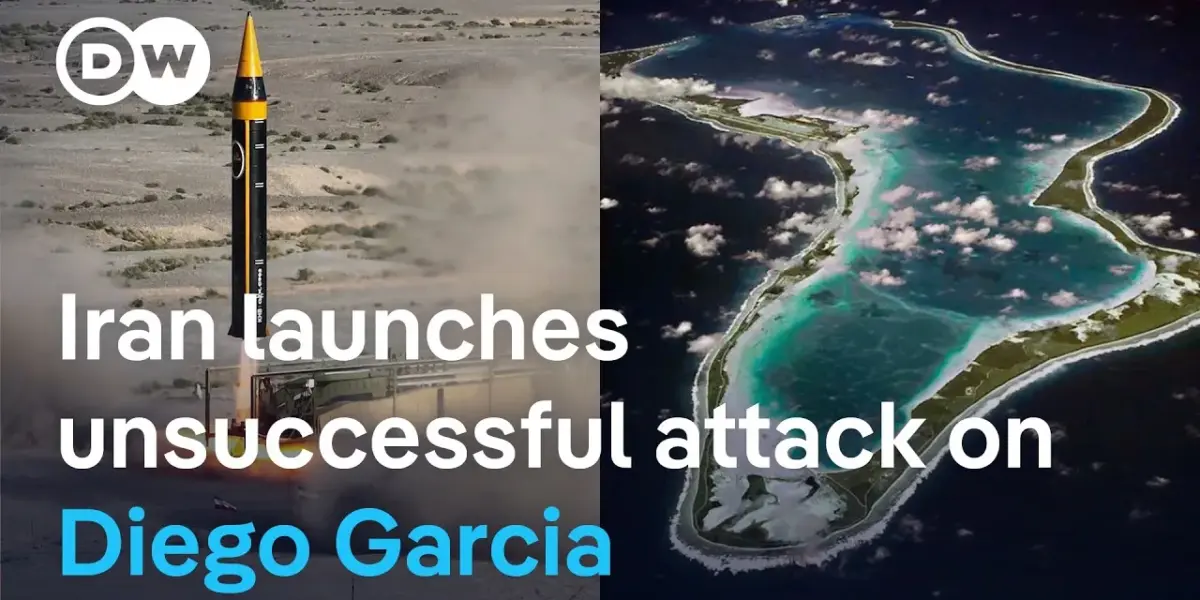
Iran Launches Long-Range Missiles at Diego Garcia Base
In a significant escalation of regional tensions, Iran has launched ballistic missiles targeting the remote U.S.-U.K. military base on Diego Garcia, an island in the Indian Ocean. The attack, which occurred before recent policy shifts allowing U.S. use of the base for offensive operations, highlights Iran’s expanding missile capabilities and willingness to strike targets far beyond the immediate conflict zone.
Missile Strike Reveals Extended Iranian Reach
The attempted strike on Diego Garcia, located approximately 3,800 km from Iran, represents the longest-range Iranian missile launch ever recorded. This distance far exceeds the previously stated 2,000 km range limit Iran claimed for its ballistic missiles. Officials report that one of the two missiles fired was intercepted by a U.S. warship, while the other failed during flight, indicating a partial but notable success in extending their reach.
Expert Analysis: Underestimating Iran’s Arsenal
Farzan Sabet, a managing researcher at the Geneva Graduate Institute, suggested that the attack may reveal an underestimation of Iran’s true missile capabilities. “Despite the efforts of the U.S. and Israel to degrade Iran’s capabilities, its weapon stockpiles were quite expansive,” Sabet explained. He noted that Iran possesses an estimated 2,000 or more medium-range ballistic missiles, some of which could be adapted to intermediate ranges, and potentially between 2,000 to 8,000 short-range ballistic missiles. While U.S. and Israeli actions have reduced quantities and production capacity, Sabet believes Iran still retains the ability to launch missiles, potentially at even greater distances than demonstrated.
“The missile that was fired towards Diego Garcia… they probably retain the capacity to fire even further afield into Europe than the launch against Diego Garcia.”
Farzan Sabet, Geneva Graduate Institute
Sabet clarified that Iran’s self-imposed 2,000 km range limit was a political restriction, not a technical one. By reducing warhead size, Iran could extend missile range. However, he cautioned that these intermediate-range missiles might not be highly accurate and may carry smaller warheads, making them “weapons of terror rather than weapons of effect” for now.
Strategic Implications and Iran’s ‘Nuclear Options’
The attack on Diego Garcia comes as Iran warns against the use of bases like the U.K.’s for strikes against it. Sabet compared Iran’s actions, such as attempting to close the Strait of Hormuz, to using its “nuclear options.” Having deployed these, he suggested Iran feels it has “very little left to lose,” especially if the regime’s survival is at stake. This could lead to further escalations against existing targets and new countries.
Resilience Under Fire: Iran’s ‘Mosaic Doctrine’
Despite U.S. claims of striking over 8,000 targets in Iran in recent weeks, the Iranian military appears to maintain resilience. This is attributed to the “mosaic doctrine” developed since the Iraq War. This strategy decentralizes command, allowing local commanders to operate autonomously if the central leadership is disrupted. The doctrine has been updated with multiple levels of succession to ensure continued operation even after decapitation strikes.
Targeting Nuclear Facilities: Natanz Strike
The transcript also mentions a reported strike on Iran’s largest nuclear facility, Natanz, which Iran claims did not result in radiation leakage. Israel has denied involvement. Sabet explained that targeting Natanz, which is crucial for uranium enrichment, aims to degrade Iran’s nuclear capabilities and temporarily reduce its ability to produce weapons-grade uranium. He anticipates that nuclear sites could continue to be targets, similar to the focus during a previous 12-day war, though the current conflict has primarily targeted missile and drone capacities.
Expert: Financial Levers Key to De-escalation
Hans Jakob Schindler, an expert on Iran and senior director at the Counter Extremism Project, echoed concerns about Iran’s expanding missile program, stating it’s clear Iran is working on longer ranges. He also urged governments to take Iran’s threats of international terrorism seriously, citing alleged firebomb attacks against synagogues in Europe with links to Iranian-backed groups. Schindler views these threats as a sign of desperation, indicating that hybrid warfare in the region is not sufficient to stop Iran’s military operations.
When asked about effective responses to de-escalate without triggering a wider war, Schindler highlighted the underutilized financial lever. He stressed that cutting off Dubai as a financial hub for Iran and preventing its oil exports are the most credible actions. “Without pay, this regime will have a problem,” Schindler concluded.
Source: Iran war: Tehran fails in missile strike on the US-UK base at Diego Garcia | DW News (YouTube)

Related Articles

Trump’s “Walk Away” Tactic Signals Tougher Stance on China
Retired Air Force Brigadier General David Stillwell believes President Trump's strategy of being willing to walk away from negotiations puts pressure on China. This tactic, combined with US global actions and strengthened alliances, signals a more assertive American foreign policy.


China Fights Back: Tariffs Loom Ahead of Trump Visit
China is retaliating against US trade investigations that could lead to higher tariffs. This escalating trade tension occurs just before a planned visit by President Trump. The dispute involves accusations of unfair practices and impacts global supply chains.


Israelis Forge Resilience Amidst Constant Bomb Shelter Drills
Life in Israel is a blend of resilience and constant vigilance, with many families adapting to frequent bomb shelter drills and even sleeping in makeshift shelters. Despite ongoing missile attacks, Israelis strive to maintain normalcy, though businesses face disruption and emotional fatigue is a growing concern.