Iran Missile Near Turkey Raises NATO Alarm, Lebanon Conflict Escalates
NATO air defenses intercepted an Iranian ballistic missile near Turkish airspace, raising regional tensions. Meanwhile, conflict escalates in Lebanon, displacing tens of thousands and seeing direct clashes between Hezbollah and Israeli forces.

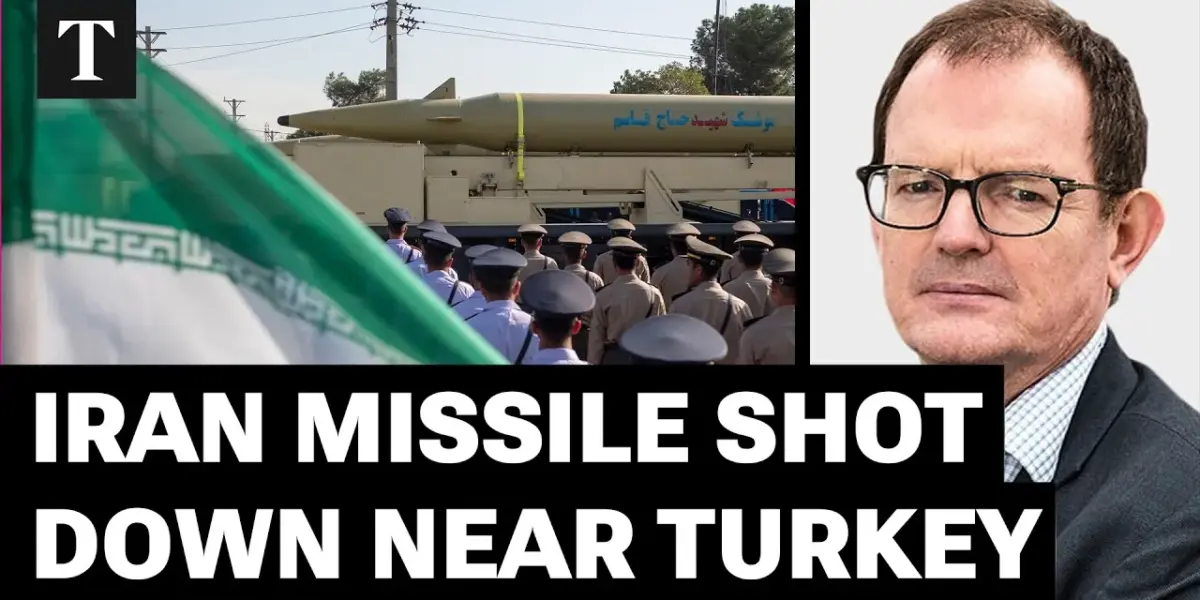
NATO Air Defenses Intercept Iranian Missile Near Turkish Airspace
Fears of wider regional escalation intensified Tuesday after NATO air defenses reportedly shot down an Iranian ballistic missile that was heading towards Turkish airspace. The Turkish Defense Ministry confirmed the engagement, stating the missile was neutralized by NATO air and missile defense assets. The incident raises significant questions about intent and brings a new dimension to the ongoing Middle East conflict.
Uncertainty Over Iranian Missile’s Trajectory and Intent
Richard Spencer, a correspondent for The Times based in Turkey, provided insights into the developing situation. While the missile’s trajectory suggested it was heading towards southwestern Turkey, Spencer noted that its exact target remains unclear. “The trajectory of this missile does suggest it was heading in that direction. It flew over Syria first… not entirely clear that that was the target. It could have been heading on further west, possibly as far as Cyprus to the west coast of Turkey,” Spencer explained. The missile’s path took it over Syria before approaching Turkish airspace. It reportedly fell in the vicinity of İncirlik Air Base, a major U.S. and NATO facility in eastern Turkey, a fact that heightens the sensitivity of the incident.
“The Iranians say that they are only targeting US interests. That’s true in the Gulf as well that we know their missiles have struck quite widely and their drones even more so and of course intercepted missiles and drones can land anywhere.”
Spencer highlighted the potential implications for Turkey, a NATO member that shares a border with Iran. “It brings another dimension to this conflict. Um Richard, I think you’re back with us. What more do we know about whether this was an intentional strike or not by Iran?” The proximity to İncirlik Air Base, a crucial Cold War-era installation, underscores the strategic importance of the region. While İncirlik is located further west than Spencer’s current position near the Iranian border, its significance to NATO operations is undeniable.
Turkey’s Cautious Stance Amid Regional Tensions
Turkey finds itself in a delicate geopolitical position, balancing its relationships with both Iran and the Western alliance. Spencer elaborated on Turkey’s reluctance to be drawn further into the conflict, stating, “Certainly very little appetite. It’s in a very sensitive position. Of course, it has a border with Iran… and it sees itself as a sort of escape valve I think for the for for a lot of the Middle East’s issues.”
The Turkish government is keen to avoid further destabilization in the region. “It hosts many many refugees from Syria as we know. It doesn’t want to host another large refugee population from Iran. It doesn’t want to see Iran destabilized,” Spencer added. Turkey is also wary of potential internal repercussions, such as a Kurdish uprising in western Iran, given its own ongoing efforts to manage Kurdish separatist movements. The country has endured significant spillover effects from conflicts in neighboring Iraq and Syria and is keen to avoid another protracted war on its border.
Lebanon Faces Escalating Conflict and Displacement
Meanwhile, the conflict has intensified in southern Lebanon, with Israeli bombardments reportedly killing 72 people since Monday and displacing approximately 83,000 residents, according to Lebanese authorities. UN peacekeepers have confirmed Israeli troops entering several towns and villages in southern Lebanon, prompting a mass evacuation notice for an estimated 250,000 people. Hezbollah has claimed responsibility for attacks on Israeli forces in Lebanon, marking direct clashes between the two sides.
Nada Homsy, a correspondent for the Middle East newspaper National News in Beirut, described the situation on the ground. “In terms of what’s happening around us in Beirut, in Beirut proper, we hear the occasional sound of air strikes. In that way, it’s very familiar to the last war between Hezbollah and Israel between 2023 and 2024,” she reported. Homsy noted the widespread anger in Lebanon over being drawn into the conflict during a period intended for post-war reconstruction.
“There’s been tens of thousands of people that have been displaced. Today, the Israeli army ordered that everyone in South Lebanon leave. That’s 250,000 people that are on the road stuck in hours and hours of traffic as they leave their homes and aren’t certain about where they’re going to stay.”
The displacement crisis is severe, with many families forced to sleep in cars or pitch tents, even after government efforts to open schools and shelters. Homsy also observed an expansion in the scope of Israeli operations, with strikes occurring in areas outside of traditional Hezbollah strongholds, including civilian neighborhoods in Beirut’s suburbs and other parts of Lebanon.
Hezbollah’s Capacity and the Protracted Conflict
The capacity of Hezbollah to sustain its fight against Israel is a critical question given the group’s history and the impact of previous Israeli campaigns. Homsy acknowledged the secretive nature of Hezbollah, making it difficult to assess their current capabilities. She recalled the devastating Israeli campaign in 2024, which led to the death of its leader Hassan Nasrallah and the decimation of its top leadership and missile capabilities. Estimates suggest that up to 75% of Hezbollah’s weaponry may have been destroyed during that period.
However, Hezbollah is known for its resilience and ability to rearm. “But we also don’t know in what capacity has been rearming itself. And they’re notoriously excellent at fighting in the wilderness. So right now in South Lebanon, they’re clashing with Israel and I believe there have been reports of several Israeli soldiers that were wounded. Direct contact,” Homsy stated. The resurgence of Hezbollah’s presence and weaponry in southern Lebanon, despite previous disarmament efforts, highlights the ongoing challenges in the region.
Looking Ahead
The coming days will be crucial in determining the trajectory of both the Turkish missile incident and the escalating conflict in Lebanon. All eyes will be on Turkey’s official response to the missile incident and any potential diplomatic ramifications within NATO. Simultaneously, the humanitarian crisis in southern Lebanon and the sustained clashes between Hezbollah and Israeli forces will continue to be closely monitored, with concerns growing over further regional spillover.
Source: ‘Very Little Appetite’ For Turkish Response To Iranian Missile | Richard Spencer (YouTube)

Related Articles


Iran’s Proxy Network Weakened Amid Regional Tensions
Iran's crucial 'Axis of Resistance' network, including Hezbollah and Hamas, faces significant strain due to weakened command structures and internal conflicts. Recent regional escalations have highlighted the proxies' cautious approach, raising questions about their reliability as Iran's strategic partners.
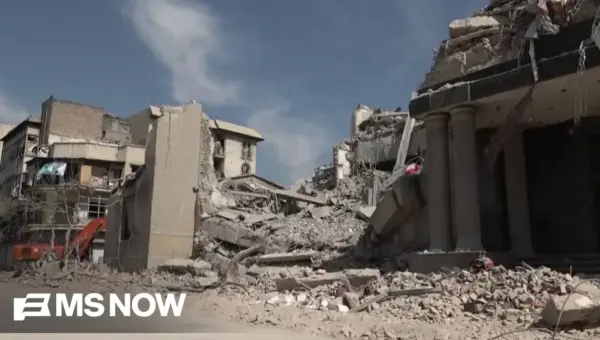
US, Israel Intensify Strikes Against Iran in Escalating Conflict
The United States and Israel have escalated their military operations against Iran, entering a "big scale hitting phase" targeting critical infrastructure and security forces. President Trump defended the preemptive strategy, stating it prevented an imminent Iranian attack. Meanwhile, tensions rise in Lebanon as Israeli strikes expand, drawing parallels to historical conflicts.

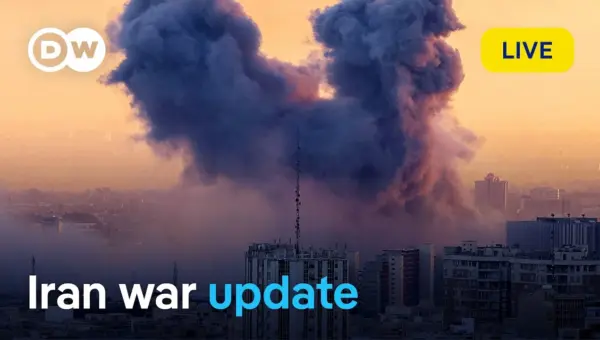
Middle East Erupts: Iran, US, Israel Escalate Regional Conflict
The Middle East is engulfed in a widening conflict as Iran, the US, and Israel engage in escalating strikes. With new explosions in Iran and attacks on Hezbollah in Lebanon, regional stability is severely threatened. The potential closure of the Strait of Hormuz looms, raising concerns about global economic impact.