Iran Missile Hits Israeli Refinery; US Strikes Deep
Iran has escalated its conflict with Israel by launching a missile strike on an oil refinery in Haifa. In response, Israel and the US have intensified their military actions, striking targets deep within Iran and in the Caspian Sea. Analysts suggest this marks a new phase of economic warfare, with significant implications for regional stability.

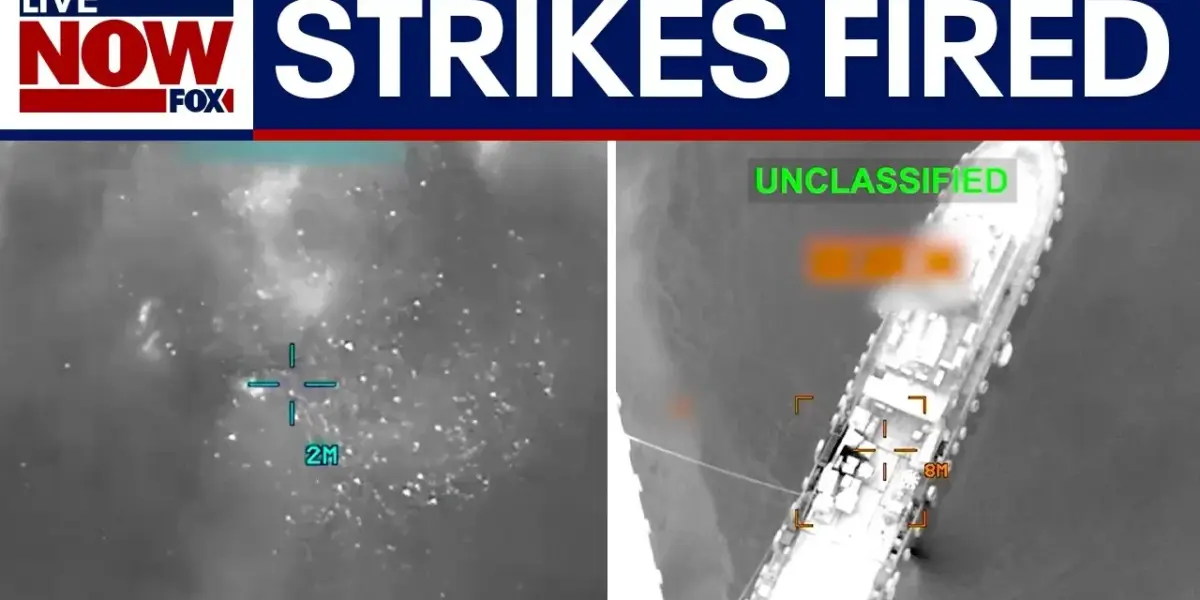
Iran Missile Strikes Israeli Refinery
An Iranian missile has struck an oil refinery in Haifa, Israel, causing damage to the country’s northern electricity grid. The incident, reported by Israeli officials and circulating on social media with images of a large fire near the refinery, marks a significant escalation in the ongoing conflict. This attack follows a pattern of targeting economic infrastructure, with Iran previously focused on energy installations in the Persian Gulf and attempting to block the Strait of Hormuz.
Israel Strikes Caspian Sea Targets
In response, Israel’s military announced it has struck numerous Iranian targets in the Caspian Sea for the first time. Lieutenant Colonel Nadav Shosani of the Israel Defense Forces confirmed that dozens of targets were hit, including Iranian naval vessels, a port command center, and infrastructure used for ship repair. Video released by the IDF shows explosions during these strikes.
US Intensifies Operations Against Iran
The United States has also ramped up its military actions. Secretary of War Pete Hegsth stated that the US has launched its largest strike package yet, targeting Iran’s defense industrial base. He reported that hundreds of Iranian defense industrial bases have been destroyed, significantly reducing their ability to produce missiles and drones. “Ballistic missile attacks against our forces down 90% since the start of the conflict,” Hegsth noted, adding that their air defenses are flattened and production lines feeding missile and drone programs are being destroyed.
General Dan Raisen Kaine, Chair of the Joint Chiefs of Staff, revealed that American forces have struck over 90 targets on Kar Island, a key part of Iran’s oil network. These strikes included air defenses, a naval base, and mine storage facilities. US forces are reportedly using 5,000-pound bunker buster bombs to hit underground weapon storage and employing attack planes and helicopters to target Iranian boats and drones.
Expert Analysis: Economic Warfare and Shifting Tactics
Jonathan Sier, from the Foundation for Defense of Democracies, explained the significance of the recent developments. He described the attacks as a new phase of the war, focusing on economic infrastructure as well as military targets. “This is has been a measure this has really been a new theater in the war that the focus is also shifting going beyond just military and repression and there’s an economic battle targeting one another’s economic uh infrastructure,” Sier stated.
Regarding the Israeli strikes in the Caspian Sea, Sier noted their significance in demonstrating Israel’s reach, even though the primary focus for naval threats remains the Persian Gulf and the Strait of Hormuz. He highlighted that while the Caspian Sea is geographically distant, it is an area where Iran produces and repairs many ships.
US Strategy: “Death From Above” and Future Phases
Sier commented on Secretary Hegsth’s phrase “death from above,” suggesting it reflects a US strategy focused on destroying military capabilities from the air rather than engaging in ground operations. He questioned whether this approach is sufficient for systemic change in Iran, implying that ground operations might be necessary for long-term impact.
“The idea here is that the United States so far has not really signaled uh using ground forces,” Sier said. “What Hexath really hinted at was the fact that the operations have really been from above and destroying the military capabilities. But for systemic change and for us to ensure that there’s going to be a government in Tehran that is not going to pursue this uh Islamist ideology death the death from above is not always going to be applicable.”
Qatar’s Role and Iran’s Regional Strategy
The discussion also touched upon Iran’s missile launches at Gulf Arab countries, with Qatar being highlighted as a potential “red line” due to hosting CENTCOM. Sier explained Qatar’s strategic importance but also its complex relationship with the US, citing disagreements on issues like the Muslim Brotherhood and support for Hamas. He noted that Qatar has often sought to preserve the Iranian regime and collaborates on financial fronts.
Sier expressed surprise at Iran targeting Qatar, which is considered the closest country to a partner in the Persian Gulf. He observed a shift in Qatar’s media rhetoric, moving from portraying Iran as a victim to labeling the regime more critically after the attacks. This suggests that Iran’s strategy of regionalizing the war to inflict political costs and end it sooner may be backfiring, turning neutral states against it.
Uncertainty and the Future of the Conflict
Looking ahead, Sier expressed interest in how the current campaign aims to support the Iranian people. He recalled President Trump’s statements about providing help to Iranians and the need for anti-regime forces within Iran to act. The division of labor between the US and Israel was discussed, with Israel leading strikes against repression apparatus and the US potentially exploring arming the populace or increasing hyper-local strikes.
The absence of Iran’s Supreme Leader from public view was also deemed significant. Sier explained that this demoralizes the regime’s support base, as the leader is a symbol of resistance. Conversely, it could encourage ordinary Iranians who see officials falling like dominoes. This situation reinforces the idea that the Islamic Revolutionary Guard Corps (IRGC) is increasingly in control, potentially dominating the alliance with the clergy.
Sier concluded that the war is unlikely to last much longer but noted that Iran’s continued actions, such as blocking the Strait of Hormuz, might prolong US involvement. He emphasized that the war cannot truly end until there is a change of government in Tehran.
Source: Iranian missile strikes oil refinery in Israel (YouTube)

Related Articles
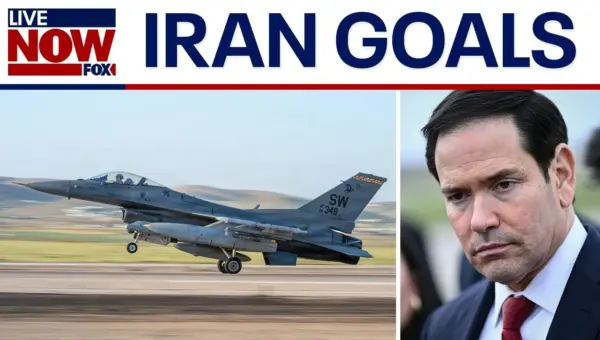
Rubio: US Can Achieve Iran War Goals Without Troops
Senator Marco Rubio outlined a strategy to counter Iran without deploying U.S. ground troops, focusing on weakening the regime and enhancing maritime security. He also criticized Cuba's economic system and expressed concerns about West Bank violence.


Israelis Forge Resilience Amidst Constant Bomb Shelter Drills
Life in Israel is a blend of resilience and constant vigilance, with many families adapting to frequent bomb shelter drills and even sleeping in makeshift shelters. Despite ongoing missile attacks, Israelis strive to maintain normalcy, though businesses face disruption and emotional fatigue is a growing concern.

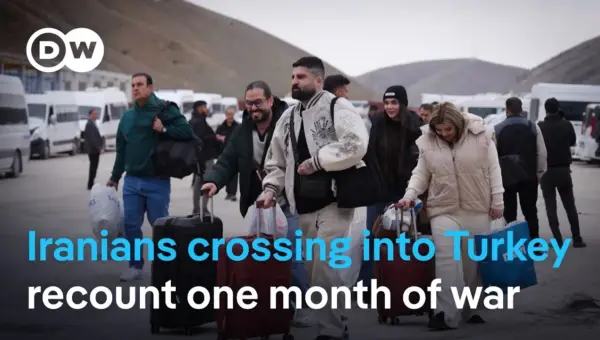
Iran War Exodus: Refugees Flee to Turkey Amidst Bombings
A train from Tehran brings refugees to Turkey, fleeing daily bombings and economic collapse. Many express deep fear for loved ones left behind, while some hold onto national pride and hope for victory. The conflict's impact is also felt economically in Turkey, with rising gas prices.