Iran Leverages Strait of Hormuz for Ceasefire Demands
Iran has dramatically increased its leverage by asserting control over the Strait of Hormuz, a crucial global oil and gas chokepoint. The nation is reportedly demanding tolls for passage and seeking the withdrawal of U.S. troops from the region as part of a potential ceasefire framework, leading to widespread confusion and challenging diplomatic efforts.

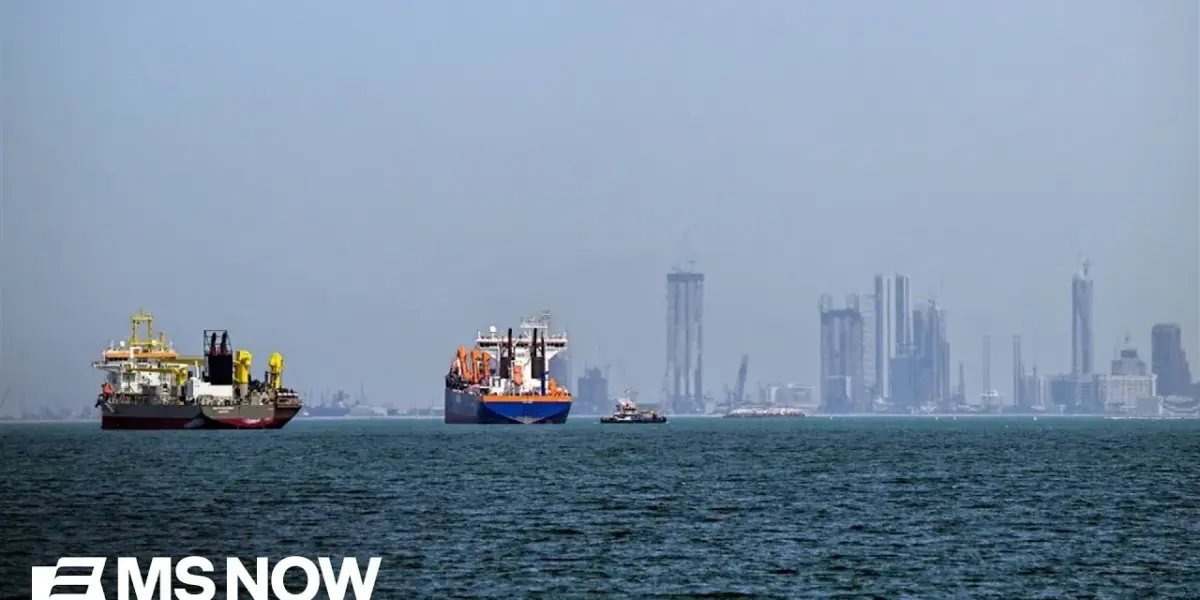
Confusion Mounts Over Ceasefire Framework as Iran Controls Key Waterway
In the heart of escalating global tensions, a burgeoning confusion surrounds the potential for a ceasefire in the Strait of Hormuz, a critical global oil passage. The situation has dramatically shifted, granting Iran significant leverage and economic power it previously lacked. This newfound control over a waterway vital to world energy supplies raises serious questions about the effectiveness of current diplomatic efforts and the potential terms of any future agreement.
Iran’s Grip on Global Energy Flow
The Strait of Hormuz is an absolutely vital chokepoint for global energy. Before the recent conflict, roughly 20 percent of the world’s oil and gas passed through its narrow waters. Now, Iran possesses the ability to significantly disrupt, or even halt, this flow entirely. This power is not merely theoretical; Iran has proposed charging a substantial toll for each oil tanker that passes through, with estimates ranging from $1 million to $2.5 million per vessel. These payments could be made in cryptocurrency or Chinese currency.
This proposed toll presents a complex problem. The Islamic Revolutionary Guard Corps (IRGC), Iran’s military force, is subject to international sanctions, including those imposed by the United States. Any tanker paying these fees, regardless of its flag, would effectively be violating these sanctions. Analysts suggest this could generate billions of dollars for the IRGC, potentially exceeding any losses they incurred due to previous sanctions. This scenario highlights a significant shift in economic power, with Iran potentially profiting immensely from a situation that began with attempts to isolate it.
Diplomatic Efforts and Conflicting Strategies
The United States’ approach to managing this crisis has drawn criticism. Instead of forming a broad international coalition involving nations heavily reliant on the Strait, such as European countries, South Korea, and Japan, the Trump administration pursued a strategy focused primarily on air power and acting unilaterally. This approach, experts argue, lacked the necessary deterrence that a larger, more unified naval presence might have provided. The absence of key allies in the operational planning has potentially weakened the collective front against Iranian actions.
Adding to the complexity, the focus of international discussions has shifted. What was once centered on Iran’s nuclear capabilities has now largely become dominated by the crisis in the Strait of Hormuz. Some observers view this shift as a strategic victory for Iran, allowing it to divert attention from its nuclear program and concentrate on leveraging its control of the waterway. The situation is further complicated by the involvement of China, adding another layer of geopolitical dynamics and conflicting interests.
Vice President Vance’s Role in Negotiations
As high-stakes talks loom, Vice President Vance is being positioned by the White House as a key negotiator. The administration hopes his long-standing advocacy for restraint in the Middle East will help de-escalate the current conflict. White House officials see Vance as an expert communicator capable of delivering a message of de-escalation. However, recent statements from Vance have introduced further confusion. He referred to Israeli strikes in Lebanon as a “legitimate misunderstanding” and questioned the English language proficiency of Iranian officials, suggesting it may have contributed to miscommunication.
Despite these mixed signals, the White House believes Vance is their best chance to temper the rising tensions. The reported demands from Iran are extensive, including the complete withdrawal of U.S. troops from bases in the region, a demand that is widely seen as a non-starter for Washington. The administration is reportedly considering repositioning some troops from NATO allies perceived as not contributing enough to the war effort, potentially moving them to more supportive nations.
Potential Troop Realignment and Strategic Implications
A significant realignment of U.S. troops could have notable strategic implications. Pulling troops from certain locations could reduce their vulnerability to Iranian missile attacks, which have targeted American positions in the Middle East. However, military analysts note that ground troops have had minimal tactical or strategic impact throughout the conflict. The substantial U.S. naval presence, while still in the region, has been hampered by the mined Strait, making even fast naval missile ships potential targets for Iran.
This situation underscores Iran’s tactical and strategic advantage due to its control over the Strait of Hormuz. The potential for U.S. actions to create rifts within NATO is also a growing concern. Critics point to a history of strained relations under the Trump administration, arguing that such rhetoric makes it easier for adversaries like Russia to operate freely in Eastern Europe. The perceived weakening of alliances could have long-term negative consequences for both American and allied security.
Negotiating Amidst Extreme Demands
The demands put forth by Iran in its reported 10-point plan appear to be hardening rather than softening. The U.S. narrative suggests that Iran’s public statements differ from private communications, but the perception on the ground is that Iran believes it has won the conflict. Emboldened by its control of the Strait and sensing desperation from President Trump, who is reportedly seeking a ceasefire, Iran feels positioned to drive a harder bargain. Despite threats of retaliation, reports suggest President Trump is actively seeking de-escalation.
Adding to the confusion, Pakistan announced a ceasefire agreement, stating that Iran was pulled back from the brink of retaliation. However, the announcement included references to Lebanon, a point that Iran reportedly considered off-limits. White House officials, who reportedly reviewed the Pakistani foreign minister’s tweet before it was posted, are now disputing the inclusion of Lebanon in the ceasefire terms. This discrepancy highlights a significant lack of clarity and widespread confusion surrounding the actual terms of the ceasefire, leaving many questioning who truly understands the details of the ongoing negotiations.
The Path Forward: Uncertainty and Potential Consequences
The path forward in the Strait of Hormuz remains highly uncertain. While Iran announced the closure of the Strait, satellite tracking indicates that cargo ships are still passing through, although oil tankers have ceased transit. This serves as a powerful demonstration of Iran’s leverage. The prospect of Iran charging tolls, and the U.S. potentially agreeing to share in these fees, opens a Pandora’s Box of potential global implications. It could encourage other nations to impose similar tolls on vital international waterways like the Taiwan Strait or the English Channel, fundamentally altering global maritime trade.
Furthermore, Iran’s demand for the U.S. to withdraw support from its proxy groups in the region presents another major sticking point. Reports indicate these militias are continuing to attack diplomatic hubs in Iraq, directly contradicting the spirit of de-escalation. While Vice President Vance, alongside other officials, faces an uphill battle, the U.S. administration is reportedly seeking a compromise. However, with the U.S. and Iran holding such diametrically opposed positions, bridging the gap to achieve a lasting ceasefire will require significant diplomatic maneuvering and concessions from both sides.
Source: ‘Absolutely unheard of’: Confusion over Strait of Hormuz leads to ceasefire framework questions (YouTube)

Related Articles

President’s War Threats Spark Global Health and Economic Crisis
President Trump's threats against Iran, including targeting its civilization and infrastructure, have drawn accusations of genocide and war crimes. This rhetoric, coupled with concerns about his cognitive health, has sparked a global economic crisis, driving up oil prices and threatening widespread shortages. Medical professionals are raising alarms about his fitness for office, while the nation faces the economic fallout of a conflict initiated without clear authorization.
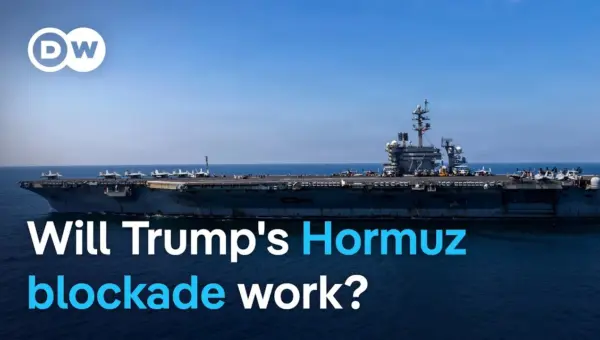
US Blocks Hormuz Blockade: Experts Warn of Oil Crisis
The U.S. Navy has initiated a blockade of the Strait of Hormuz, a vital global oil chokepoint, in response to Iran's actions. Experts like Ben Friedman of Defense Priorities are skeptical, warning the move could worsen the global oil shortage and might not achieve its intended goals. The strategy faces operational challenges and potential diplomatic pushback.

Ukraine Strikes Cripple Russia’s War Chest
Ukraine's targeted strikes on Russian oil and gas infrastructure are severely damaging Moscow's war funding capabilities. Analyst Jason J. Smart notes these attacks cripple Russia's economy, making it difficult to sustain the conflict and potentially destabilizing the Putin regime. Peace talks remain stalled due to Russian maximalist demands.