Iran Issues Final Warning Over Ceasefire Violations
Iran has issued a final warning to the U.S. and Israel over alleged ceasefire violations, disputing the terms of an agreed-upon 10-point framework. Conflicting accounts from Iranian officials and U.S. representatives highlight deep mistrust and could lead to further escalation.

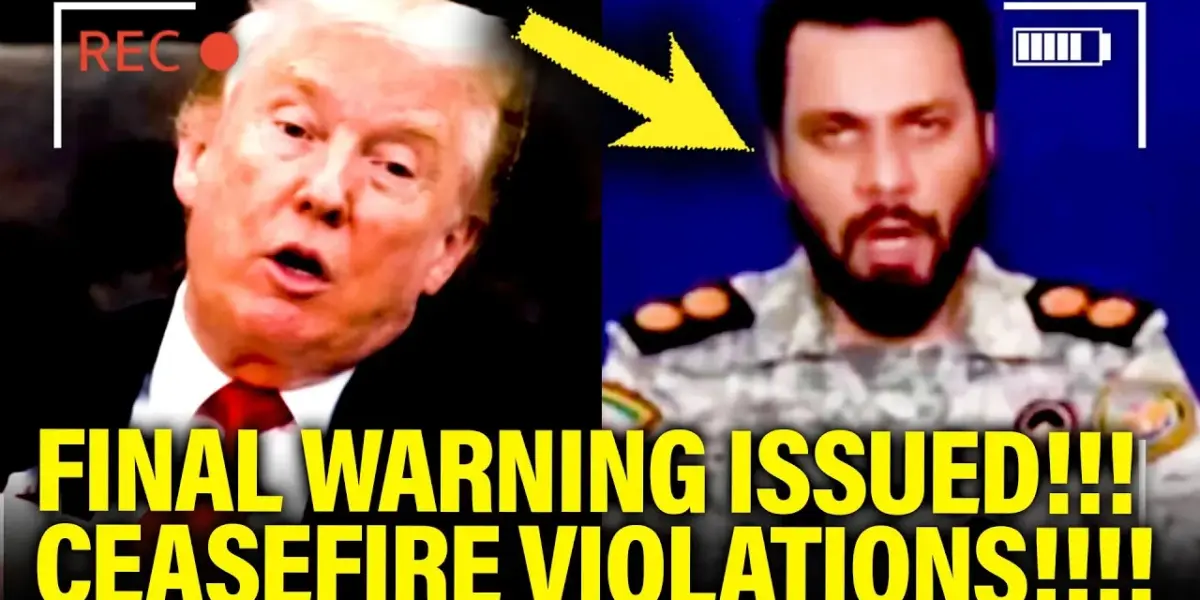
Iran Issues Final Warning Over Ceasefire Violations
Iran has delivered a stark final warning to the Trump administration and Israel concerning alleged violations of a ceasefire agreement. The core of the dispute centers on a 10-point negotiating framework proposed by Iran, which both sides had reportedly agreed to as a basis for talks. However, conflicting claims have emerged regarding the terms and their acceptance.
Conflicting Narratives on the Agreement
According to statements from Iranian officials, including Foreign Minister Javad Zarif and the Speaker of Iran’s Parliament, the United States and Israel have already violated key clauses of this 10-point plan. These violations reportedly include actions in Lebanon, breaches of Iranian airspace, and interference with Iran’s right to uranium enrichment. Iran’s foreign minister stated, “The Iran US ceasefire terms are clear and explicit. The US must choose ceasefire or continued war via Israel. It cannot have both.” He added that the world is watching to see if the U.S. will uphold its commitments.
The Iranian parliamentary speaker, Mohammad Bagher Ghalibaf, expressed a deep-seated distrust of the United States, citing a history of broken commitments. He specifically pointed to three violations: a failure to uphold a ceasefire in Lebanon, a drone entering Iranian airspace, and a denial of Iran’s right to enrich uranium. He emphasized that the 10-point proposal was a workable basis for negotiation, as acknowledged by the U.S. president, but that its core tenets were already being disregarded.
This account is directly challenged by U.S. officials. White House spokesperson Caroline Levit held a press conference to refute media reports suggesting that Iran’s 10-point plan was the agreed-upon framework. Levit asserted that the initial 10-point plan from Iran was considered “fundamentally unserious, unacceptable, and completely discarded.” She claimed that President Trump’s team presented a 15-point proposal that represented “complete surrender from Iran,” and that Iran had actually agreed to this modified, more condensed plan, which was then mischaracterized as their own 10-point proposal.
Levit further stated that President Trump’s “red lines,” including the end of Iranian enrichment, have not changed. She dismissed the idea of accepting Iran’s demands as an “Iranian wish list,” insisting that any deal would solely serve the best interests of the United States. The U.S. position is that Iran backed down to avoid severe consequences, agreeing to reopen the Strait of Hormuz, a critical shipping lane.
Alleged Ceasefire Violations and International Scrutiny
The dispute arises amidst reports of significant military actions. Earlier reports mentioned around 100 Israeli missile strikes on Beirut in a short period, resulting in numerous casualties. Additionally, there have been reports of Iranian drones over Saudi Arabia and missiles launched into Qatar, which Iran denies. The control of the Strait of Hormuz remains a key point of contention, with Iran reportedly stating it will not reopen the strait until the U.S. complies with its framework.
International mediators, including Pakistan’s Prime Minister and previously Oman’s Foreign Minister, have played roles in these negotiations. In a past instance, Oman’s Foreign Minister reportedly stated that the U.S. and Israel had violated the terms of a deal. The current situation highlights the deep historical distrust between Iran and the United States, making any agreement fragile.
Adding another layer to the complex diplomatic situation, White House spokesperson Caroline Levit also addressed questions about potential U.S. withdrawal from NATO. She indicated that the president had discussed this possibility and would be having a frank conversation with NATO Secretary General Jens Stoltenberg. This suggests a broader shift in U.S. foreign policy priorities and alliances.
Rhetoric and Moral High Ground
The rhetoric surrounding the conflict has also drawn attention. When questioned about President Trump’s threat to “destroy Iran’s civilization,” Levit defended the president’s stance. She contrasted it with past U.S. actions, arguing that Trump’s actions and those of the U.S. military have targeted a “rogue Islamic regime” that has a long history of hostility towards the U.S. She asserted that the president holds the moral high ground over the Iranian regime.
Reporters pressed Levit on who controls the Strait of Hormuz, given conflicting reports and statements. While the White House expects the strait to be opened, Iranian state media has reported its closure in response to Israeli attacks in Lebanon. Levit stated that these public reports from Iran are false and that traffic in the strait has actually seen an uptick, though she acknowledged needing to verify information with the national security team.
The situation remains tense, with Iran issuing what it calls a “final notice.” The differing interpretations of the agreement, the alleged violations, and the aggressive rhetoric underscore the challenges in de-escalating the conflict and reaching a stable resolution. The world is indeed watching to see how these conflicting claims and actions will play out.
Why This Matters
This situation is critical because it involves major geopolitical tensions with potentially global consequences. The disagreement over the ceasefire terms and alleged violations could easily reignite or escalate conflict in a volatile region. The Strait of Hormuz is a vital artery for global oil supplies, and any disruption there can significantly impact energy prices and economies worldwide. Furthermore, the differing narratives highlight the deep mistrust and communication challenges between the involved parties, making diplomatic solutions incredibly difficult to achieve. The outcome of these negotiations, or lack thereof, will shape regional stability and international relations for the foreseeable future.
Implications, Trends, and Future Outlook
The immediate implication is the potential for continued or escalated hostilities. If Iran’s warning is not heeded, or if the U.S. continues to dispute the terms of engagement, the fragile ceasefire could collapse. This could lead to further military actions, impacting civilian populations and regional security. A growing trend evident here is the use of brinkmanship and conflicting public statements as negotiating tactics. Both sides are attempting to shape the narrative and exert pressure through declarations and counter-declarations.
The future outlook remains uncertain. The reliance on intermediaries and the starkly different interpretations of agreements suggest that a lasting peace will require more than just a formal handshake. It will likely demand clear, verifiable commitments and a mechanism for addressing future disputes. The U.S. administration’s focus on its own national interests, as stated by Levit, and Iran’s insistence on its rights and security guarantees, paint a picture of a challenging path ahead. The international community’s role in mediating and verifying any future agreements will be crucial.
Historical Context and Background
The current tensions are rooted in a long history of complex relations between Iran and the United States. Decades of political friction, including the 1979 Iranian Revolution, the Iran hostage crisis, and subsequent U.S. sanctions, have created a deep well of suspicion. The nuclear program has been a major point of contention, leading to the 2015 Joint Comprehensive Plan of Action (JCPOA) and its subsequent withdrawal by the Trump administration in 2018. This withdrawal and the re-imposition of sanctions significantly heightened tensions. The current situation, involving alleged ceasefire violations and disputed negotiating frameworks, is a continuation of this pattern of mistrust and strategic maneuvering in the Middle East.
Source: Iran GIVES FINAL WARNING to Trump on CEASEFIRE VIOLATIONS!!! (YouTube)

Related Articles


Artemis II Crew Faces Risky Reentry: Heat Shield Concerns Loom
The Artemis II astronauts are preparing for a critical reentry into Earth's atmosphere, facing concerns over the heat shield's performance. Meanwhile, global markets are reacting to a significant inflation surge linked to Iran tensions, and a new lawsuit alleges an energy drink's high caffeine content led to a teen's death.

Trump Administration Targets Cuba, Local Races
Cuban President Miguel Diaz-Canel has defiantly responded to U.S. pressure, emphasizing national sovereignty in a rare interview. Meanwhile, the Trump administration's influence extends to local U.S. politics, with reports of intense pressure tactics used in Indiana primaries to unseat candidates who defied the White House.


Ukraine Shoots Iranian Drones in Middle East: A Bold New Strategy
Ukrainian forces are now shooting down Iranian drones in the Middle East as part of a security exchange. President Zelensky revealed this strategy, which aims to secure aid and resources for Ukraine's defense. The move highlights Ukraine's active role in global security.