Iran Infrastructure Attack: 100 Years to Rebuild?
Claims suggest that devastating attacks on Iran's infrastructure could require a century to rebuild, highlighting the immense power of modern military capabilities. A past bridge strike illustrates the speed of such destruction, with rebuilding efforts potentially relying on U.S. expertise.


Iran Infrastructure Attack: 100 Years to Rebuild?
The potential for devastating attacks on Iran’s infrastructure was discussed recently, with claims that such actions could set the country back a century in rebuilding efforts. These remarks highlight the immense power of modern military capabilities and raise questions about the long-term economic and societal impact of widespread destruction.
Military Power and Infrastructure Destruction
During a discussion about military options, it was suggested that Iran’s bridges and power plants could be completely destroyed within a short timeframe. The hypothetical scenario painted a picture of every bridge in Iran being decimated and every power plant being rendered unusable, burning, and exploding. This level of destruction was described as complete demolition, potentially achievable within a matter of hours.
“Every bridge in Iran will be decimated by 12:00 tomorrow night where every power plant in Iran will be out of business, burning, exploding, and never to be used again.”
However, the speaker indicated a reluctance to pursue such destructive paths. The focus seemed to be on the strategic implications and the sheer scale of rebuilding required. It was stated that destroying critical infrastructure like power plants and bridges, which are incredibly expensive to build, would have severe consequences.
A Past Incident: The Bridge Strike
An example was given of a past event where a significant bridge in Iran was targeted. According to the account, after being informed that a deal might be falling apart, an order was given to strike the largest bridge in Iran. Within minutes of the order, the bridge was reportedly destroyed.
This incident serves as a stark illustration of the speed and precision with which military forces could disable vital infrastructure. It also implies a willingness to use such capabilities under certain circumstances, even if the ultimate goal is not widespread destruction.
The Cost of Rebuilding
The central theme emerging from the discussion is the immense difficulty and time required for rebuilding. It was estimated that if such widespread destruction were to occur, it could take Iran a hundred years to fully recover its infrastructure. Even without such attacks, it was suggested that if the U.S. were to withdraw today, it would still take Iran twenty years to rebuild its country to its previous state, and it might never reach the same level of quality.
The implication is that the United States possesses a unique capability, described as the “genius of the United States of America,” which could be instrumental in any rebuilding process. This suggests a potential future where reconstruction efforts might involve American expertise and resources.
Market Impact and Investor Considerations
While this discussion is hypothetical, it underscores the geopolitical risks that can impact global markets, particularly those tied to energy and international trade. The destruction of infrastructure in any major nation, especially one with significant oil production like Iran, could lead to supply chain disruptions and price volatility in energy markets. Investors often monitor geopolitical tensions closely, as they can create uncertainty and affect commodity prices, stock market performance, and currency exchange rates.
The sheer scale of destruction and the lengthy rebuilding timeline proposed suggest profound economic consequences. For investors, understanding these potential impacts is crucial. Geopolitical instability can lead to increased defense spending, shifts in global trade patterns, and opportunities in reconstruction and security sectors. Conversely, it can also lead to market downturns due to heightened risk aversion and economic slowdowns. Monitoring developments in regions with potential for conflict is a key aspect of strategic investment planning.
The idea that rebuilding would require external expertise also points to potential economic opportunities for companies involved in engineering, construction, and technology, should such a scenario unfold. However, the immediate aftermath would likely be characterized by significant economic hardship and market uncertainty for the affected nation and its trading partners.
Source: '100 YEARS TO REBUILD': Trump on targeting Iranian infrastructure #shorts (YouTube)

Related Articles


Trump Details Iran Strategy, Warns of ‘Stone Ages’ if Deal Fails
President Donald Trump detailed his administration's strategy regarding Iran, emphasizing the goal of preventing nuclear proliferation and countering regional aggression. He warned that failure to reach a deal could result in Iran being pushed into the 'stone ages' with strikes on critical infrastructure.


Trump Details Iran Rescue, Faces Fact-Checks on Claims
President Trump's recent press conference featured strong threats against Iran and a detailed account of a pilot rescue. However, claims about the rescue being a "first" and the disclosure of sensitive operational details drew immediate fact-checking and criticism from national security experts and journalists.

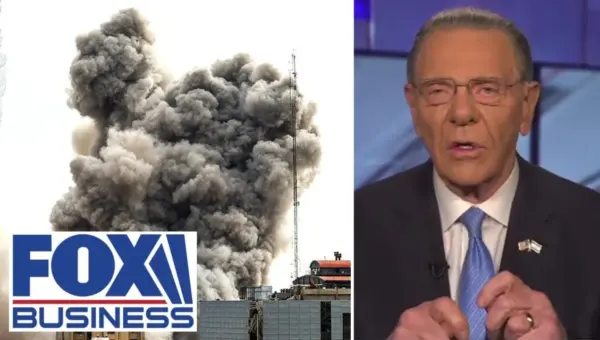
US Military’s “Extraordinary” Iran Operations Highlight Presidential Resolve
General Jack Keane highlights the extraordinary capabilities of the U.S. military and presidential resolve in successful Iran operations. The strategy aims to curb Iran's aggression and potentially trigger economic collapse.