Iran Hits F-35: Stealth’s Heat Signature Becomes Deadly Weakness
An F-35 stealth fighter was reportedly hit by an Iranian missile, exposing a key vulnerability: its heat signature. This incident highlights how advanced infrared detection can challenge even the most advanced stealth technology, forcing a reevaluation of air combat strategies.

Iran’s Missile Strike Exposes F-35 Vulnerability
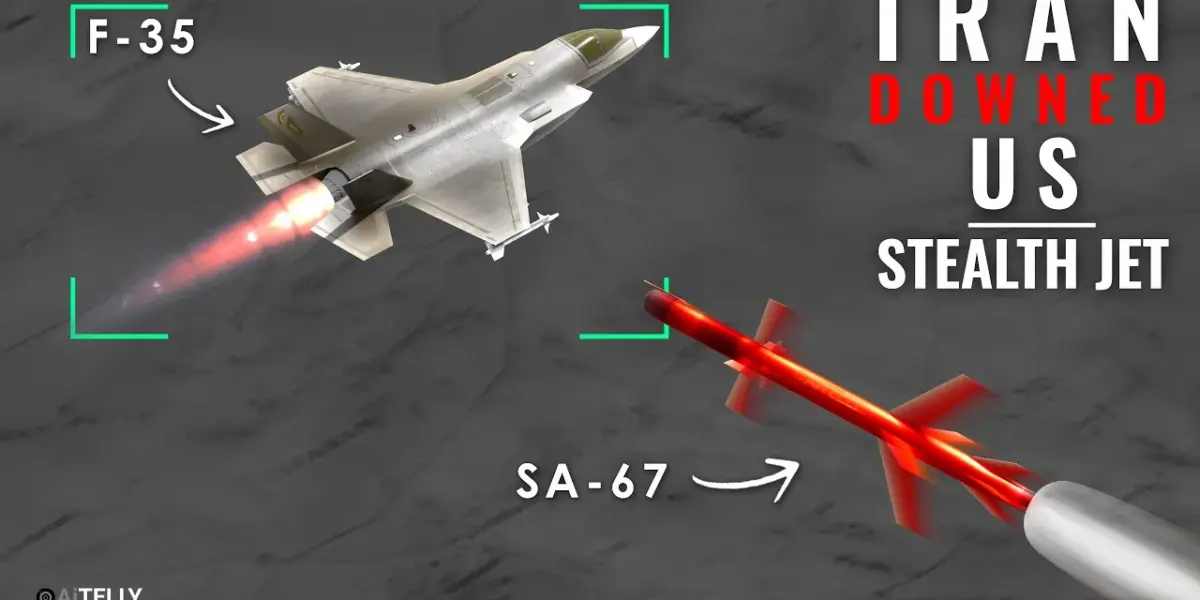
An F-35 stealth fighter, a symbol of modern air power, was reportedly hit by an Iranian missile during Operation Epic Fury. This event challenges the idea that advanced stealth planes are untouchable. The secret to how Iran managed this lies not in beating radar, but in exploiting the F-35’s heat. While the jet is designed to be almost invisible to radar, it still gives off a significant heat signature from its powerful engine.
This heat plume becomes a target for a different kind of missile. Modern air defense systems use infrared search and track (IRST) systems. These systems look for heat, not radio waves. Unlike radar, IRST systems don’t send out signals, so the F-35’s radar warning systems wouldn’t know it’s being targeted. This allows heat-seeking missiles to get close without the pilot knowing until it’s almost too late.
How Heat-Seeking Missiles Work
Radar-guided missiles are what most people think of when discussing air defense. They bounce radio waves off a target to find it. The F-35 is built to be very hard to detect this way. Its shape and special materials make its radar signature incredibly small, like comparing a bird to a plane on radar. However, the F-35’s Pratt & Whitney F135 engine is one of the most powerful in the world, and it produces a lot of heat.
Heat-seeking missiles, on the other hand, are designed to track this heat. They use passive sensors that scan the sky for heat sources. When a missile’s heat-seeking head locks onto the hot exhaust of the F-35’s engine, the pilot gets an alert. The F-35 has a system called the distributed aperture system, which uses six infrared cameras to give the pilot a 360-degree view. This system can detect the heat from an incoming missile’s rocket motor and warn the pilot instantly.
Fighting Back: Flares and Evasive Action
Once a heat-seeking missile is launched, it becomes a race against physics. The F-35 pilot’s best defense is to break the missile’s lock. This is done by flying at high speeds and pulling many Gs, which is a lot of force on the pilot’s body. At the same time, the pilot releases flares. These are special countermeasures that burn very hot, hotter than the jet’s engine. The idea is to trick the missile’s heat-seeking sensor into locking onto the decoy flares instead of the aircraft.
Even if the missile doesn’t hit the F-35 directly, it can still cause damage. If a missile gets close enough, its proximity fuse can detonate the warhead. The resulting shrapnel and shockwave can damage the F-35’s control surfaces, stealth coating, or internal systems. This type of damage would explain reports of an F-35 being hit but still managing to make an emergency landing.
Iran’s Unique Weapon: The 358 Missile
Iran’s reported success might be due to a weapon called the 358 anti-aircraft missile. This weapon is unique because it’s a mix between a kamikaze drone and a surface-to-air missile. It can fly slowly and loiter, or wait, in a specific area. Its optical and infrared sensors then look for a target. If a 358 or a similar advanced heat-seeking missile is guided by a ground-based IRST network, it could attack an F-35 using only heat detection. This bypasses the F-35’s radar-evading capabilities entirely.
While this weapon can engage targets close by, it has limitations. It likely can’t hit jets that are very far away. This incident shows that even fifth-generation fighters, which were thought to be safe in enemy airspace, face new threats. The growing ability to detect targets using infrared is changing modern warfare.
Operation Epic Fury: A Coordinated Assault
During Operation Epic Fury, the US used F-35s to lead attacks and gain control of the air, aiming to find and disable Iranian air defenses. Even though the US achieved air superiority, Iran was still a threat. The reason for using F-35s, even when Iran’s main air defense network was weakened, is that isolated missile batteries, like the S-300, can still be dangerous. A single lucky missile lock on a traditional fighter jet could be fatal. The risk of losing expensive aircraft and crews is too high for the Pentagon.
The US and Israel used F-35s to strike Iran while its air defenses were still active. They didn’t just rely on nearby bases. They brought two massive carrier strike groups close to Iran’s coast. The USS Abraham Lincoln and the USS Gerald R. Ford provided a powerful presence in the Arabian Sea and the Eastern Mediterranean. Israeli jets flew long distances to reach Iranian airspace, making timing critical for the attacks.
The Genius of Synchronization: Time on Target
Military planners used a tactic called “time on target.” This means that missiles fired from submarines, cruise missiles from ships, and bombs dropped from stealth bombers all hit their targets at the exact same moment. This complex plan involved launching weapons from different locations at different times. The goal was to create a sudden, overwhelming shock to Iran’s military system.
When the bombs hit, it was a display of “shock and awe.” But why did Iran’s air defenses seem to fail? The US military used advanced electronic warfare and cyber operations. They sent false data directly to Iranian radar screens, confusing their systems. Top Iranian air defense systems were overwhelmed by this electronic attack.
Decoys and Stealth: Opening the Door
To get stealth fighters into Iranian airspace, the US used a clever trick. They launched hundreds of decoys called Miniature Air-Launched Decoys (MALDs). These small drones looked like a large group of fighter jets to the confused Iranian radar operators. With the air defenses distracted and overwhelmed, stealth fighters like the F-35 and possibly F-22 Raptors flew through the airspace undetected. The Iranian air defense network was not just suppressed; it was effectively dismantled for a period.
Iran’s Retaliation and Ongoing Threats
Iran did retaliate, launching a wave of missiles and drones that targeted US bases in the region. These attacks hit bases in the UAE and Bahrain, causing casualties. Air defenses in Qatar and Kuwait were also targeted, and Israel reported massive mid-air interceptions over its cities. This shows that while the US and its allies have advanced technology, the conflict remains dangerous.
Why This Matters
This incident highlights a critical shift in modern warfare. Stealth technology, once thought to make aircraft invincible, has a known weakness: heat. As infrared detection technology improves, stealth aircraft may face greater risks. This forces military planners to rethink how they use these expensive assets and develop new strategies to counter evolving threats. The ability of Iran to damage an F-35, even if not a catastrophic hit, shows that nations with less advanced technology can still find ways to challenge powerful adversaries.
Historical Context and Future Outlook
For decades, air superiority has been a key goal in military conflicts. The development of stealth technology was a major leap forward, allowing aircraft to penetrate heavily defended airspace. However, every technology has countermeasures. The development of sophisticated infrared detection systems by nations like Iran and Russia represents a counter-trend to stealth. This creates an ongoing arms race where offensive and defensive technologies constantly evolve.
The future of air combat will likely involve a combination of technologies. Stealth will remain important, but it will need to be complemented by electronic warfare, decoys, and perhaps even new ways to mask heat signatures. The success of synchronized attacks, like those seen in Operation Epic Fury, also points to a future where coordinated assaults from multiple domains—air, sea, and cyber—will be decisive. The ability to degrade enemy defenses before launching manned aircraft will be crucial for mission success and pilot safety.
Implications for Air Power
The F-35 is a cornerstone of air forces around the world, representing a huge investment. An incident like this raises questions about its survivability in certain scenarios. It suggests that even the most advanced aircraft are not immune to attack and that their effectiveness depends on the broader support systems, including electronic warfare and intelligence. The ability to operate from carrier strike groups also shows the importance of naval power in projecting air power far from home bases.
The coordinated, multi-wave attacks described in the operation demonstrate a complex military strategy. This involved disabling air defenses with cruise missiles and decoys before sending in bombers and fighter jets. The use of tanker aircraft for mid-air refueling highlights the logistical challenges and planning required for long-range missions. This level of coordination is essential for achieving objectives while minimizing risks to aircraft and crews.
Conclusion
The engagement between an F-35 and an Iranian missile, likely an advanced heat-seeking variant, is a significant event. It underscores that technological superiority is not absolute. While the F-35’s stealth features protect it from radar, its heat signature remains a vulnerability. This incident serves as a reminder that warfare is constantly evolving, and adversaries will always seek ways to counter even the most advanced military assets. The development and deployment of sophisticated infrared detection and missile systems will continue to shape the future of air combat, demanding constant adaptation from all military powers.
Source: How an F-35 Got Hit by Iranian Missile in Operation Epic Fury (YouTube)

Related Articles


Dem Rep. Calls Trump’s Iran Threats ‘Apocalyptic’
Democratic Congresswoman Yasemin Anzari has strongly condemned President Trump's "apocalyptic" threats against Iran, warning of potential genocide and nuclear war. She is calling for the 25th Amendment to be invoked and is introducing articles of impeachment against Defense Secretary Pete Hegseth. Anzari fears the President's rhetoric could strengthen the Iranian regime and harm its people.
Iran’s Strait of Hormuz Trap: How the US Fights Back
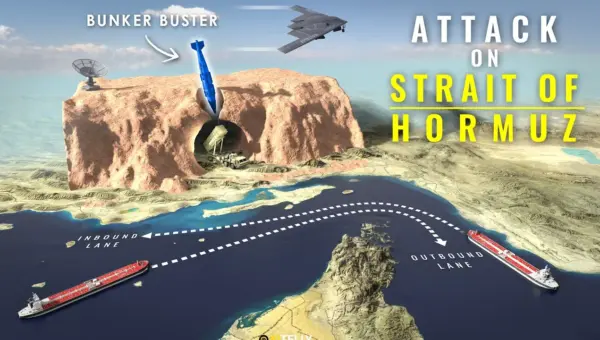
Iran's strategy to control the Strait of Hormuz involves using islands as bases for anti-ship missiles and launching swarm attacks with small boats. The US counters with advanced defense systems, surveillance drones, and powerful bunker-buster bombs, highlighting the ongoing tension in this vital global shipping lane.
US Aims to Cripple Iran’s Power Grid to Secure Strait of Hormuz
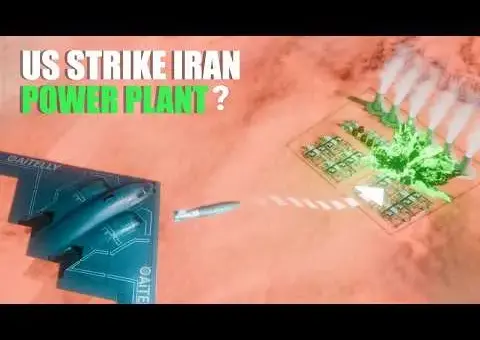
A new US strategy reportedly targets Iran's power grid, including major plants like Damavand, to force open the Strait of Hormuz. The plan involves multi-stage air attacks using advanced bombers and precision munitions to cripple energy infrastructure and cause cascading failures.