Iran Hit By Massive Explosion Amid Leader’s Bunker Hiding
A significant explosion has rocked an industrial complex in Abadan, Iran, fueling speculation about targeted attacks. Concurrently, unconfirmed reports suggest Supreme Leader Ayatollah Khamenei is hiding in a bunker, while U.S. stealth fighter deployments and stalled nuclear talks heighten regional tensions.

Iran Rocked by Major Industrial Explosion; Leader Reportedly in Bunker
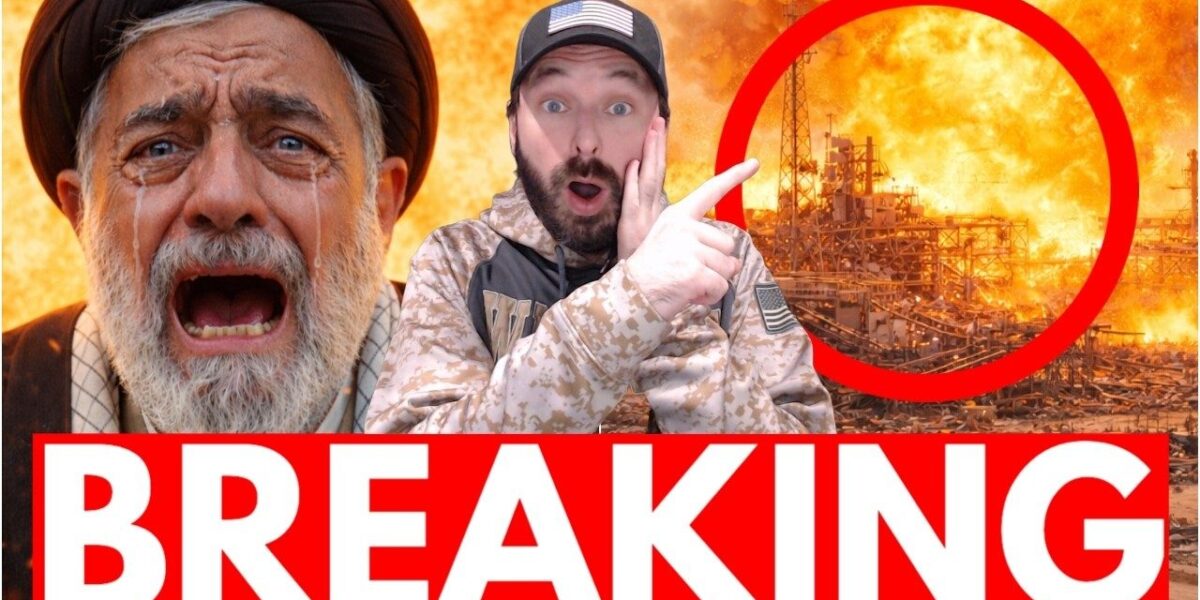
February 26, 2024 – A significant explosion has ripped through an industrial complex in Iran’s southern city of Abadan, adding to a growing list of mysterious incidents targeting critical infrastructure. The blast, which occurred on February 26th, has caused extensive damage, with footage circulating online showing intense flames and a devastated industrial site. This event coincides with unconfirmed reports suggesting Iran’s Supreme Leader, Ayatollah Ali Khamenei, has retreated to a secret underground bunker in Tehran, raising concerns about escalating tensions in the region.
Unexplained Blasts Plague Iranian Infrastructure
The explosion at the Abadan industrial complex is the latest in a series of unexplained incidents that have plagued Iran in recent months. While the Iranian government has frequently attributed such events to gas leaks, observers and open-source intelligence analyses suggest a pattern of targeted attacks on sensitive sites. These incidents have affected military installations, residential buildings housing regime officials, and industrial facilities crucial for producing war materials. By the assessment of some analysts, the frequency and location of these explosions point towards clandestine “black operations” designed to inflict damage without leaving traceable fingerprints.
Footage from the Abadan incident clearly depicts the scale of the destruction, with one observer noting, “This looks like a bomb went off. I can’t say that for sure, but when you look at the blast radius, when you look at what it looks like, the way it it happened to me, that looks like a bomb. That does not look like a gas leak at all.” The visual evidence, showing a completely destroyed industrial complex and large flames, fuels speculation beyond official government explanations.
Supreme Leader Allegedly in Hiding
Amidst these developments, reports from opposition outlet Iran International claim that Supreme Leader Ayatollah Khamenei has sought refuge in an underground bunker in Tehran. The report, citing sources within the Islamic Revolutionary Guard Corps (IRGC), alleges that the bunker is connected by extensive tunnel networks. Furthermore, senior regime officials attempting to meet with Khamenei are reportedly blindfolded to prevent disclosure of his location. This alleged move comes as security has been tightened, with some officials, including Ali Larijani, reportedly being taken blindfolded to meetings with the Ayatollah.
The report also details the alleged roles of Khamenei’s sons in managing affairs during his reported seclusion. Mojtaba Khamenei is said to be handling contacts with regime figures, while another son, Massad, is reportedly managing routine governmental operations. While these claims remain unconfirmed by official Iranian channels, the narrative of the nation’s top leader in hiding amplifies concerns about internal instability and external threats.
Stealth Fighters Surge in Region Amidst Failed Negotiations
The geopolitical landscape surrounding Iran appears to be rapidly intensifying. In a significant show of military readiness, the United States is reportedly deploying additional F-22 Raptor stealth fighter jets to the region. This deployment follows an initial forward deployment of 11 F-22s to southern Israel, with more aircraft arriving from the U.S. This surge in advanced stealth capabilities, including dozens of F-22s and F-35s, suggests a preparedness for potential conflict. Analysts note that such deployments are typically indicative of imminent operational plans, stating, “You don’t deploy entire squadrons of F-22 fighter jets unless you plan on using them.”
Adding to the military buildup, the USS Gerald R. Ford, the U.S. Navy’s largest and most advanced aircraft carrier, is expected to arrive off Israel’s coast within 24 hours, further bolstering regional military presence. In a critical defensive maneuver, U.S. Navy vessels have reportedly been evacuated from Bahrain and moved to open sea, a move interpreted as a preemptive measure against potential Iranian missile strikes.
Diplomatic Efforts Stall as Tensions Escalate
Meanwhile, diplomatic efforts to curb Iran’s nuclear and missile programs appear to be faltering. Negotiations currently underway in Switzerland have yielded little progress. A senior Iranian official reportedly told Al Jazeera, “We completely reject dismantling the nuke facilities, handing over uranium stockpiles, and the principle of zero enrichment forever.” This stance directly contradicts key demands from international negotiators, including the U.S., which seeks to halt Iran’s enrichment activities and prevent the development of nuclear weapons.
Further complicating matters, another Iranian official indicated that while Iran might consider a temporary freeze on enrichment, they reject any permanent dismantling of facilities, transfer of stockpiles, or discussions regarding their missile and defense programs. Senator Marco Rubio highlighted the broader threat posed by Iran’s ballistic missile program, stating, “They already possess weapons that could reach much of Europe already now as we speak. Uh and the ranges continue to grow every single year exponentially.” Rubio characterized Iran’s missile development as an “unsustainable threat” that extends beyond its nuclear ambitions.
Imminent Conflict Looms?
The convergence of a major industrial explosion in Iran, reports of the Supreme Leader’s retreat, a significant military buildup by the United States, and the apparent failure of diplomatic talks paints a grim picture. Israeli sources have indicated that if diplomatic gaps are not bridged, military action could be considered within the next 72 hours, with intelligence suggesting that adversaries are bracing for the commencement of hostilities. The strategic evacuation of U.S. naval assets from Bahrain is seen as one of the clearest indicators that war may be imminent, as such a move is typically reserved for situations where the outbreak of conflict is considered a matter of time.
As of February 26th, the situation remains extremely volatile. The combination of escalating military postures and stalled negotiations suggests that a peaceful resolution is increasingly unlikely. The coming days will be critical in determining whether de-escalation is possible or if the region is on the precipice of a wider conflict.
Source: Huge Explosion HAMMERS Iran – Dictator FLEES Into Bunker (YouTube)

Related Articles


Trump: Iran Strikes Ahead of Schedule, Expects ‘Great Deal for World’
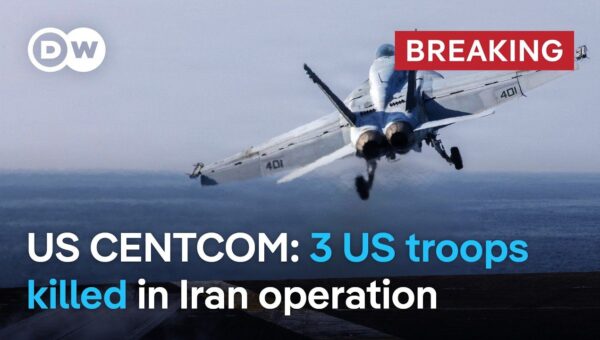
Three U.S. service members have been killed amid escalating conflict with Iran, President Trump confirmed. He stated that strikes are ahead of schedule, with senior Iranian leaders killed, and expressed optimism for a "great deal for the world" despite ongoing talks with Iranian officials.


US Launches War on Iran: Supreme Leader Killed
The United States and Israel have launched major military operations against Iran, reportedly killing Supreme Leader Ayatollah Ali Khamenei and a significant portion of the nation's leadership. While proponents hail the action as a necessary blow against terrorism, critics raise concerns about the lack of a clear strategy and the potential for a wider conflict.
Middle East on Edge: Iran Retaliates Amid Regional Instability
Iran has launched retaliatory strikes against Israel and US bases in the Gulf following the reported assassination of Supreme Leader Ayatollah Ali Khamenei. The attacks have resulted in US casualties and heightened regional anxiety, with neighboring countries bracing for potential spillover effects. The escalating crisis has exposed divisions within Iran and prompted diplomatic efforts to prevent a wider conflict.