Iran Ground Offensive? US, Israel Weigh Risky Options
Speculation mounts over potential US and Israeli ground operations in Iran following recent air strikes. Analyst Shahin Madaris suggests a full-scale invasion is unlikely due to logistical challenges, but limited special forces missions targeting nuclear materials or leadership are possible, albeit with significant risks to civilians and captured personnel.

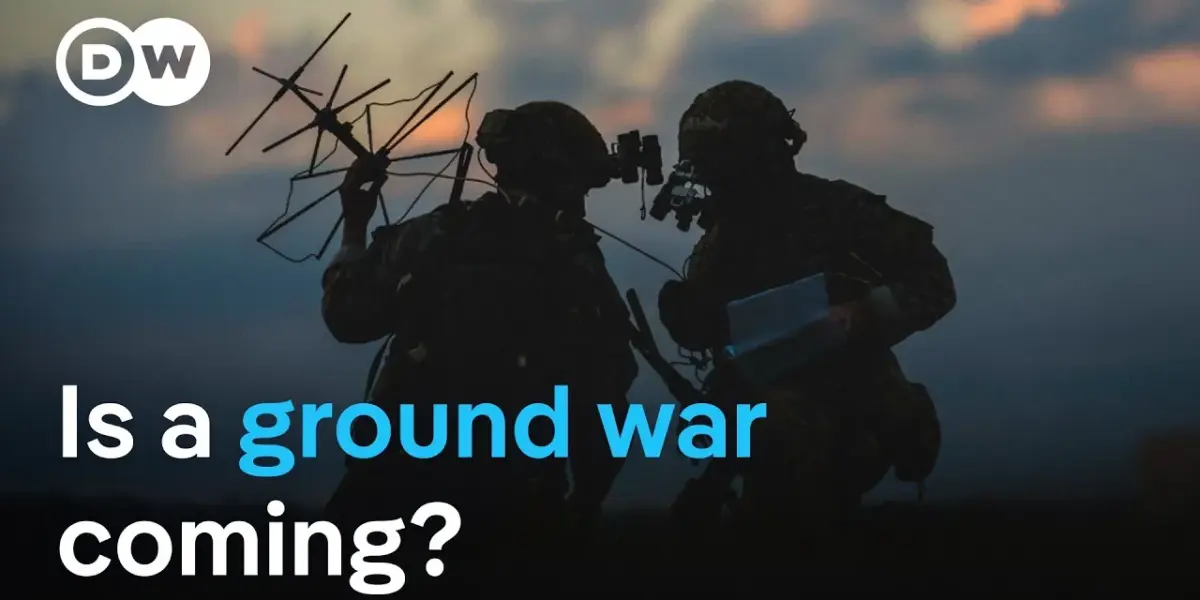
Iran War: Ground Offensive on the Horizon?
The possibility of United States and Israeli ground troops entering Iran is a growing concern following days of intense air strikes, raising critical questions about the potential escalation of the conflict. While President Trump has been notably reticent on the subject, his statements suggest that such a move, if undertaken, would be preceded by overwhelming force designed to decimate Iran’s fighting capabilities. This has led to speculation about the specific options being considered and their feasibility, particularly given Iran’s vast geography.
Assessing the Scale of a Potential Ground Invasion
Shahin Madaris, a Middle East analyst and director of the Iran team at the International Institute for the Study of Security, offers a stark assessment of the logistical challenges involved in a full-scale ground invasion. “Iran is a very vast and large country,” Madaris explains. “So because of this, if they want to go after regime change or if the US and Israel decide to eliminate and eradicate the Islamic Republic as a political system, this means that if we exclude the role of the people coming to the streets, they have to bring something between 800,000 to 1,200,000 soldiers to Iran in order to make sure they can eradicate the Islamic Republic.” Madaris deems such a massive deployment as “not possible anytime soon,” suggesting that a full-scale invasion is highly unlikely.
Limited Special Forces Operations: The More Likely Scenario
While a large-scale invasion appears improbable, Madaris outlines two more plausible scenarios involving limited ground operations by special forces. The first potential objective is the recovery of approximately 400 kg of 60% enriched uranium, a significant nuclear material stockpile held by Iran. The second, more audacious objective, could be the elimination of Iran’s newly appointed Supreme Leader, Mohseni, the son of the former leader. Madaris suggests that either of these operations might be preceded by airborne assaults to clear the way for special forces to enter.
The Human Cost: Civilian Risk in Urban Warfare
A significant concern highlighted by Madaris is the potential for high civilian casualties. He points out that elements of Iran’s military, and potentially political figures, may seek refuge within civilian infrastructure, including hospitals. “This is something that cannot be dealt with with drones and bombs or missiles because the number of civilian casualties will be quite high,” Madaris states. He posits that these are precisely the situations where the use of special forces might be deemed justifiable, as they could theoretically conduct more targeted operations with a reduced risk to non-combatants, although the inherent dangers remain immense.
High Stakes for Special Forces
Even with limited special forces involvement, the risks are substantial. Madaris warns that captured special forces personnel could face harsh treatment, with the Islamic Republic having a history of taking hostages, including dual citizens, to exert pressure on Western governments. “The sad thing is that the Islamic Republic is not going to treat them based on the Geneva Convention regarding the PWS,” he notes, referencing the treatment of prisoners of war.
Iran’s Military vs. Elite Foreign Forces
From a military standpoint, the transcript suggests a significant disparity in capabilities between Iran’s ground forces and potential US or Israeli special forces. While Iran may possess numerical superiority, Madaris emphasizes a critical deficit in training and modern weaponry. “The Islamic Republic’s ground troops might be high in number, but the lack of training and the lack of them being armed with new and uh recent technological weapons makes them quite vulnerable and makes them weak,” he states. In contrast, he asserts that “the American and probably the Israeli special forces or the airborne troops will be less, but they will be more enhanced and more efficient dealing with these troops.”
The Kurdish Factor: A Potential Wild Card
The role of Kurdish forces presents another complex dimension to the escalating situation. While possessing historical grievances against Tehran and being the only systematically ready armed groups capable of engaging Iranian forces on the ground, their involvement remains uncertain. President Trump’s statements have been contradictory, initially expressing openness to Kurdish intervention and later asking them not to get involved to avoid complicating matters, particularly for Turkey, a NATO ally with significant concerns about Kurdish autonomy. Despite these mixed signals and assurances given to Turkey, President Trump has reportedly been in contact with Kurdish leaders, including those in Washington D.C., leaving their potential role as a significant unknown.
Key Indicators to Watch
Madaris identifies the pronouncements of Iran’s new Supreme Leader, Mohseni, as a crucial indicator of future policy and potential targets. “Choosing Mushtab as the next supreme leader of Iran means that the Islamic Republic is not still letting go of the political will to revive the nuclear program, the ballistic missile program and the proxy groups within the Middle East region,” he observes. Therefore, “the attacks will continue against the Islamic Republic and they will try to eliminate the new supreme leader as well.” Madaris stresses the importance of analyzing the new leader’s first speech to discern the core policies and objectives of the Islamic Republic moving forward, which could signal the trajectory of the conflict.
DW News will continue to provide in-depth coverage and the latest updates on this developing story across all platforms.
Source: Iran war: Are we headed for a ground offensive? | DW News (YouTube)

Related Articles

Trump Rallies GOP at Florida Retreat Amid Multiple Crises
President Donald Trump addressed House Republicans at their annual policy retreat in Doral, Florida. The gathering focused on key issues including Iran tensions, immigration, and the Epstein investigation.

Iran’s “Unconditional Surrender” Demand: A Strategic Folly
President Trump's demand for Iran's unconditional surrender is a strategic miscalculation, ignoring the regime's decentralized structure and popular dissent. Historical precedents show air power alone rarely achieves such goals, leaving the US with unappealing options for a prolonged conflict.
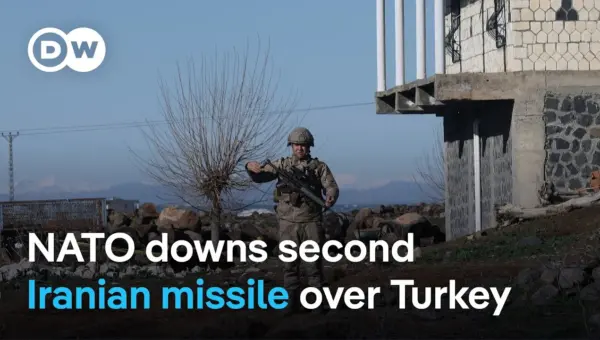
NATO Confirms Downing Second Iranian Missile Over Turkey
NATO confirmed it intercepted a second Iranian ballistic missile over Turkey, raising regional tensions. Turkey vows decisive action but seeks to avoid direct conflict with Iran, prioritizing diplomatic solutions amidst economic pressures.