Iran FM: US regime change calls are ‘mission impossible’
Iran's Foreign Minister dismissed US calls for regime change as 'mission impossible,' citing widespread public support for the Islamic Republic and a history of failed US interventions. He stated Iran is open to de-escalation but only if US aggression ceases.

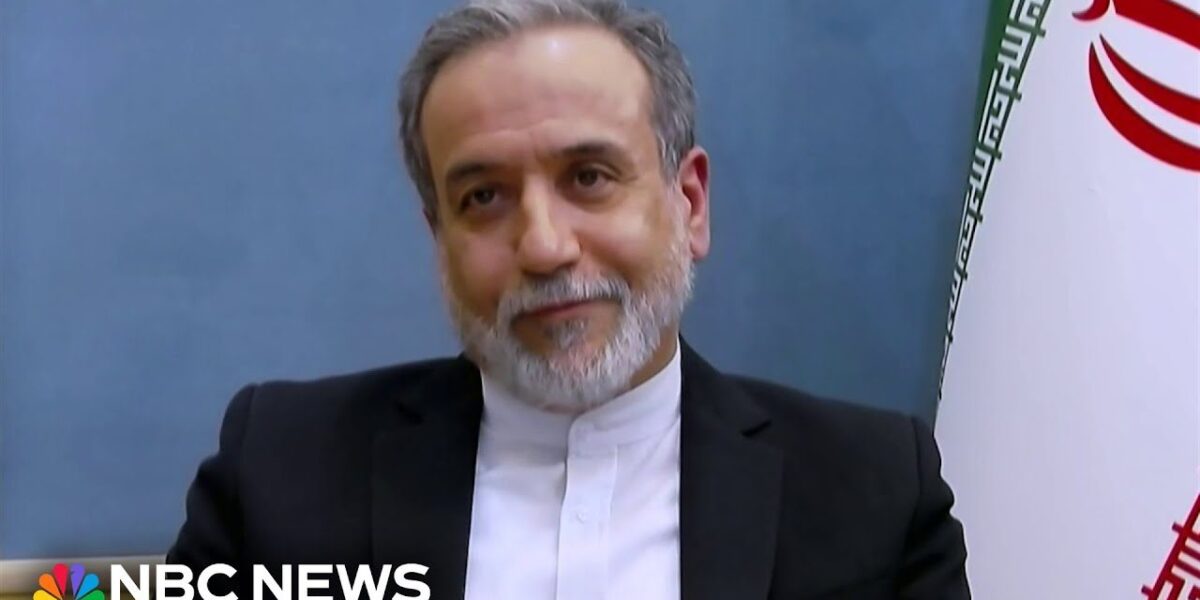
Iran’s Top Diplomat Dismisses US Regime Change Efforts as Futile
Iran’s Foreign Minister has characterized the United States’ calls for regime change in Iran as a “mission impossible,” asserting that such attempts have consistently failed over the past four decades and are destined to repeat that pattern. The comments come amid heightened tensions and amidst reports of unrest within Iran.
Rejection of External Interference
In a pointed response to remarks from the US President advocating for regime change, Iran’s Foreign Minister stated, “I think this is mission impossible. You know, for regime change, you cannot do regime change. While millions of people are supporting these so-called regime.” He cited the recent 47th anniversary of the Islamic Revolution, where an estimated 30 million Iranians reportedly took to the streets in support of the Islamic Republic and its system. This widespread public backing, he argued, makes external efforts to alter the government inherently unviable.
“You cannot, you know, change this regime because it’s the it’s the, you know, it’s supported by the people.”
The Foreign Minister acknowledged that dissenting voices exist within Iran but emphasized that the core support for the system remains strong. He further pointed to the country’s “very well-established political structure” as a significant obstacle to any externally engineered change. This is not the first time, he noted, that the US has pursued such a strategy.
History of Failed US Interventions
The top diplomat detailed a history of US-led attempts to destabilize Iran over the past 47 years. These efforts, he listed, have included coups, sanctions, backing Saddam Hussein’s eight-year war against Iran, imposing “snapback” sanctions at the UN Security Council, and supporting terrorist operations. “They have tried everything and all of them failed,” he declared, questioning the persistence of the US in repeating strategies that have yielded no success.
“If they want to repeat a failed experience, they won’t get any better result,” the minister warned.
Addressing Internal Unrest and Reassurance to the Public
When questioned about the apparent unrest and concern within Iran, with reports of smoke and panic in Tehran, the Foreign Minister maintained that “everything is under control.” However, he candidly admitted the existence of conflict and attacks, acknowledging casualties, including approximately 60 students killed in a school incident.
His message to the Iranian people was one of resilience and national pride. “We are a great nation with a great civilization. We have lasted for thousands of years and we know how to defend ourselves. We know how to deal with our enemies and we will survive when we become more stronger out of this,” he stated, projecting confidence in Iran’s ability to overcome current challenges.
US President’s Call to Action Deemed Interventionist
The Foreign Minister dismissed the US President’s encouragement to the Iranian people to “rise up” with promises of US support as a “hollow gesture.” He framed such statements as direct intervention in the internal affairs of another sovereign nation, questioning the right of any foreign leader, regardless of power, to dictate actions to the populace of another country.
“Isn’t that the intervention in the, you know, internal affairs of another country? If we had done so, what what have you said? So the president of the of another country, how no matter how powerful, has no right to decide for the people of another country to to order the people of another country what to do and what not to do.”
He drew a parallel between the President’s current rhetoric and past US actions, suggesting that the US has previously instructed specific actions, such as setting fires in government buildings, during “terrorist operations.” The minister questioned the legitimacy of such calls for popular uprising from a foreign entity.
Openness to De-escalation, Conditional on Cessation of Aggression
Regarding potential communication channels, the Foreign Minister stated that there were no ongoing backchannel talks but indicated Iran’s openness to dialogue if the US wished to engage. “If Americans want to talk to us, they know how they can contact me,” he said. Iran, he asserted, is interested in de-escalation, framing the current conflict as an “imposed war” initiated by the United States.
“This is not our war. This is an imposed war against us. This is a war of choice by the United States. And they have to pay for that. And I will, they will, they do. But as far as we are concerned, we don’t want war. We don’t want escalation in our region,” he explained. De-escalation, however, is contingent upon the cessation of US aggression and attacks.
“But the aggression should be stopped first. The attacks should be stopped first, and then there is the possibility to talk. And we can consider that. I’m not promising anything because our people are very angry right now. So if the war is stopped, if the aggression is stopped, then we will see how we can, you know, work for de-escalation,” the minister added.
Nuclear Program Concessions and Missed Opportunity
Reflecting on recent diplomatic efforts, the Foreign Minister mentioned a “semblance of an agreement” that had been discussed days prior, aimed at avoiding war. He clarified Iran’s position on its nuclear program, emphasizing a willingness to provide assurances of its peaceful nature, including robust verification and monitoring by the International Atomic Energy Agency (IAEA).
“What we are not prepared for is to give up our right. We are not giving up our right, including for enrichment, but we are ready to to build confidence on our nuclear program, to make sure that that our program is peaceful and would remain peaceful forever,” he stated. Iran offered significant concessions, including agreeing to enrichment based solely on its domestic needs, such as powering the Tehran Research Reactor, which supplies essential radioisotopes for nearly 2 million Iranians.
“We would continue our program based on our own needs. This is this is what we can do. And we are prepared to do that. And we can accept, you know, robust verifications and monitoring by the by the agency,” he added, expressing belief in the possibility of a deal that guarantees a peaceful nuclear program, leads to the lifting of sanctions, and enables economic cooperation.
The minister concluded by expressing bewilderment at the perceived missed opportunity by the US administration. “And I don’t know why the United States, why President Trump, Trump just missed that opportunity,” he lamented.
Looking Ahead: Path to De-escalation or Further Confrontation?
The Iranian Foreign Minister’s firm stance on the futility of US regime change efforts, coupled with his conditional openness to dialogue, sets the stage for continued diplomatic maneuvering. While Iran insists on the cessation of aggression as a prerequisite for de-escalation, the US maintains its pressure campaign. The coming weeks will be critical in determining whether diplomatic channels can be reopened to avert further escalation or if the cycle of confrontation will intensify, with significant implications for regional stability and global energy markets.
Source: Iran's FM: Trump's call for regime change is ‘mission impossible’ (YouTube)

Related Articles

US Regime Change Efforts: A History of Tactical Wins, Strategic Losses
A comprehensive review of U.S. interventions reveals a consistent pattern: while the United States is adept at tactically removing foreign governments, achieving strategic success—the establishment of stable, legitimate political orders—has proven exceedingly difficult. Historical analysis points to unintended consequences and long-term instability as common outcomes.

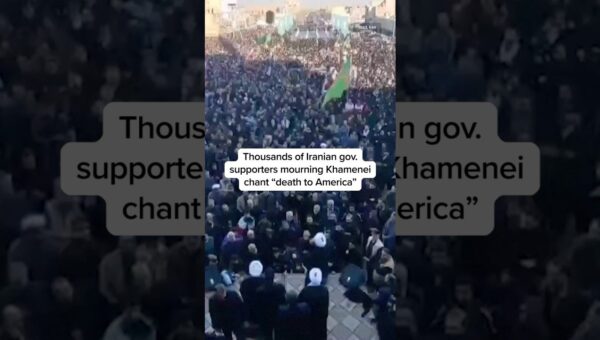
Thousands Mourn Khamenei, Chant ‘Death to America’ in Iran
Thousands gathered in Yazd, Iran, to mourn Supreme Leader Ayatollah Ali Khamenei following reported U.S. and Israeli strikes. The mourning ceremony was marked by chants of "Death to America," highlighting deep-seated anti-American sentiment amid geopolitical tensions.
Iran’s Regime Under Siege: Attacks Cripple Leadership, Impact Russia
Iran's regime is reportedly facing critical blows from targeted attacks, crippling its leadership and severing a vital military supply line to Russia. This dual pressure is significantly impacting Russia's war efforts in Ukraine, while internal dissent grows within Iran.