Iran Faces Uncertainty After Ayatollah’s Death in US Strike
Iran faces a period of profound uncertainty following the death of its long-time leader, Ayatollah, in a US-led strike. The event has triggered international diplomatic discussions, revealing divergent views among allies, while domestic reactions in Iran appear mixed.

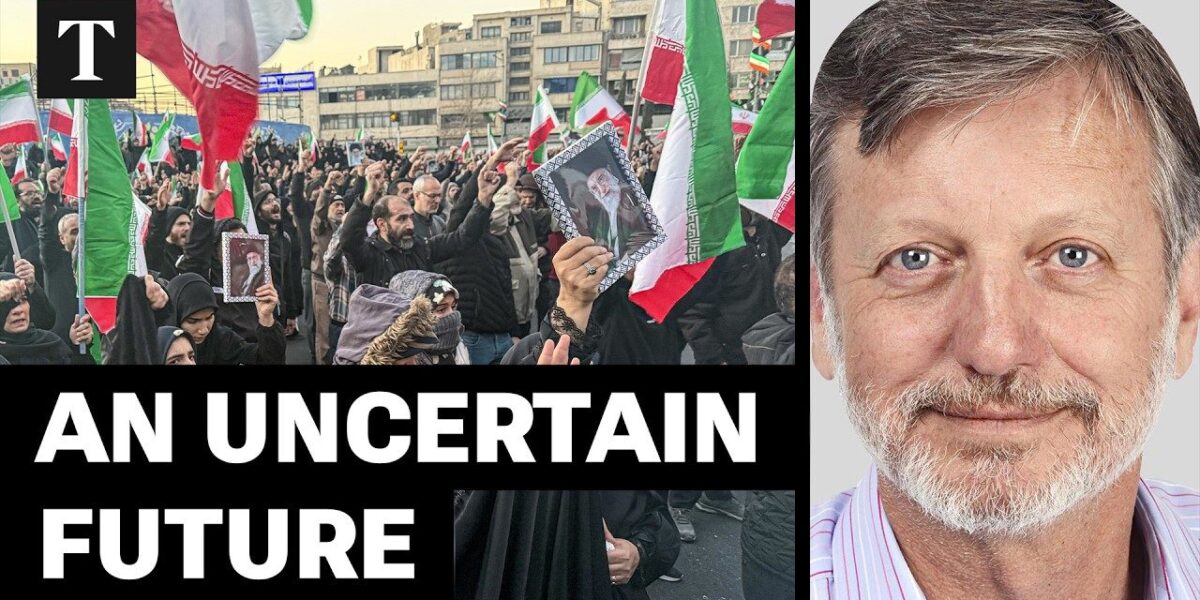
Iran Plunged into Uncertainty Following Ayatollah’s Death
The death of Iran’s long-standing leader, Ayatollah, in a targeted US-led strike has plunged the nation into a “period of great uncertainty,” marking one of the most consequential events since the 1979 revolution. The strike, reportedly carried out after intelligence provided by the CIA identified the Ayatollah attending a meeting with senior officials at his compound, has sent ripples through both domestic Iranian politics and international diplomacy.
International Response and Diplomatic Maneuvers
The international community is closely monitoring the situation, with US Secretary of State Marco Rubio scheduled to hold calls with G7 leaders to discuss the evolving geopolitical landscape. However, initial responses reveal a divergence of opinions among key allies.
E3 Nations Urge De-escalation
France and Germany, forming part of the E3 group along with the UK, have emphasized their non-involvement in the strikes and called for de-escalation. French President Emmanuel Macron issued a strong statement highlighting the “grave consequences for international peace and security” if war were to break out and advocated for a UN Security Council meeting. This stance contrasts with that of other G7 members.
Divergent G7 Positions
Canada, for instance, has expressed support for the US action, indicating a diversity of positions within the G7 that are expected to be a central topic in today’s discussions. The failure to secure a UN Security Council resolution prior to the 2003 invasion of Iraq, a situation reminiscent of past diplomatic challenges, looms in the background of these deliberations.
UK’s Position and Nuclear Concerns
The United Kingdom has officially condemned the Iranian regime as “abhorrent” but stressed its non-involvement in the strikes. British planes were reportedly in the skies over the region to protect national interests and allies, a move that followed reported disagreements between the UK and the US regarding the use of British facilities for such operations. A key concern for Britain remains Iran’s potential development of nuclear weapons, a stance reiterated by the Prime Minister.
Domestic Reactions and Succession Speculation
Inside Iran, reactions to the Ayatollah’s death are reportedly mixed. While some Iranian citizens have expressed jubilation, with video clips emerging of people celebrating in the streets and chanting anti-regime slogans, others are preparing to mourn. Ali Sufavi, a member of the Iranian parliament in exile, described the public mood as one where “nobody shed any tears over him, at least in Iran,” citing the Ayatollah’s alleged responsibility for the deaths of tens of thousands of Iranians.
Opaque Political System and Transition
Matthew Campbell, Foreign Features Editor for The Times and The Sunday Times, noted the opacity of Iran’s political system, making it difficult to immediately ascertain the full implications of the strike. He stated, “This is one of the most consequential events in Iran since the revolution in 79 and the death of Ayatollah um uh has is is basically going to plunge the country now into a period of great uncertainty.”
Potential Successors and Future Direction
Speculation is rife regarding the succession plan. Reports suggest the possibility of an interim three-man council or the ascension of the Ayatollah’s son, Mushtaraba, whose wife was among those killed in the attack along with other senior regime officials, including the defense minister. However, the Ayatollah’s own succession planning, reportedly underway for some time, remains unclear amidst the current turmoil.
The Gamble of Air Strikes and Regime Change
The effectiveness of the US and Israeli air strikes as a catalyst for change within Iran is a subject of debate. Campbell expressed skepticism about the ability of air strikes alone to bring about regime change, citing past experiences in places like Iraq where “boots on the ground” were ultimately necessary, with often disastrous outcomes. He cautioned that while a change in top leadership is certain, a fundamental shift in the regime’s deeply entrenched ideology is not guaranteed. “It’s hard to imagine the country suddenly abandoning some some of its deeply held and long-held policies,” he remarked.
Looking Ahead
As Iran navigates this critical juncture, the world watches closely for signs of the country’s future direction. The coming days are expected to provide crucial hints as to whether the recent events will embolden hardliners, potentially leading to retaliation, or empower more moderate factions within the regime. The long-term implications for regional stability and international relations remain uncertain.
Source: Iran To Face ‘Great Period Of Uncertainty’ Following Ayatollah’s Death | Matthew Campbell (YouTube)

Related Articles

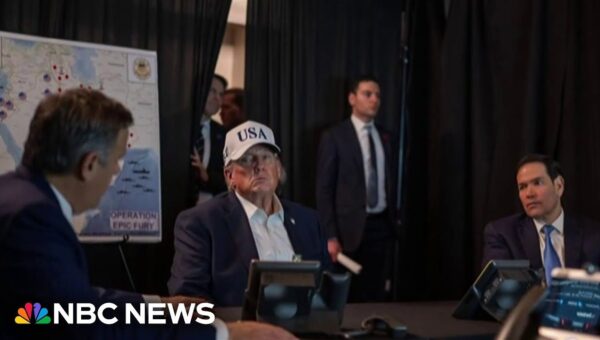
Trump: Iran Strikes Ahead of Schedule, Expects ‘Great Deal for World’
Three U.S. service members have been killed amid escalating conflict with Iran, President Trump confirmed. He stated that strikes are ahead of schedule, with senior Iranian leaders killed, and expressed optimism for a "great deal for the world" despite ongoing talks with Iranian officials.
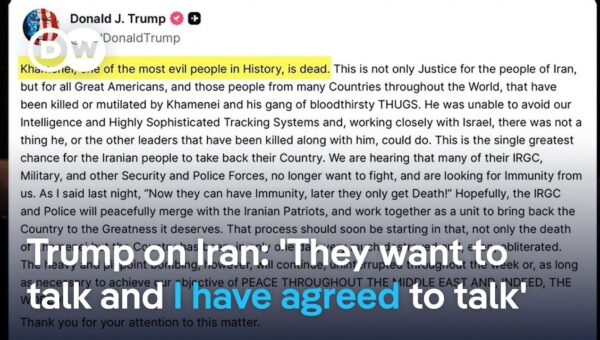
Trump Agrees to Talks with Iran After Major Strikes
President Donald Trump has agreed to talks with Iran's leadership following coordinated strikes that reportedly killed key figures, including the Supreme Leader. While Trump claims significant military successes, U.S. strategy remains unclear, and public opinion shows limited support for the actions amid rising American casualties.

Trump’s Putin Stance: US Strategy and Global Implications
Analysis suggests Donald Trump's approach to the Ukraine war involves pressuring Kyiv, but US involvement is crucial for resolution. China's influence and the 'MAGA' agenda's geopolitical implications are key factors.