Iran Faces Pressure as U.S. Boosts Military Presence
The U.S. is increasing its military presence in the Persian Gulf amid rising tensions with Iran. While Iran publicly rejects U.S. demands, private signals suggest openness to talks. The situation highlights the strategic importance of the Strait of Hormuz and the potential for wider conflict.

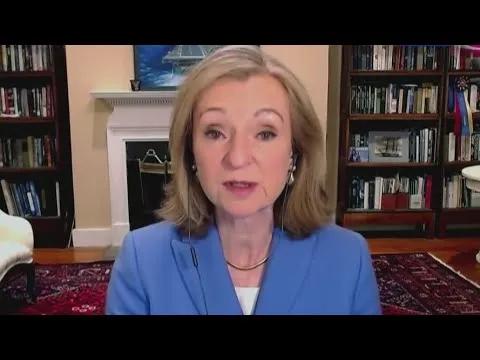
Iran Faces Pressure as U.S. Boosts Military Presence
Tensions are rising in the Persian Gulf as the United States increases its military presence and Iran faces growing pressure. Publicly, Iran rejects demands from the U.S. to stop its military actions. However, reports suggest that privately, Iran may be open to talks. This situation highlights the complex games played in international diplomacy, where public statements often differ from private intentions.
Iran’s Stance and Demands
Iran has publicly rejected proposals from the U.S., particularly concerning a cease-fire. Analysts suggest that Iran’s public stance is a tactic. Their demands include significant reparations and the U.S. withdrawing support from its Gulf allies. Iran also seeks to maintain control over the Strait of Hormuz, a vital shipping lane. An incident where Iran allegedly tried to charge ships passing through a side route near its coast underscores the importance of this waterway to Iran’s geopolitical goals.
U.S. Objectives and Military Buildup
The U.S. objective, referred to as Operation Epic Fury, aims to limit Iran’s military capabilities. This includes preventing Iran from developing drones, missiles, and a strong navy. The U.S. is reinforcing its position in the region. The 82nd Airborne Division is being sent, adding to the thousands of American troops already present. Two Marine Expeditionary Units are also expected to arrive soon. This buildup provides more options for the U.S. if it decides to escalate, offering additional helicopters, fighter jets, and ground forces.
Escalation Risks and Options
The U.S. faces difficult choices if it chooses to escalate. The main options are sending ground troops into Iran or bombing its nuclear facilities. Both actions carry significant risks. An alternative strategy involves continuing an intense air campaign, which has reportedly been effective. The arrival of naval assets like the USS Tripoli and the alert status of the 82nd Airborne suggest a readiness to apply more pressure. A key U.S. focus is ensuring Iran does not control the Strait of Hormuz, a critical global trade route.
Shifting Alliances and Diplomatic Efforts
Iran’s actions have reportedly strained relations with its neighbors, including the United Arab Emirates. This has pushed some Gulf states away from Iran. Pakistan may be acting as an intermediary, trying to help facilitate communication between the U.S. and Iran. There is also a possibility of allies like Britain and France joining a maritime security force. Such a force could provide zone defense around the Strait of Hormuz, similar to operations conducted in the Red Sea. Allies like Japan and South Korea could also participate.
Public Opinion and Economic Concerns
In the United States, public support for military action against Iran appears limited. A recent poll indicated that nearly 60% of Americans believe military action has gone too far. The economic impact of the tensions is also a concern. The U.S. President is known to be attentive to oil markets and the stock market, both of which can be affected by instability in the region. The economic fallout could spread if the situation worsens.
Global Impact: Why This Reshapes the World Order
The situation in the Strait of Hormuz is crucial for global trade. Approximately one million barrels of oil pass through this waterway daily. Iran’s ability to threaten or control this passage is its most significant bargaining chip. Any disruption to oil flow from the Persian Gulf can impact energy prices worldwide. The involvement of multiple nations in maritime security could signal a renewed effort towards collective security in vital shipping lanes. This could lead to a more coordinated approach to managing regional threats, but also risks drawing more countries into a potential conflict.
Historical Context
The Strait of Hormuz has long been a strategic chokepoint. Historically, control of such maritime passages has been a major factor in international power struggles. The U.S. has consistently sought to ensure freedom of navigation in this region. Past incidents and diplomatic efforts have aimed to prevent any single nation from dominating the strait. The current tensions echo past concerns about regional stability and the free flow of global commerce.
Future Scenarios
Several outcomes are possible. The U.S. could continue its pressure campaign, hoping to force Iran to negotiate. Diplomatic efforts, possibly involving intermediaries like Pakistan, could lead to de-escalation. However, miscalculation or an escalation of incidents could lead to direct military conflict, with severe consequences for the region and the global economy. The involvement of allies in a security force offers another path, potentially stabilizing the region through a multilateral approach.
Source: Iran has little bargaining power in discussions with U.S.: Analyst | Elizabeth Vargas Reports (YouTube)

Related Articles

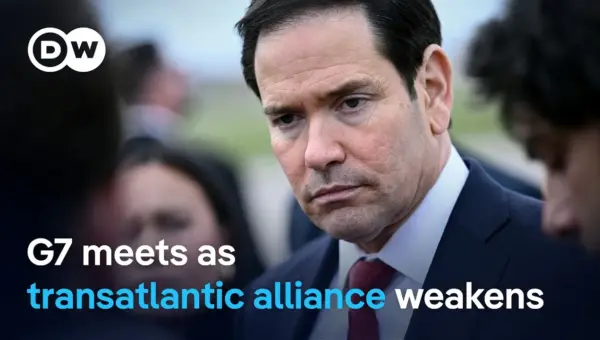
G7 Allies Clash Over Iran War Strategy, Urge Focus on Russia
G7 foreign ministers met in Paris, revealing deep divisions over the U.S. war with Iran. European allies urged the U.S. to pressure Russia, linking its actions to the conflict and fearing support for Ukraine will wane.
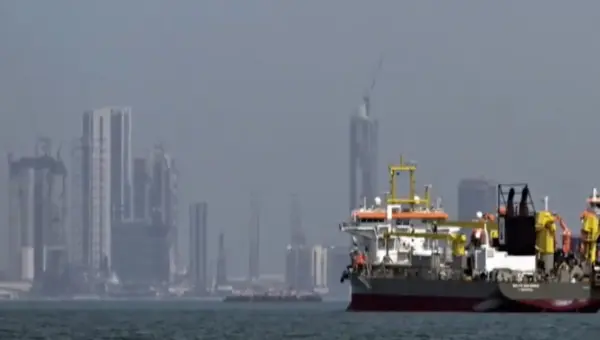
Iran Blocks China Ships, Exposing Beijing’s Weak Grip
Iran's recent decision to block Chinese ships at the Strait of Hormuz is exposing the limits of Beijing's influence in the Middle East. This action is causing delays and cancellations for Chinese manufacturers, turning a perceived geopolitical win into an economic strain.
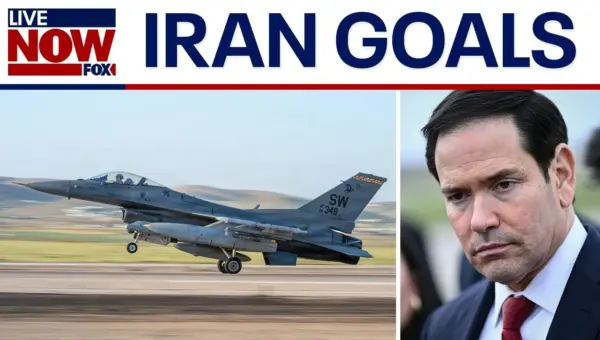
Rubio: US Can Achieve Iran War Goals Without Troops
Senator Marco Rubio outlined a strategy to counter Iran without deploying U.S. ground troops, focusing on weakening the regime and enhancing maritime security. He also criticized Cuba's economic system and expressed concerns about West Bank violence.