Iran Escalates: Ships Attacked, Nukes Targeted in Hormuz
Recent attacks on ships in the Strait of Hormuz and potential strikes on Iran's nuclear sites signal a dramatic escalation. This analysis delves into the strategic implications, historical context, and future outlook of Iran's confrontational stance.

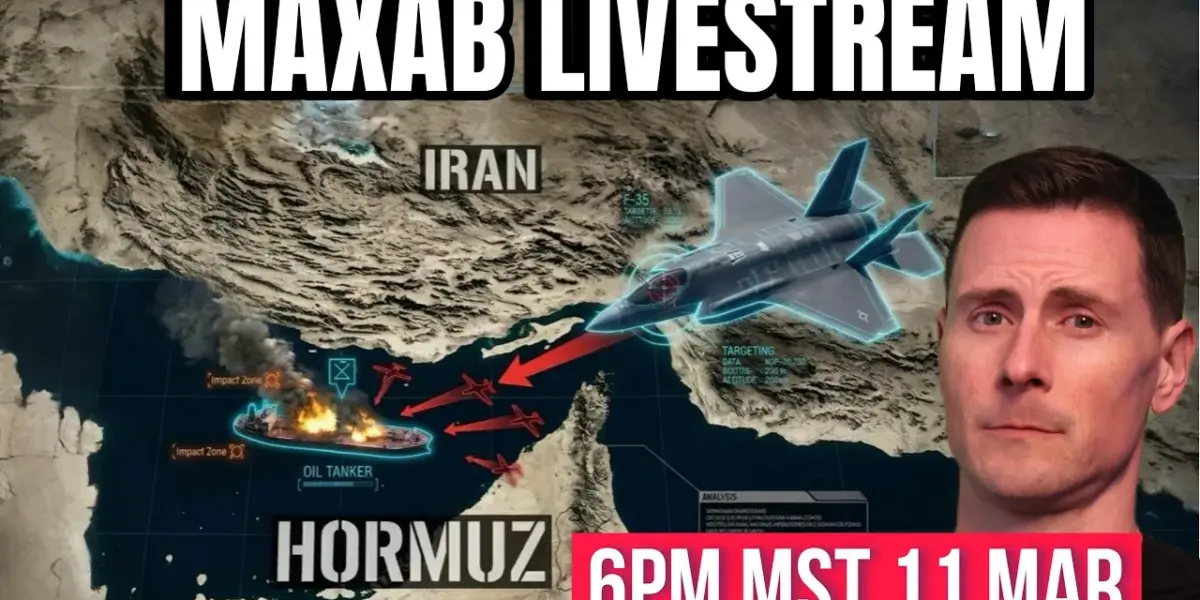
Iran Escalates: Ships Attacked, Nukes Targeted in Hormuz
Recent events in the Strait of Hormuz have dramatically heightened geopolitical tensions, with reports of Iran targeting commercial shipping and significant strikes on what appear to be nuclear-related sites. This escalation signals a potential turning point in the long-standing conflict between Iran and its adversaries, particularly the United States and Israel.
The Strait of Hormuz: A Critical Chokepoint Under Fire
The Strait of Hormuz, a narrow waterway through which a significant portion of the world’s oil passes, has become the focal point of recent hostilities. Reports indicate that Iran has directly targeted multiple oil tankers, a move that aligns with its stated goal of creating chaos and undermining regional stability. The Islamic Revolutionary Guard Corps (IRGC) has long viewed control or disruption of this chokepoint as a strategic victory. The attacks, described as potentially utilizing advanced drones like the Shahed, demonstrate an evolving Iranian capability to strike moving targets in vital shipping lanes. The visual evidence of explosions and subsequent fires on at least one tanker suggests a deliberate and impactful assault, raising concerns about the safety of maritime traffic and the potential for further disruption to global energy supplies.
Strikes on Qom: Targeting Iran’s Nuclear Ambitions?
Adding to the escalating situation, unconfirmed reports suggest a massive explosion near Qom, a city known to host significant nuclear research and enrichment facilities. The scale of the explosion, described as potentially involving a GBU-57 bunker buster bomb, points to a strike of immense power, possibly aimed at Iran’s nuclear program. Such an attack, if confirmed and attributed to Israel, would represent a significant escalation, moving beyond conventional military engagements to directly targeting Iran’s most sensitive strategic assets. The mention of a “showstopper bomb” and the specific targeting of Qom suggest a deliberate effort to degrade Iran’s ability to develop nuclear weapons, a long-held concern for international powers.
Netanyahu’s Stance: Regime Change on the Horizon?
In parallel with these military developments, Israeli Prime Minister Netanyahu has reportedly spoken of a “well-organized plan with many surprises to undermine the regime and enable change” in Iran. This rhetoric, though not explicitly detailing military actions, suggests a strategic intent to destabilize the current Iranian leadership. Coupled with the potential strikes on nuclear facilities, this indicates a coordinated effort to pressure the Iranian regime, possibly aiming for its eventual downfall or significant alteration. The historical context here is crucial; Iran’s revolutionary ideology, often expressed through anti-Israel and anti-US sentiments, has been a constant source of friction. The current administration’s willingness to take direct action, contrasted with previous approaches that focused on appeasement or sanctions, marks a significant shift.
Historical Context: The “Date with Destiny”
The current events are framed within a broader narrative of Iran’s 47-year trajectory under its current regime. The analysis suggests that the leadership has consistently driven towards a confrontation, rejecting numerous diplomatic “offramps” and opportunities for de-escalation. This path, characterized by radical ideology and a persistent stance of defiance against the West, is seen as an inevitable march towards a critical juncture, a “date with destiny.” The historical study of Iran, particularly within military and intelligence circles, has long identified this potential for confrontation, with academic projections dating back to the late 2000s highlighting Iran as a probable future conflict zone.
The Role of Ideology and Governance
A key theme emerging from the analysis is the potent influence of religious ideology on governance in Iran. The speaker distinguishes between personal faith, which is seen as guiding and morally constructive, and the governance of a state by religious dogma, which can lead to extremism and oppression. The Iranian military’s allegiance to a religious ideology, rather than an elected civilian leadership, is presented as a fundamental aspect of the regime’s structure and a reason for its confrontational stance. This ideological fervor, coupled with a history of human rights abuses against its own citizens who dissent, is viewed as a driver of both internal conflict and external aggression. The targeting of individuals who do not adhere to the state’s interpretation of faith, alongside the pursuit of nuclear weapons and ballistic missile development, paints a picture of a regime whose actions are deeply rooted in its unique ideological framework.
Shifting US Policy and Strategic Calculus
The current situation is also characterized by a perceived shift in US policy. The analysis posits that the present administration possesses a “backbone,” indicating a willingness to engage in more assertive actions compared to previous administrations. While past leaders like Bush and Obama provided significant financial aid or pursued different diplomatic avenues, the current context of Iran’s advanced ballistic missile program and its persistent pursuit of nuclear capabilities has created what is described as a “worst-case scenario” for Iran. This, in turn, has led to a more direct and robust response, including the potential use of advanced weaponry and strikes on strategic sites. The strategy appears to be one of direct confrontation, an “only way out is through” approach, acknowledging the difficulty but necessity of addressing Iran’s actions head-on.
The Broader Regional Impact
The implications extend beyond Iran and its immediate adversaries. The Gulf states, many of whom are Muslim-majority nations, are presented as desiring peace and prosperity. Their position is contrasted with that of Iran, where religious ideology has led to violence and instability. The presence of a significant US military contingent in the Middle East, composed of individuals from diverse faiths working together, is highlighted as a force for stability against regimes that use religion to justify violence. The potential for Iranian escalation through asymmetric attacks, such as cyber warfare or proxy conflicts, remains a significant concern, as these tactics have been a hallmark of the IRGC’s strategy.
Why This Matters
The events unfolding in and around the Strait of Hormuz, coupled with potential strikes on Iran’s nuclear infrastructure, are of paramount importance for several reasons. Firstly, they directly threaten global energy security by targeting a vital shipping lane. Secondly, they bring the world closer to a potential nuclear-armed Iran, a scenario with profound regional and global security implications. Thirdly, they signal a significant shift in geopolitical strategy, with a more assertive stance being taken against a regime long accused of destabilizing activities. The outcome of these escalating tensions could reshape the Middle East and impact international relations for years to come. The willingness of multiple actors, including the US and Israel, to take direct and potentially preemptive action suggests that the diplomatic playbook may have fundamentally changed, leading to a more volatile but perhaps more decisive phase in confronting Iran’s strategic ambitions.
Future Outlook
The immediate future likely holds continued high tensions. Iran may retaliate through asymmetric means, or further direct confrontations could occur. The international community faces the challenge of managing this escalation while preventing a wider conflict. The effectiveness of current military actions in deterring Iran’s nuclear program and its aggressive regional posture remains to be seen. The long-term outlook depends on whether Iran’s leadership perceives its current path as sustainable or whether internal and external pressures force a significant policy shift. The analysis suggests that Iran’s current trajectory, driven by its ideological imperatives, makes a direct confrontation increasingly probable, leading to a period of heightened risk and uncertainty.
Source: Iran Strikes Ships in Straits of Hormuz LIVE | 6pm MST 11 mar (YouTube)

Related Articles


G7 Allies Clash Over Iran War Strategy, Urge Focus on Russia
G7 foreign ministers met in Paris, revealing deep divisions over the U.S. war with Iran. European allies urged the U.S. to pressure Russia, linking its actions to the conflict and fearing support for Ukraine will wane.

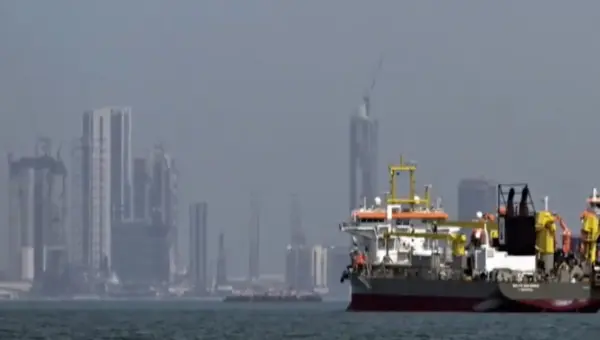
Iran Blocks China Ships, Exposing Beijing’s Weak Grip
Iran's recent decision to block Chinese ships at the Strait of Hormuz is exposing the limits of Beijing's influence in the Middle East. This action is causing delays and cancellations for Chinese manufacturers, turning a perceived geopolitical win into an economic strain.
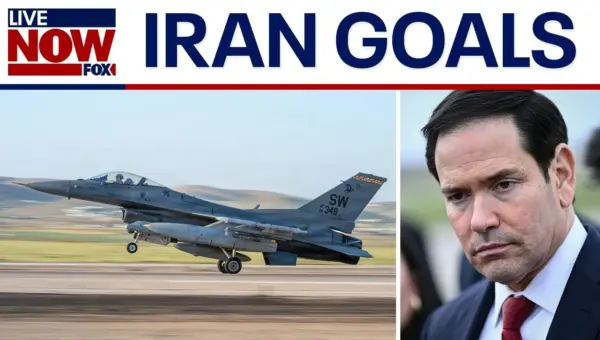
Rubio: US Can Achieve Iran War Goals Without Troops
Senator Marco Rubio outlined a strategy to counter Iran without deploying U.S. ground troops, focusing on weakening the regime and enhancing maritime security. He also criticized Cuba's economic system and expressed concerns about West Bank violence.