Iran Escalates Middle East Attacks Amidst Shifting US Stance
Iran has escalated attacks on shipping and energy infrastructure across the Middle East, triggering global oil price surges. Meanwhile, the U.S. faces scrutiny over mixed messaging on the conflict and a preliminary investigation into a deadly U.S. missile strike on an Iranian school.

Iran Escalates Middle East Attacks Amidst Shifting US Stance
The Middle East is witnessing a significant escalation of conflict on multiple fronts as Iran intensifies its attacks on shipping traffic and energy infrastructure. Despite claims by U.S. officials that American and Israeli aerial assaults have crippled Iran’s air defense capabilities, the nation continues to launch missiles and drones across the region, impacting global markets and raising questions about the U.S. administration’s strategy and messaging.
Regional Impact and Market Volatility
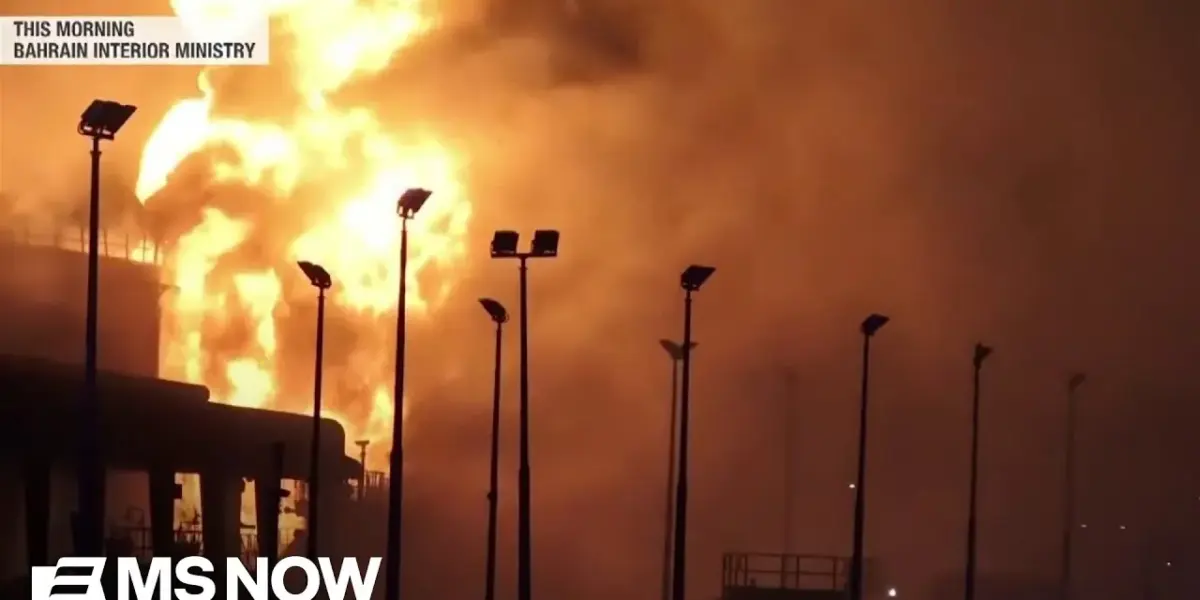
New video footage from Bahrain depicts firefighters battling a massive blaze at a fuel storage facility following an Iranian strike. In Iraq, oil port operations were halted due to deadly attacks on two foreign oil tankers, and a container ship off the coast of Dubai was also targeted. These assaults triggered a surge in global oil prices, briefly exceeding $100 a barrel, even as a coalition of over 30 countries pledged to tap into strategic reserves to stabilize volatile markets.
Conflicting Messages from the White House
President Trump’s public statements regarding the conflict have presented a complex and often contradictory narrative. While downplaying the scale of the engagement, he has also highlighted the perceived success of U.S. military operations. In a recent address, President Trump described the military action as a “little excursion” that would prevent a larger war, while simultaneously stating, “the war is going to be, I mean, for them it’s a war. For us it turned out to be easier than we thought.” This duality in language has led to confusion regarding the administration’s objectives and the actual nature of the conflict.
“We had to take this little couple of weeks, few weeks of excursion, but it’s been incredible. Our military is unbelievable, the job they’re doing… So we had to take an excursion, but it’s doing well. The market’s holding up well. Prices are coming down very substantially. Oil will be coming down.” – President Trump
The shifting timelines and ambiguous descriptions have made it challenging for advisors to brief lawmakers and other stakeholders on clear objectives and exit strategies. This lack of clarity, according to analysts, hinders public understanding of the administration’s actions.
Investigation into Deadly Tomahawk Strike
Adding a critical dimension to the unfolding situation is a preliminary Pentagon investigation that suggests the United States may be responsible for a deadly Tomahawk missile strike on an elementary school in Iran. The strike, which occurred on the first day of U.S. operations, reportedly killed at least 170 people, with a significant number being children. U.S. officials familiar with the investigation indicate that outdated targeting information, which misidentified the school as part of an adjacent military complex, may have led to the fatal incident. The school building had previously been part of an Iranian Revolutionary Guard base before being converted into an educational facility.
The preliminary findings, first reported by The New York Times, suggest that U.S. Central Command officers utilized data from the Defense Intelligence Agency that was no longer accurate. While the investigation is ongoing, questions persist about the provision of such outdated information, potentially marking one of the most significant military errors in decades. This revelation stands in stark contrast to President Trump’s earlier assertions that Iran might have been responsible for the strike.
Divergent Strategies Between the U.S. and Israel
Shashank Joshi, Defense Editor at The Economist, highlighted potential divergences in strategy and objectives between the United States and Israel. While the Trump administration appears sensitive to the economic repercussions of the conflict and may seek a swift conclusion, Israeli officials reportedly believe there are still numerous targets to pursue and would prefer a prolonged campaign aimed at degrading Iran’s regime.
Joshi noted that planning for the current operation between U.S. Central Command and the Israeli Defense Forces has been ongoing since last summer, indicating a joint effort rather than the U.S. being reluctantly drawn in. However, tactical differences are apparent. An example cited was an Israeli strike on an Iranian oil storage tank outside Tehran, which the U.S. administration reportedly had reservations about, particularly concerning the targeting of energy infrastructure crucial for Iran’s potential reconstruction.
“The Trump administration clearly is much, much more sensitive to the ramifications of the economic turmoil that we are seeing. And they may absolutely call a halt to this campaign, well short of that point, while the regime is still standing and likely to survive.” – Shashank Joshi, The Economist
Furthermore, Joshi cautioned that the end of the conflict is not solely dependent on U.S. decisions. Iran retains significant missile and drone capabilities and may seek concessions, such as a halt to energy strikes in the Strait of Hormuz, before agreeing to a ceasefire. This suggests that Iran’s actions could influence the timeline, potentially diverging from U.S. objectives.
Broader Implications and Future Outlook
The use of euphemistic language, such as referring to the conflict as an “excursion” rather than a war, has been compared to Russia’s terminology regarding its invasion of Ukraine. Analysts suggest this linguistic approach may be intended to avoid legal and political ramifications but ultimately hinders public comprehension of the war’s objectives and magnitude. The administration’s failure to adequately articulate its goals to the American public remains a significant point of concern.
As the situation continues to evolve, key areas to watch include the U.S. administration’s messaging clarity, the impact of ongoing energy market volatility, the progress of the investigation into the school strike, and the evolving strategic alignment between the U.S. and Israel. The potential for Iran to exert influence on the conflict’s duration and terms also remains a critical factor.
Source: Iran launches new attacks across Middle East (YouTube)

Related Articles
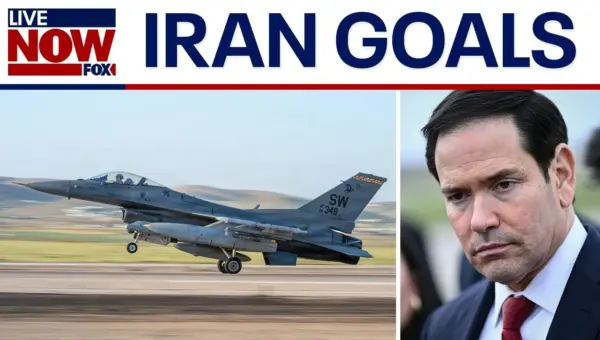
Rubio: US Can Achieve Iran War Goals Without Troops
Senator Marco Rubio outlined a strategy to counter Iran without deploying U.S. ground troops, focusing on weakening the regime and enhancing maritime security. He also criticized Cuba's economic system and expressed concerns about West Bank violence.


Israelis Forge Resilience Amidst Constant Bomb Shelter Drills
Life in Israel is a blend of resilience and constant vigilance, with many families adapting to frequent bomb shelter drills and even sleeping in makeshift shelters. Despite ongoing missile attacks, Israelis strive to maintain normalcy, though businesses face disruption and emotional fatigue is a growing concern.
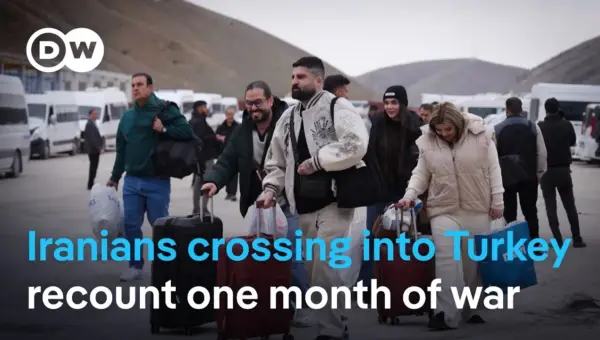
Iran War Exodus: Refugees Flee to Turkey Amidst Bombings
A train from Tehran brings refugees to Turkey, fleeing daily bombings and economic collapse. Many express deep fear for loved ones left behind, while some hold onto national pride and hope for victory. The conflict's impact is also felt economically in Turkey, with rising gas prices.