Iran Escalates Conflict: Oil Prices Surge Amid Strait of Hormuz Crisis
Iran's escalation of hostilities, including missile strikes and attacks on oil tankers near the Strait of Hormuz, has sent shockwaves through global markets, driving oil prices to $100 a barrel. The U.S. and allies are releasing strategic oil reserves, but the conflict's impact on energy supply and international relations continues to unfold.


Iran Escalates Conflict: Oil Prices Surge Amid Strait of Hormuz Crisis
DUBAI, UAE – March 12 – The simmering conflict between Iran and the United States intensified overnight as Iran launched what state media described as its most significant operation since the war began, firing advanced ballistic missiles toward Tel Aviv and Haifa in Israel. Simultaneously, U.S. forces conducted retaliatory strikes, eliminating 16 Iranian mine layers and multiple naval vessels near the critical Strait of Hormuz. This escalating confrontation has effectively halted nearly all oil shipments through the vital waterway, which accounts for approximately one-fifth of the world’s oil supply, sending global oil prices soaring and prompting international efforts to stabilize the market.
Strait of Hormuz Under Siege
The Strait of Hormuz, a narrow 20-nautical-mile-wide passage, has become the focal point of the Middle East conflict. Iran’s actions, including the alleged use of unmanned boats filled with explosives, have targeted commercial shipping, with at least three oil tankers struck in separate incidents near the strait. A British maritime monitoring agency confirmed attacks on vessels, including a Thai bulk carrier hit by an unknown projectile in the Persian Gulf. These attacks have created a palpable sense of unease, impacting the psychological landscape of regional commerce hubs like Dubai, even as defenses have largely prevented significant casualties.
“The passageway has become the focal point of the Middle East. The U.S. and Iran are fighting for control of that vital shipping lane. 20% of the world’s oil typically passes through it.”
Keir Simmons, NBC News Chief International Correspondent, reporting from Dubai, described the situation on the ground. “The UAE has managed to stop, most frankly, of the missiles and drones that are targeted on this city and on this country,” Simmons stated, “but the UAE has suffered 50% of the attacks, and that is having an impact on the psychology of the place, even if mostly there are people wounded.” He added that Iran’s strategy appears aimed at disrupting global economic lifelines by targeting the Strait of Hormuz and economic centers like Dubai, which are partners and allies of the U.S.
Global Oil Market Reacts
In response to the escalating crisis and the threat to global energy supplies, the International Energy Agency (IEA) has agreed to release 400 million barrels of oil from member countries’ reserves. The U.S. Department of Energy announced that 172 million barrels will come from the Strategic Petroleum Reserve. However, this move has yet to significantly curb oil prices, which briefly touched $100 a barrel again. According to the Department of Energy, the full impact of the reserve release may take up to 120 days to materialize.
President Trump, speaking at a rally in Kentucky, addressed the rising oil prices, asserting that the conflict would end quickly and lead to lower prices. He defended the decision to engage militarily, stating, “The main thing is we have to win this thing, win it quickly.” However, analysts suggest that ending such conflicts is often more complex than starting them, and Iran has signaled its intent to continue targeting the Gulf unless U.S. bases are removed from the region.
U.S. Military Assesses Costs and Strategy
The financial implications of the conflict are substantial. A closed-door briefing revealed that the estimated cost for the first six days of the war was $11.3 billion. Lawmakers, particularly Democrats, are calling for more transparency and public hearings regarding the war’s expenditure, while Republicans argue that the administration has been transparent and that such hearings could be used for political embarrassment.
Military analysts discussed the complex strategy required to reopen the Strait of Hormuz. Colonel Steve Warren, a military analyst, explained that air power alone would be insufficient. “We’ll have to put U.S. naval vessels on patrol inside that strait to give those captains, those skippers confidence that they’re going to be safe,” he said, highlighting the psychological element Iran is leveraging.
The U.S. military is also investigating a February 28th strike on an elementary school in Iran that reportedly killed over 170 people. Preliminary findings suggest outdated intelligence may have led to the deadly missile strike, with a U.S. Tomahawk missile potentially responsible. Investigations are ongoing to determine accountability, with potential consequences ranging from career derailment to court-martials if gross negligence or incompetence is found.
Severe Weather Strikes the Midwest
Beyond the international crisis, severe weather has devastated parts of the American Midwest. A series of powerful storms spawned at least 16 tornadoes across several states, resulting in two fatalities and at least ten injuries. Homes and structures have been heavily damaged, with dozens completely destroyed. Millions of people are waking up to winter alerts, with some areas expecting up to a foot of snow. Crews are working to restore power to over 200,000 customers affected by the widespread outages.
Bridging Generational Divides
In a heartwarming initiative amidst the global turmoil, a project called “Call a Boomer” at Boston University is connecting Gen Z students with seniors in Reno, Nevada, via a payphone outside a coffee shop. This social experiment, created by Matter Neuroscience, aims to combat loneliness by fostering intergenerational communication. The free calls offer a unique way for younger generations to engage with and learn from their elders, providing a sweet throwback to a simpler form of connection.
What’s Next
All eyes remain on the Strait of Hormuz as the U.S. and Iran continue their standoff. The effectiveness of the strategic oil reserve release and potential diplomatic efforts will be crucial in stabilizing global energy markets. Domestically, the nation braces for the ongoing severe weather impacts while grappling with the economic and political ramifications of the escalating international conflict.
Source: LIVE: NBC News NOW – March 12 (YouTube)

Related Articles

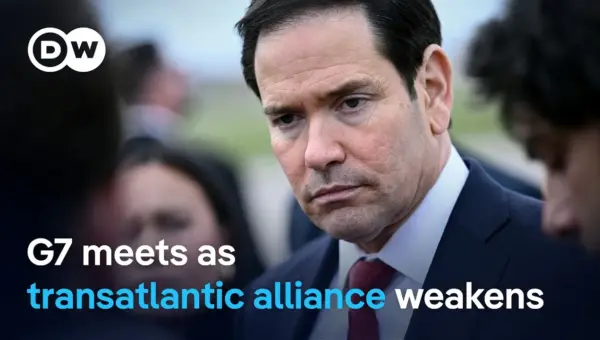
G7 Allies Clash Over Iran War Strategy, Urge Focus on Russia
G7 foreign ministers met in Paris, revealing deep divisions over the U.S. war with Iran. European allies urged the U.S. to pressure Russia, linking its actions to the conflict and fearing support for Ukraine will wane.
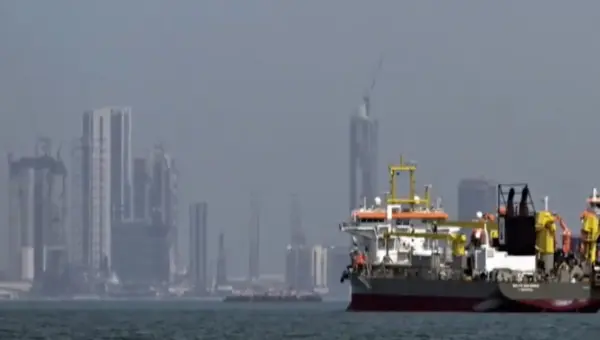
Iran Blocks China Ships, Exposing Beijing’s Weak Grip
Iran's recent decision to block Chinese ships at the Strait of Hormuz is exposing the limits of Beijing's influence in the Middle East. This action is causing delays and cancellations for Chinese manufacturers, turning a perceived geopolitical win into an economic strain.
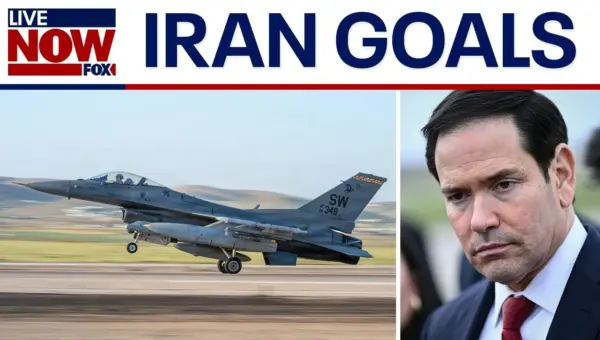
Rubio: US Can Achieve Iran War Goals Without Troops
Senator Marco Rubio outlined a strategy to counter Iran without deploying U.S. ground troops, focusing on weakening the regime and enhancing maritime security. He also criticized Cuba's economic system and expressed concerns about West Bank violence.