Iran Downs US Jets: A Night of Fire and Rescue
A daring mission deep into Iranian airspace turned into a nightmare as an F-15E was shot down, triggering a cascade of dangerous rescue attempts. The night highlighted the evolving threats to advanced aircraft and the military's unwavering commitment to saving its pilots.

Iran Downs US Jets: A Night of Fire and Rescue
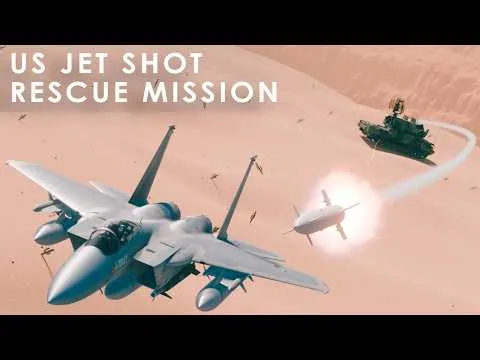
In a dramatic turn of events, a routine US military mission over Iran turned into a desperate fight for survival. An American F-15E Strike Eagle jet was shot down. This happened despite advanced technology and careful planning. The incident, which occurred near the Iran-Iraq border in the Zagros Mountains, led to a complex rescue operation involving multiple aircraft and high risks.
The F-15E Strike Eagle Goes Down
The mission began late at night, with two F-15E Strike Eagles flying low to avoid radar detection. Their target was a deeply buried command bunker. Using terrain-following radar, the pilots stayed hidden in the valleys. However, to drop its powerful GBU-28 bunker buster bomb, the lead F-15E had to ascend above the mountain peaks. This action exposed it to enemy radar.
A mobile surface-to-air missile system, hidden in a gorge below, quickly locked onto the jet. Two missiles were launched. The pilot managed to evade one by deploying flares, but the second missile detonated nearby. This blast caused critical hydraulic failure, forcing the crew to eject into the dark mountains. The military’s strict code of “nobody gets left behind” immediately kicked in.
The A-10 Warthog’s Risky Rescue Attempt
Soon after, an A-10 Thunderbolt II, known for its toughness and powerful 30mm cannon, was diverted to provide rescue escort. As Iranian forces closed in on the downed pilots, the A-10 pilot executed a low-level attack. The jet’s “Avenger” cannon neutralized the approaching convoy, but the aggressive maneuver came at a high cost.
Flying at a low altitude made the A-10 vulnerable. Iranian forces, equipped with shoulder-fired missiles, fired a heat-seeking missile. The missile struck the A-10’s engine, crippling it. Despite the damage, the pilot managed to steer the damaged jet toward a plateau and eject safely. The A-10 eventually crashed in the southern Persian Gulf.
A Deadly Ambush for the Rescue Team
A dedicated combat search and rescue team was launched next. This package included an HC-130J Combat King as an airborne command center and two MH-60 Black Hawk helicopters, call signs Pedro 11 and Pedro 12. Flying low and fast, they entered hostile territory as dawn approached. Pedro 11 located the downed F-15E pilot’s heat signal. Pedro 12 provided cover.
As Pedro 11 prepared to land, a hidden Soviet-era ZU-23 anti-aircraft gun opened fire from a concealed position. It was an ambush. The gun’s heavy rounds tore through Pedro 12, severing transmission lines and injuring its crew. The pilot fought to control the damaged helicopter, forcing a hard crash landing near Pedro 11. The rescue mission had turned into a fight for survival.
High-Tech Intervention and Escape
With the ZU-23 gun still a threat, the C-130 overhead called for immediate support. Two F-35 stealth fighter jets, providing high-altitude overwatch, dropped precision munitions. These strikes silenced the anti-aircraft gun. The crew of the crashed helicopter scrambled to the surviving Pedro 11. The helicopter was now dangerously overloaded with the A-10 pilot, the rescued pilots, and the crash chopper’s crew.
Pushing their engines to the limit, the overloaded Pedro 11 barely cleared the treetops. They dove back into the valleys, racing towards the border. By early morning, the battered but intact helicopter crossed back into Iraqi airspace. The military’s promise that “no one gets left behind” was upheld, though the F-15E crew still required a major raid the following night.
Stealth vs. Heat: The F-35 Vulnerability
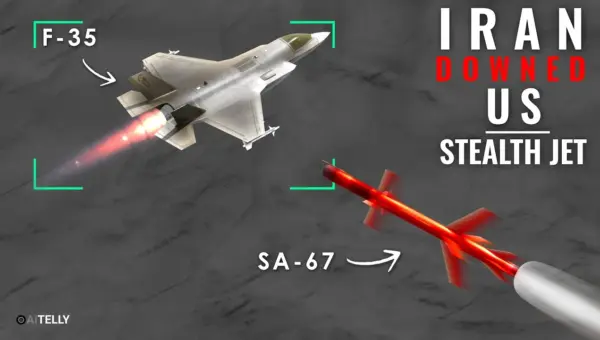
The transcript also touches on the vulnerability of advanced stealth aircraft like the F-35. While designed to be nearly invisible to radar, the F-35 produces a significant heat signature from its powerful engine. This heat plume can be detected by infrared search and track systems, especially by modern heat-seeking missiles. These missiles don’t rely on radar, meaning the F-35’s radar warning systems wouldn’t necessarily detect them.
When an infrared-guided missile locks onto the F-35’s heat, the pilot uses evasive maneuvers and deploys flares. Flares are designed to burn hotter than the jet’s engines, confusing the missile’s heat-seeking sensors. Even if the missile isn’t a direct hit, its proximity fuse can detonate the warhead, causing damage from shrapnel. This scenario aligns with reports of F-35s sustaining damage but managing emergency landings. The incident highlights how modern air defense networks are evolving to counter stealth technology.
Why This Matters
This detailed account of a single night’s combat operations reveals several critical insights. Firstly, it underscores the enduring importance of traditional air combat tactics and aircraft, like the A-10, in supporting ground and rescue operations, even in an era of advanced stealth. Secondly, it highlights the persistent threat posed by even older, less sophisticated weaponry when employed effectively in ambush scenarios, particularly in challenging terrain. The successful downing of an F-15E and the damage to an A-10 and a rescue helicopter demonstrate that no aircraft is invincible.
Thirdly, the incident illustrates the escalating sophistication of both offensive and defensive military technologies. Iran’s ability to target an F-15 with a Russian missile and employ Chinese-made anti-air weapons shows a diverse and adaptable arsenal. Simultaneously, the US response, involving F-35s and advanced electronic warfare, demonstrates the cutting edge of modern air power. The story also reinforces the unwavering commitment to personnel recovery, a core tenet of military operations, even when faced with overwhelming odds and multiple downed aircraft.
Implications, Trends, and Future Outlook
The events described point towards a future of warfare where electronic warfare and infrared detection play increasingly significant roles. Stealth technology, while still a major advantage, is not a foolproof shield against all threats. The development of hybrid loitering munitions and advanced infrared search and track systems suggests that future conflicts will involve a complex interplay of radar, heat, and electronic deception.
The reliance on carrier strike groups and forward-deployed assets, like the USS Abraham Lincoln and USS Gerald R. Ford, also shows the continued importance of naval power projection. The synchronization of attacks from multiple platforms, a tactic known as “time on target,” demonstrates a high level of planning and coordination. This meticulous synchronization aims to overwhelm enemy defenses through simultaneous impact, creating a “shock and awe” effect. The use of decoys like the MALD (Miniature Air-Launched Decoy) to confuse enemy radar further emphasizes the growing importance of psychological and electronic warfare in modern combat scenarios.
Historical Context and Background
The narrative draws parallels to historical air combat scenarios where challenging terrain has often dictated the course of engagements. The Zagros Mountains, with their jagged peaks and narrow valleys, have historically provided excellent cover for ambushes. The use of Soviet-era anti-aircraft guns like the ZU-23 points to the lingering influence of Cold War-era military hardware still present in many global arsenals. This highlights how even older technologies can remain relevant when integrated into effective operational plans.
The mention of Russian-made missiles used by Iran and Chinese-made shoulder-fired weapons reflects the global proliferation of military technology. This complex web of international arms sales and reverse engineering means that modern conflicts often involve a mix of equipment from various global powers. The US military’s response, utilizing a combination of fifth-generation fighters, proven workhorses like the A-10, and advanced rescue capabilities, showcases its adaptability and multi-layered approach to air power and personnel recovery.
Source: How a US F-15 Jet Was Shot Down & it's Pilot Rescued (YouTube)

Related Articles
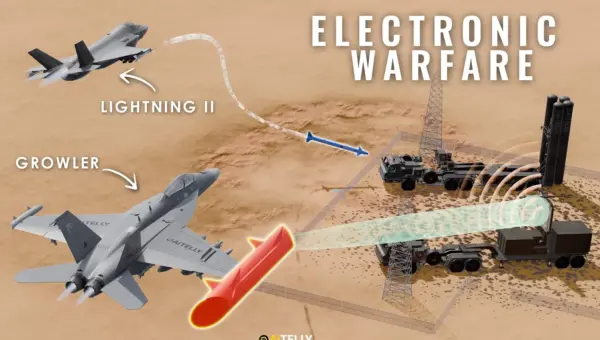
Invisible War: How US Blinds and Deceives Enemy Defenses
The US military employs sophisticated electronic warfare tactics to disable enemy radar and communications. Aircraft like the EA-18G Growler create digital illusions and blind defenses, allowing other forces to operate safely. This invisible war is crucial for modern military strategy.
Iran Hits F-35: Stealth’s Heat Signature Becomes Deadly Weakness
An F-35 stealth fighter was reportedly hit by an Iranian missile, exposing a key vulnerability: its heat signature. This incident highlights how advanced infrared detection can challenge even the most advanced stealth technology, forcing a reevaluation of air combat strategies.
Stealth Bombers Unleash Fury on Iran’s Hidden Missile Arsenal
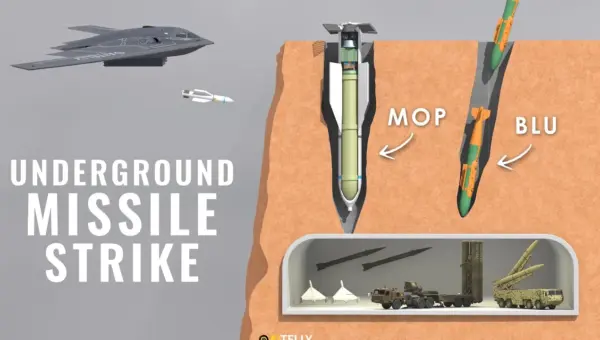
The B-2 Spirit stealth bomber executed a critical mission, striking Iran's deeply buried ballistic missile sites. This operation highlights advanced warfare tactics and the specialized technology needed to neutralize hidden threats.