Iran Downs US Jet, Sparking Pilot Rescue Mission
An F-15 fighter jet was shot down by Iran, triggering a massive search for a missing pilot and raising concerns about regional stability. Meanwhile, the Trump administration is cracking down on healthcare fraud, appointing JD Vance as "fraud czar" amidst accusations of partisan targeting. A strong jobs report contrasts with public dissatisfaction over inflation and border issues.


Iran Downs US Jet, Sparking Pilot Rescue Mission
In a significant escalation, an F-15 fighter jet belonging to the United States was shot down by Iran. This marks the first time an American aircraft has been downed since the conflict began 34 days ago. The incident has triggered a massive search and rescue operation for one of the two pilots aboard, who remains missing in a vast region of Iran. Adding to the danger, Iran has attacked a U.S. Blackhawk helicopter and another jet during the ongoing rescue efforts.
Pilot Survival and Rescue Challenges
Retired Marine Colonel Mike Jernigan, who has planned similar rescue missions, described the operation as difficult and dangerous, but not impossible. He emphasized that U.S. military personnel train for such scenarios daily. The missing pilot, identified as a weapon systems officer, has undergone survival, escape, resistance, and evasion training. His immediate goal is to reach friendly locals, hide, and signal for help. Colonel Jernigan recalled the 1995 case of Scott O’Grady, who was shot down in Bosnia and evaded capture for six days before being rescued.
Iran’s Bounty and Negotiation Impact
Aaron David Miller, a former Middle East peace negotiator, noted that Iran has placed a $76,000 bounty on the downed airman. He questioned whether the pilot’s potential capture would create pressure on President Trump. Miller believes this is unlikely to affect the president’s strategy, especially since this is the first downed aircraft after thousands of sorties. He characterized the current situation as a potential tactical success but a major strategic defeat if the war ended today, April 3rd, 2026. Key strategic challenges include the unretrieved highly enriched uranium, the potential for clerical rule to shift to IRGC control, and Iran’s ability to regulate passage through the Strait of Hormuz.
Iran’s Enduring Capabilities
John Spencer, an expert in urban warfare, stated that Iran clearly still possesses the ability to wage war, despite its means being attrited. He noted that a nation’s war-fighting power depends on both its capabilities and its will. While Iran’s resources have been depleted, its determination to continue fighting remains. Spencer believes the Iranian regime is not stronger than before the conflict and may not have significant staying power, though the emergence of new hardline leadership adds uncertainty. He also pointed out that despite significant attacks on Iran’s missile program, intelligence reports suggest it may not be as degraded as commonly believed. Spencer highlighted that Iran’s ability to control the Strait of Hormuz, described as a “toll booth,” is a significant strategic advantage that the U.S. is currently allowing.
Escalation and Ground Operations
The discussion turned to potential escalation, including ground operations. Aaron David Miller outlined three critical issues that any ground operation should address: the location of 900 lbs of highly enriched uranium, Iran’s capacity to strike vulnerable Gulf States, and the fundamental dismantling of Iran’s capacity to strike, particularly concerning the Strait of Hormuz. He expressed uncertainty about the feasibility and risks of such operations, mentioning strategic islands like Kar Island. John Spencer suggested that revealing unwillingness to use ground forces is a poor strategy. He argued that boots on the ground could seize and hold key terrain, such as islands critical to Iran’s ability to project power into the Strait of Hormuz or secure nuclear sites. He believes that presenting multiple scenarios where ground troops could be deployed would force Iran to reconsider its actions.
Combating Healthcare Fraud
The program then shifted to domestic issues, focusing on the Trump administration’s efforts to combat healthcare fraud. President Trump appointed JD Vance as a “fraud czar” to address what the administration calls rampant healthcare fraud. Recent actions include the arrest of eight individuals in California accused of schemes totaling $50 million. Billy, the First Assistant U.S. Attorney for the Central District of California, explained that these cases had languished due to a lack of priority in previous administrations. Under the new task force, resources have been allocated, leading to charges against 15 people and eight arrests in a single day, with potential fraud reaching billions of dollars.
Systemic Failures in Healthcare Oversight
The investigation revealed systemic failures in oversight and vetting, particularly in California, which has an unusually high number of hospice centers. Billy noted that licenses were issued without proper checks, even to individuals with criminal convictions. The hospice license grants access to Medicare billing systems, making it a lucrative target for fraudulent claims. He stressed that while his office is focused on criminal prosecutions, many investigations are ongoing. He also pushed back against accusations that the crackdown is politically motivated, stating that the Department of Justice prioritizes fraud cases nationwide, and that egregious cases have coincidentally appeared in blue states due to factors like state-level leniency towards incarceration.
Political Divide on Fraud Crackdown
Chris Han, host of the Aggressive Progressive podcast, expressed skepticism about the administration’s motives, suggesting the focus on “crooked blue states” is partisan. He argued that fraud is a national problem and that making it partisan undermines any potential victory. Harrison Fields, former Trump White House principal deputy press secretary, countered that the focus is on “low-hanging fruit” and that the administration is actively addressing fraud, citing actions in Minnesota and California as examples. He criticized the previous administration for inaction on fraud and border issues. The debate highlighted a broader political division, with Democrats accusing the administration of politicizing fraud investigations to target political opponents, while Republicans argue they are simply enforcing the law and holding states accountable for lax oversight.
Economic Concerns Amidst Positive Jobs Report
The segment concluded by examining the latest jobs report, which showed 78,000 jobs added in March and unemployment falling to 4.3%. President Trump touted this as a success of his economic policies. However, public sentiment remains mixed. A CNN poll revealed that about 25% of Americans have an unfavorable view of both parties. More strikingly, white working-class voters, a key demographic for the president, have turned negative for the first time in his second term, with approval dropping from 54% to 49%. Former Trump campaign senior economic adviser Steven Moore and Andrew Yang, founder of the Forward Party, discussed reasons for this disconnect. Yang cited concerns about the border and inflation, including “pain at the pump” and the inflationary effects of tariffs, as reasons for voter dissatisfaction, particularly among those who voted for Trump based on these issues.
Source: Hunt for US Pilot, JD Vance: Fraud Czar, Will Tiger Woods Bodycam Free Him? | CUOMO Full Show 4/3 (YouTube)

Related Articles
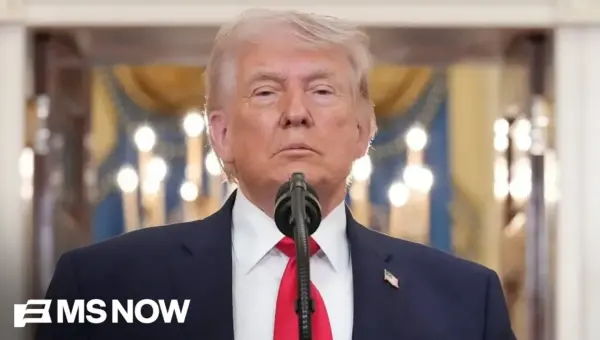
Trump Shares War Footage Amidst Iran Strikes; Civilians Fear
Former President Donald Trump has shared video footage of U.S. strikes in Iran, accompanying it with aggressive rhetoric that has alarmed civilians and experts. While some strikes may be targeted, concerns are rising over civilian harm and the potential for broader destruction, as Iranians express fear for their survival.

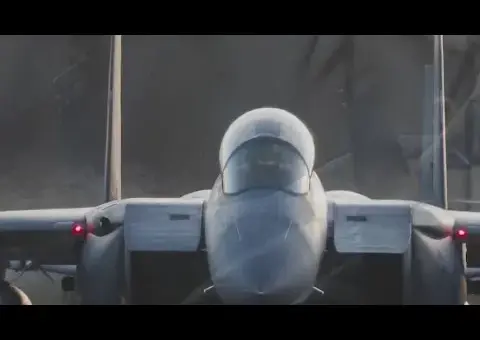
US Rescues Pilot From Iran Amidst Strait of Hormuz Deadline
The U.S. military conducted a daring rescue of a downed airman from Iran, coinciding with President Trump's deadline for Iran to reopen the Strait of Hormuz. Escalating tensions see Iran striking energy sites in response to Israeli operations, threatening global energy supplies.

Trump’s Iran Claims: Truth or Deception?
Did President Trump's claims about Iran's military being in ruins hold up to scrutiny? Reports suggest U.S. intelligence may have painted a different picture, raising questions about transparency and the reality of Iran's defense capabilities.