Iran Downs US Jet, Escalating Mideast Tensions
Iran has reportedly shot down a U.S. fighter jet, prompting immediate search and rescue operations for the downed airmen. This incident significantly escalates regional tensions and could alter ongoing U.S. military plans against Iran. The event highlights the volatile nature of the Middle East and the potential for miscalculation.


Iran Downs US Jet, Escalating Mideast Tensions
Reports indicate Iran has shot down a United States fighter jet, a serious development that could significantly change the situation in the Middle East. The incident, if confirmed by the Pentagon, involves the loss of a two-seater F-15 with its pilot and co-pilot now behind enemy lines. This event raises immediate concerns about search and rescue efforts and potential U.S. military responses.
Search and Rescue Underway
The U.S. military is reportedly launching rapid rescue attempts for the downed airmen. The ejection seat of the aircraft was apparently found empty, suggesting the pilots may have ejected safely. However, being behind Iranian lines puts them in immediate danger. Rescue operations would likely involve specialized teams using aircraft like the C-130 Hercules and helicopters. These teams are trained for such missions, drawing on experience from past conflicts like Vietnam. The operations would also need to counter any Iranian anti-aircraft fire directed at the rescue aircraft.
Iran’s Claim and Potential U.S. Response
Iran has claimed responsibility for shooting down the American plane. This claim, if true, marks a significant escalation. The U.S. response is expected to align with President Trump’s previously stated policy of continuing strong air operations against Iranian military targets and infrastructure. Some analysts suggest this incident might even strengthen the resolve to continue these operations, rather than deter them. This is based on the idea that such an event, while serious, would be seen as justification for existing policy, not a reason to change course.
Context of Aerial Operations
A former U.S. Army Major General noted that with the high number of missions flown by both the U.S. and its allies over Iran, losing an aircraft was statistically likely. He mentioned that both the U.S. and Israel have been flying many missions in the region. Over time, it was probable that Iranian air defenses would successfully bring down an aircraft. The U.S. military has experienced aircraft losses before, including incidents due to friendly fire and damage to other aircraft. However, prior to this incident, losses had not been attributed to direct combat with Iranian forces.
Broader Geopolitical Implications
This incident occurs as President Trump has spoken about ending operations against Iran in the coming weeks. The downing of the jet could alter the trajectory of these plans. It highlights the volatile nature of the region and the potential for miscalculation. The presence of U.S. personnel in harm’s way during search and rescue operations further complicates the situation. The immediate question is how the U.S. will react, considering its significant military presence and firepower in the region.
Global Impact
The downing of a U.S. fighter jet by Iran sends a clear signal of heightened tensions. It demonstrates Iran’s capability and willingness to engage U.S. assets. This event could lead to a reassessment of military strategies and diplomatic approaches by all parties involved. The risk of a wider conflict increases, impacting regional stability, global energy markets, and international relations. Allies and adversaries alike will be closely watching the U.S. response to gauge future actions and the stability of the international order.
Historical Context
The history between the U.S. and Iran is marked by decades of tension, stemming from the 1979 Iranian Revolution and subsequent events. While direct military confrontations have been limited, proxy conflicts and diplomatic standoffs have been common. Incidents like this echo past moments of escalation, where a single event could significantly alter the course of relations. The region has long been a flashpoint, with various powers vying for influence and security.
Economic Considerations
While not explicitly detailed in the report, economic factors are always at play. Sanctions against Iran continue to be a tool of U.S. foreign policy. Any escalation could lead to further economic measures or disruptions to trade routes, particularly those involving oil. Control over energy resources and shipping lanes in the Persian Gulf remains a critical concern for global economic stability.
Future Scenarios
Several future scenarios are possible. The U.S. could respond with targeted strikes against Iranian military positions, increasing the risk of a wider conflict. Alternatively, diplomatic efforts could be intensified to de-escalate the situation, though this may be challenging given the direct military engagement. A third scenario involves a prolonged period of heightened tension, with increased military posturing but no direct large-scale conflict. The likelihood of each scenario depends heavily on the political decisions made by leaders in Washington and Tehran, as well as the reactions of regional and international powers.
Source: Search underway for crew of US fighter jet reportedly shot down by Iran | NewsNation Live (YouTube)

Related Articles


Trump Shakes Up Top Ranks Amid Iran Uncertainty
President Trump has initiated a series of high-profile firings, including the Attorney General and the Army's Chief of Staff, sparking uncertainty in Washington. These changes occur as the administration's strategy regarding Iran remains unclear. Meanwhile, Vice President JD Vance has been appointed "Fraud Czar," taking the lead on a new anti-fraud initiative.
US Jet Downed in Iran: Crew Fate Unknown, War Unpopular
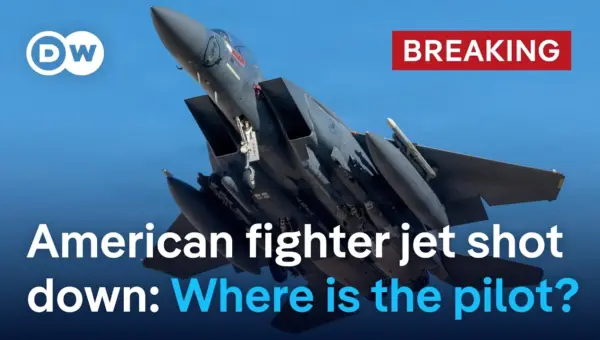
An American F-15 fighter jet has been shot down over Iran, with U.S. officials confirming the loss but offering few details on the crew's fate. The incident occurs amid widespread public opposition to the war and raises questions about Iran's air defense capabilities.
Iran Claims US Pilot Ejected; US Silent Amid Escalating Tensions
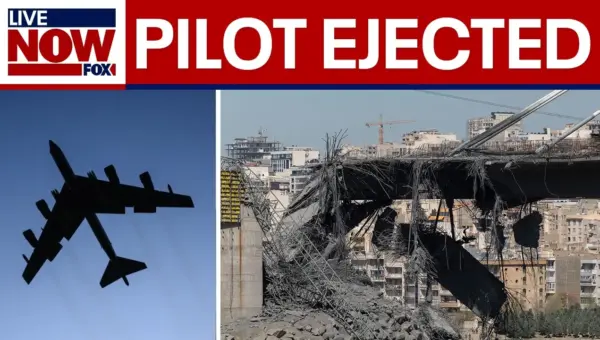
Iran claims a U.S. pilot ejected from a fighter jet over its territory, offering a reward for capture. The U.S. has not confirmed the report amid escalating regional tensions. Military experts discuss the strategic implications of U.S. strikes and the potential for internal change in Iran.