Iran Downs US Jet, Challenging Air Superiority Claims
A U.S. fighter jet has been shot down over Iran, challenging official claims of complete air superiority. The incident has sparked a risky rescue mission for a missing airman and raises questions about the true effectiveness of U.S. military operations against Iran's evolving defenses. Experts suggest strategic goals remain unmet despite tactical successes.

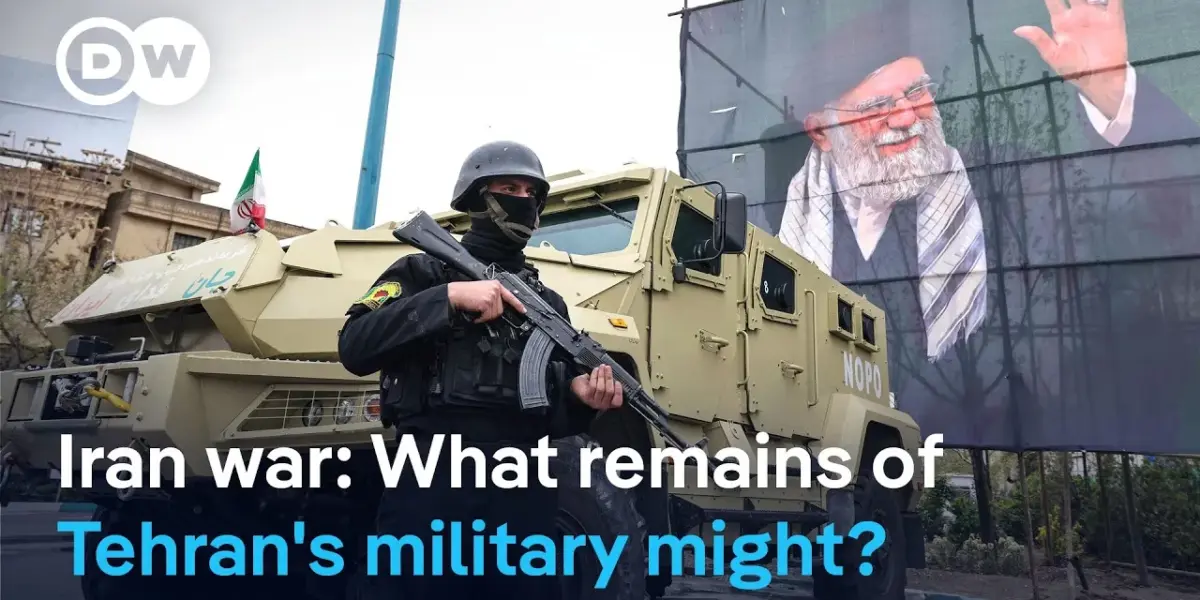
US Jet Downed Over Iran, Casting Doubt on Air Dominance
In a significant development, a U.S. warplane was shot down over Iran, leading to an ongoing search for a missing airman. This incident occurred just hours after President Donald Trump declared Iran’s air defenses had been “completely decimated” and that the U.S. military was “unstoppable.” The downing of the aircraft, an F-15E Strike Eagle which lacks stealth capabilities, directly challenges the administration’s assertions of complete air superiority in the region.
Experts Question Overstated Claims of Success
Jennifer Kavanaaugh, director of military analysis at Defense Priorities, a think tank focused on diplomacy, stated that the President and Secretary of Defense have “overstated the degree of air superiority” the U.S. holds. While acknowledging the U.S. has inflicted significant damage on Iran’s military capabilities, Kavanaaugh explained that completely destroying all of Iran’s air defenses and missile launchers is “impossible to accomplish in this short a time period.” She noted that out of roughly 13,000 combat flights flown by the U.S. in the conflict, only two aircraft have been lost, which is a “pretty good rate of success.” However, she added that an adversary shooting down a U.S. fighter jet is “not impossible.” Kavanaaugh’s assessment suggests that while U.S. forces have achieved tactical successes, strategic goals like regime change or ending Iran’s nuclear program have not been met, making the overall operation potentially a “massive disaster for the United States” if it ended today.
Risky Rescue Mission Underway
The incident has triggered a high-risk combat search and rescue operation for the missing airman. Kavanaaugh described these missions as among the “riskiest operations that the U.S. military conducts” because aircraft must fly low and slow, making them vulnerable to ground fire. Lieutenant General David Dtula, dean at the Mitchell Institute for Aerospace Studies, echoed these concerns, calling combat search and rescue “one of the most time-sensitive and dangerous missions in warfare.” He explained that the enemy knows the location of the downed aircraft, increasing the likelihood of engagement for rescue forces. The urgency is also driven by the potential for the airman to be captured by Iran, which would be a significant political win for Tehran and a deeply concerning development for the American public.
Iran Claims New Air Defense Systems
Adding to the complexity, the Iranian Revolutionary Guard Corps (IRGC) claimed responsibility for shooting down the U.S. jet, stating they used a “new air defense system” developed by Iranian scientists. The IRGC spokesman asserted, “The enemy should know that we possess advanced air defense systems… which are being unveiled one after another in real combat conditions.” Kavanaaugh finds it difficult to evaluate this claim definitively but notes that Iran has made significant improvements to its defenses since a previous conflict, possibly acquiring systems from Russia and China, or learning to use existing ones more effectively. She suggested that a combination of new technology, updated tactics, and perhaps “overconfidence on the U.S. side” may have contributed to the jet’s downing.
Air Superiority vs. Air Dominance
Experts differentiate between “air superiority” and “air supremacy.” While the U.S. and its allies are generally considered to have air superiority over Iran – meaning they can operate without prohibitive interference – this does not equate to air supremacy, where operations can occur anywhere, anytime, without any risk. Lieutenant General Dtula pointed out that losing only one aircraft after thousands of sorties in a heavily defended territory is historically low attrition, similar to Operation Desert Storm where 42 aircraft were lost over 43 days. However, the fact remains that Iran still possesses some surviving anti-aircraft capabilities, which is normal in war but indicates that U.S. air dominance is not absolute.
Iran’s Remaining Capabilities and Strategic Goals
Despite significant reductions in Iran’s missile and drone launch capabilities, experts believe the country still retains meaningful capacity. U.S. intelligence reportedly estimates that about half of Iran’s missile launchers remain intact, and the country still possesses large numbers of drones, which are essentially cheap cruise missiles. While this represents a loss for Iran, it is still enough to threaten regional adversaries and U.S. facilities. Kavanaaugh argued that Iran is playing for short-term gains, sacrificing its long-term economy and military, in the hope that media perception management will pressure the U.S. to halt operations. The strategic objective, according to Lieutenant General Dtula, extends beyond military gains to achieving peace and stability in the region through diplomacy and economics, which is a far more complex endeavor than solely military solutions.
Future Outlook
The incident highlights the ongoing risks in the conflict and the challenges of achieving complete air dominance. The success of the rescue mission, Iran’s evolving air defense capabilities, and the broader strategic objectives will be critical factors to watch as the situation develops. The U.S. military’s commitment to rescuing its personnel, even at great risk, will continue to be tested, while Iran seeks to leverage any perceived advantage to its strategic benefit.
Source: Assessing Iran's military power after a month of war | DW News (YouTube)

Related Articles
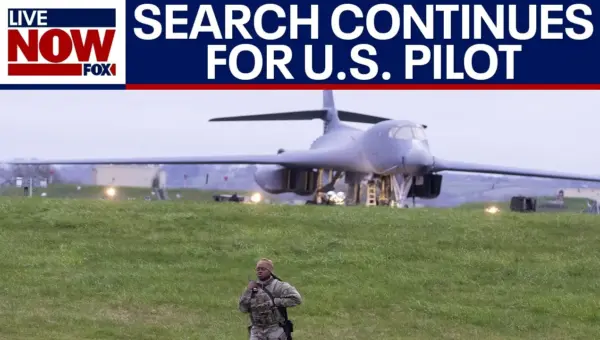
US Pilot Missing in Iran After F-15E Strike Eagle Downed
A U.S. F-15E Strike Eagle fighter jet was shot down over Iran, prompting an ongoing search for the missing pilot. Retired Lt. Col. Jason Harris highlighted the critical role of SEIR (Survival, Evasion, Resistance, and Escape) training for pilots in such emergencies. Elite U.S. combat search and rescue teams are working tirelessly to locate and recover the downed airman.


US Service Member Missing in Iran; Wildfire Season Looms
An urgent search is underway for a U.S. service member missing after an F-15 jet crashed in Iran, amid heightened regional tensions. Meanwhile, new federal funding aims to ease child care costs for American families, offering a bipartisan boost to working parents.
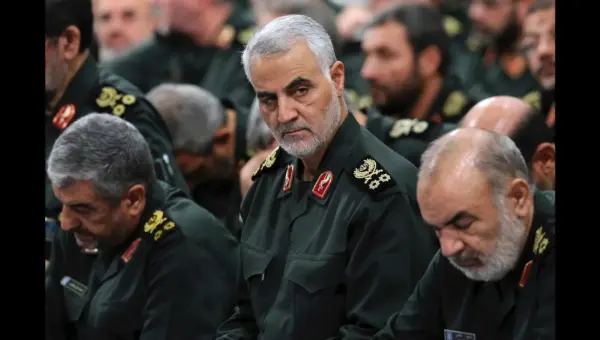
US Targets Soleimani’s Family: A New Front in Iran Tensions?
The U.S. detained relatives of former Iranian General Qasem Soleimani, revoking visas and taking them into ICE custody. This action highlights the ongoing tensions between the U.S. and Iran and the use of immigration policy as a foreign relations tool.