Iran Disputes Trump’s ‘Good Talks’ Claim Amid Escalation Fears
Iran has disputed President Trump's claims of "very good talks," adding complexity to regional tensions. Experts suggest the Iranian regime, though weakened, remains resilient and capable of resistance, questioning the true objectives and potential for escalation in the ongoing military campaign.

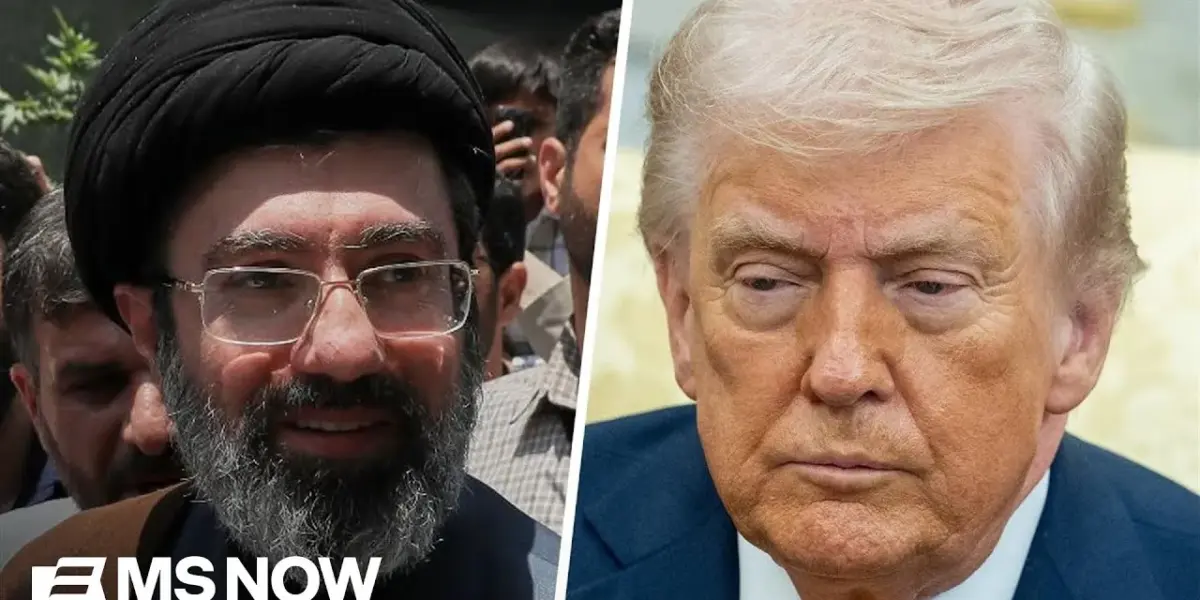
Iran Disputes ‘Good Talks’ Claim
Following President Trump’s assertion of “very good talks” with Iran, the Iranian regime has pushed back, casting doubt on the president’s claims. This exchange comes as tensions remain high in the region, with markets initially reacting positively to hopes of de-escalation. However, expert analysis suggests the situation is far more complex than a simple diplomatic breakthrough.
Regime’s Resilience and Strategic Goals
Retired Major General Spider Marx, founder and president of the Marx Collaborative, offered a sobering assessment of the Iranian regime’s current standing. “This Iranian regime is not going anywhere,” Marx stated, emphasizing that despite significant weakening, they retain the capacity to resist. He questioned what specific “off-ramp” both Iran and the United States/Israel are seeking, highlighting the need to understand the regime’s self-perception moving forward.
Marx pointed to the internal struggles within Iran, particularly concerning the Islamic Revolutionary Guard Corps (IRGC). The IRGC’s core mission is to protect the revolution itself. With questions surrounding the status of key leaders like Mushtaba Hamadeh, it appears the theocracy may be struggling to embody the revolution it claims to represent. “So do they now embody the revolution? Because we haven’t seen the theocracy, right? We haven’t seen Mushtaba Hamadeh. There’s no proof of life there,” Marx noted. He suggested that any high-level talks would likely involve senior IRGC leadership.
Military Campaign and Shifting Objectives
The ongoing maritime and air campaign, now in its fourth week, involves decisions driven by political rather than purely military objectives, according to Marx. He argued that the initial military goals, though never clearly stated, likely focused on Iran’s nuclear program, proxy networks, and ballistic missile capabilities. Marx believes these objectives were likely achieved within the first 96 hours, setting back Iran’s capabilities by five to ten years.
However, he expressed concern that the current strategy has moved beyond these initial successes. “We’re now over our skis. In other words, we had strategic clarity with tactical brilliance and now we’re a little bit lost,” Marx explained. He questioned the ultimate purpose of the achieved successes, asking, “These are great successes… but toward what end?”
Leverage and Escalation Concerns
The deployment of 5,000 Marines is seen as a crucial element of leverage, providing the capacity to inflict damage, survive, and execute operations. This presence signals to the Iranian regime that the U.S. possesses the capability to act. Marx highlighted a critical scenario: if these Marines were to be used to secure highly enriched uranium, it would become a significant manpower drain, potentially requiring far more personnel than currently deployed unless a prior agreement was reached.
He stressed that the U.S. military presence and capabilities are not expected to decrease but rather increase. “It’s all about leverage,” Marx reiterated.
Trump’s Red Lines and Domestic Pressures
The article also touched upon President Trump’s threats to target Iran’s power plants if the Strait of Hormuz is not reopened within five days. U.S. Ambassador to the U.N. Mike Waltz supported this stance, stating, “The president is not messing around. He stands, unlike his predecessors, he stands by his red lines and he’s not going to allow this genocidal regime to hold the world’s energy supplies or economies hostage.”
However, Marx raised questions about whether Trump has backed himself into a military corner, requiring escalation to achieve his stated goals. He admitted, “I don’t think so. That’s the challenge.” Marx outlined the difficult choices facing the administration: either maintain the costly current pressure campaign, pursue diplomatic solutions, withdraw having met initial objectives, or escalate further.
The pressure of upcoming mid-term elections and domestic concerns significantly influence these decisions. Marx contrasted the U.S. situation with Iran’s, noting, “Iran has no domestic, anything that they care about. They just want to survive.” In contrast, the United States must cater to multiple domestic and global constituencies, making the situation exceedingly difficult. Marx concluded that the Iranian regime is unlikely to yield, comparing their resilience to a Monty Python sketch where they continue to resist despite severe setbacks, potentially for years to come.
Looking Ahead
The coming days will be critical in determining whether diplomatic channels can truly de-escalate the situation or if the current military pressure will continue, potentially leading to further escalation. The world watches to see if President Trump’s claims of “good talks” hold any weight against the backdrop of Iran’s continued defiance and the complex geopolitical pressures at play.
Source: Iran disputes Trump claim of 'very good talks' on war (YouTube)

Related Articles

G7 Allies Clash Over Iran War Strategy, Urge Focus on Russia
G7 foreign ministers met in Paris, revealing deep divisions over the U.S. war with Iran. European allies urged the U.S. to pressure Russia, linking its actions to the conflict and fearing support for Ukraine will wane.

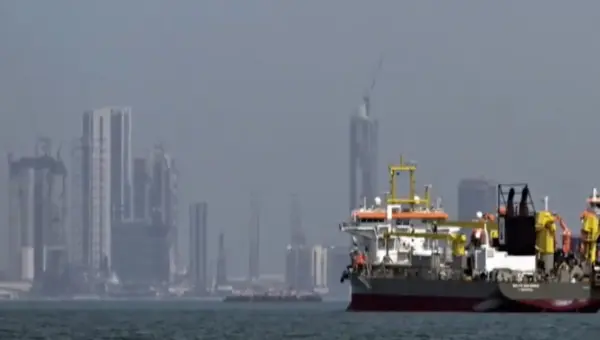
Iran Blocks China Ships, Exposing Beijing’s Weak Grip
Iran's recent decision to block Chinese ships at the Strait of Hormuz is exposing the limits of Beijing's influence in the Middle East. This action is causing delays and cancellations for Chinese manufacturers, turning a perceived geopolitical win into an economic strain.
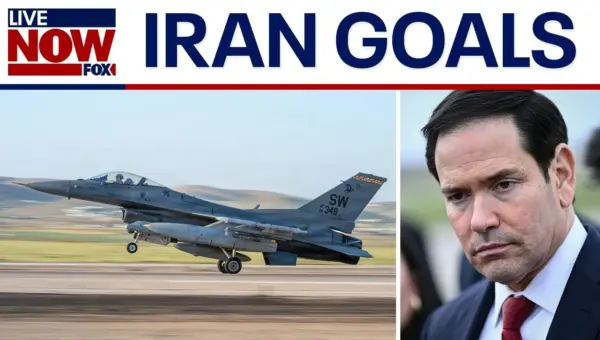
Rubio: US Can Achieve Iran War Goals Without Troops
Senator Marco Rubio outlined a strategy to counter Iran without deploying U.S. ground troops, focusing on weakening the regime and enhancing maritime security. He also criticized Cuba's economic system and expressed concerns about West Bank violence.