Iran Deadline Looms: War Escalation or Diplomatic Off-Ramp?
As a critical deadline approaches for Iran on April 7th, President Trump has issued an ultimatum threatening 'complete demolition' if no ceasefire agreement is reached. The world watches for potential diplomatic off-ramps amidst escalating U.S. and Israeli strikes on Iranian infrastructure and Iran's retaliatory actions. Life on the ground in Israel is disrupted by daily sirens, while concerns grow over civilian impact and the broader geopolitical consequences of a prolonged conflict.

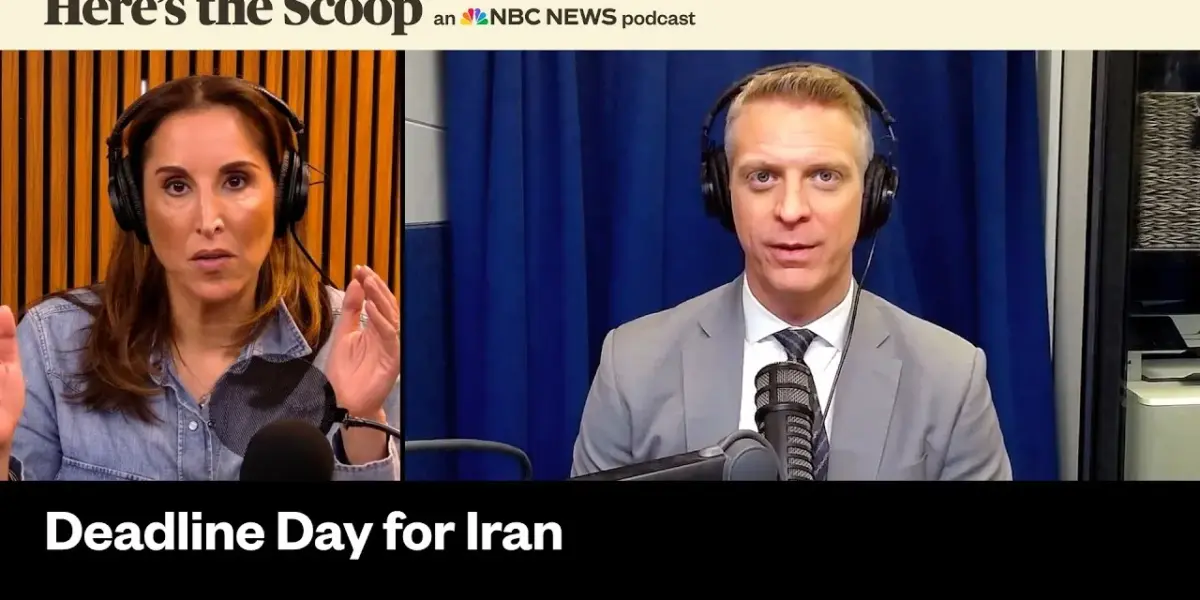
Iran Faces Critical Deadline Amidst Escalating Tensions
A critical deadline for Iran is set to expire tonight, April 7th, as President Trump has issued a stark ultimatum: reach an agreement on a ceasefire and reopen the Strait of Hormuz, or face what he called the ‘complete demolition’ of their country. The world watches closely to see if a diplomatic solution can be found or if the President will carry out his deadly ultimatum, potentially leading to a severe escalation of the ongoing conflict. The region is bracing for what might come, with Iran ramping up retaliatory strikes and the United States and Israel conducting new waves of attacks inside Iran.
White House Rhetoric and Strategic Pressure
President Trump’s social media posts have significantly amplified the rhetoric surrounding the conflict. One post stated, ‘A whole civilization will die tonight, never to be brought back again. I don’t want that to happen, but it probably will.’ This strong language has drawn criticism, with some Democratic lawmakers calling it ‘completely unstable and unhinged.’
NBC News Senior White House Correspondent Garrett Haig explained the President’s communication style as a form of ‘classic gunboat diplomacy.’ Haig noted that the President’s words are intended to pressure Iran into reaching a deal, targeting multiple audiences including the Iranian regime, domestic supporters, and the global community. The strategy, often referred to as the ‘madman theory,’ relies on the belief that if opponents think he might do anything, they will be more inclined to make a deal to avoid his unpredictable actions.
However, past threats have sometimes been followed by de-escalation, leading to a sentiment on Wall Street that ‘Trump always chickens out.’ Despite this, the current situation requires serious consideration of the President’s threats, given his past actions. Haig acknowledged the possibility of a ‘very serious escalation’ but also pointed to ‘off-ramps of various size and legitimacy’ that could still be available.
Potential Scenarios for Escalation
The potential for escalation involves two main possibilities. The first is the direct targeting of civilian infrastructure, such as bridges and power stations, including Iran’s only nuclear power plant. The White House might justify these actions by arguing that many of these facilities have ‘dual-use’ capabilities, meaning they can serve both civilian and military purposes. For example, destroying bridges could disrupt the movement of missiles.
The second, more significant escalation option, is the deployment of American ground forces. While the U.S. currently has thousands of Marines and paratroopers stationed in the region, their role remains undefined. A larger deployment could signal a more direct military intervention.
Possible Diplomatic Pathways and Obstacles
Several potential ‘off-ramps’ exist for de-escalating the conflict. These range from a comprehensive deal to end the war, which appears unlikely, to a framework agreement offering a face-saving exit for all parties. A temporary ceasefire, even for just a few days, or progress that appears significant but gets bogged down in logistics, are also possibilities.
Negotiations have been complicated by inherent distrust between the U.S. and Iran. Iran’s state media reported that Tehran sent a 10-point peace proposal to the U.S. through Pakistan, rejecting a ceasefire in favor of a permanent end to the war. However, the U.S. has already conducted strikes, including on Karg Island, the site of Iran’s main oil export terminal.
Garrett Haig suggested that airstrikes alone have limitations. While they might degrade Iran’s missile production or nuclear program, they cannot definitively end the long-term threat to global commerce through the Strait of Hormuz. This requires either a negotiated solution or a sustained military presence, which presents its own challenges.
Geopolitical Pressures and International Relations
Several geopolitical factors are influencing the President’s decisions. A prolonged war would significantly complicate his planned trip to China next month. Furthermore, with midterm elections approaching in November, the American public’s dissatisfaction with the war and high gas prices could create political pressure to resolve the situation.
The conflict also strains relationships with NATO allies, which have been frayed by the current administration’s policies. While direct engagement with China on this issue might be unlikely due to differing diplomatic styles, the President has been in touch with some foreign leaders, including Finland’s Prime Minister and French President Macron. The upcoming meeting with Mark Rutte, the head of NATO, is seen as an opportunity to potentially mend some of the strained relations.
Coordination with Israel is also crucial. President Trump has maintained strong ties with Prime Minister Netanyahu, leveraging this relationship in past dealings concerning Iran and Gaza. If the President seeks a deal before Israel feels its objectives are met, he may need to exert influence on Netanyahu.
Life on the Ground in Israel
On the ground in Israel, daily life has been profoundly disrupted by the ongoing conflict. Bomb sirens are a constant presence, a reality residents have lived with for weeks. While Israel’s defense systems are highly effective, intercepting over 90% of incoming rockets, occasional breaches cause significant damage and loss of life. Stephanie Gosk, NBC News Senior National Correspondent, reported from Israel, describing an instance in Haifa where a rocket strike leveled a home, killing four people and injuring many others.
Despite the pervasive threat, Israelis have developed routines for seeking shelter. Gosk observed people calmly leaving beaches and heading to designated safe areas when sirens sounded, indicating a practiced, orderly response to the danger. While there is an underlying sense of nervousness, the population appears to be managing the disruption, with a strong desire for the conflict to end.
Iran’s Response and Civilian Impact
Reports from U.S. officials indicate widespread strikes across Iran in recent days, targeting critical infrastructure like bridges and power stations, and affecting facilities such as Karg Island. The Israeli Defense Forces (IDF) have warned Iranians to stay clear of trains and train stations, which they intended to target. Universities, like Sharif University in Tehran, have also reportedly been hit, with faculty members emphasizing their research-focused nature.
The justification for these strikes, according to the IDF and the U.S., is the military significance of the targets. However, this differs from the President’s broader threats of total annihilation. Iranian state media has shown images of civilians forming ‘human chains’ around potential targets, like Karg Island, possibly as a form of protest or protection. While the authenticity and voluntary nature of these actions are difficult to verify, they highlight the civilian impact of the conflict.
A statement read on Iranian television from Ayatollah Mojtaba Khamenei, the son of the late Supreme Leader, accused the U.S. and Israel of resorting to terrorism. This statement comes after the killing of an intelligence chief for Iran’s Revolutionary Guard. The situation remains tense, with conflicting reports about the status of diplomatic communication.
Looking Ahead: Capacity and Future Actions
The capacity for further escalation by Iran, particularly after weeks of bombardment, is a key question. Rockets have continued to target Bahrain, Saudi Arabia, and Kuwait, indicating that Iran likely retains some offensive capability, though its scale and destructive potential for wider attacks remain uncertain. Israel, meanwhile, faces the challenge of sustaining operations on multiple fronts, including the conflict to its north with Lebanon, while also defending its homeland and engaging offensively against Iran.
As the April 7th deadline approaches, the world awaits the outcome. The possibility of a diplomatic breakthrough exists, with President Trump himself acknowledging Iran’s 10-point proposal as a ‘start.’ However, the threat of severe military action looms large, making the coming hours critical for regional and global stability.
Source: Deadline Day for Iran – April 7 | Here's the Scoop (YouTube)

Related Articles

Trump’s Nuclear Rhetoric Sparks Global Outcry, Expert Warns
Malcolm Nance, a former U.S. Navy intelligence officer, has voiced alarm over former President Donald Trump's "blithe attitude" towards nuclear weapons and his threats against Iran. Nance argues this rhetoric is unprecedented and dangerous, drawing condemnation from global leaders and sparking calls for constitutional measures.


Troops Could Block Trump’s Iran Orders, Experts Warn
Experts suggest U.S. troops might legally refuse orders from a future President Trump concerning Iran, potentially creating a military dilemma. This would signal a serious breakdown between civilian and military leadership, as military advice and adherence to international law are critical.

Iran’s Power Play: Regime Stays Strong Amidst Ceasefire Talks
A recent two-week ceasefire agreement between the U.S. and Iran masks deep internal tensions within Iran's leadership. While the U.S. sees a victory, experts point to the regime's continued hardline stance and its control over crucial resources like enriched uranium. The public's desire for real change clashes with the government's focus on survival.