Iran Conflict: US Seeks Peace Deal, Warns of Escalation
The U.S. is sending negotiators to Pakistan to discuss an end to the conflict with Iran, following Iran's submission of a revised peace proposal. However, tensions remain high as Israel insists its ceasefire doesn't apply to Lebanon, and Iran warns of continued war and potential reopening of the Strait of Hormuz.


US Negotiators Head to Pakistan Amidst Iran Peace Talks
The United States is sending a negotiating team to Pakistan this week in an effort to end the ongoing conflict with Iran. Key figures like U.S. Envoy Steve Witkoff and Jared Kushner are expected to be part of the delegation. While JD Vance was slated to join, security concerns may prevent his attendance, though he is still scheduled to lead discussions in Islamabad.
JD Vance expressed optimism about the upcoming talks, stating, “We have a negotiation that’s supposed to start this weekend. I’m happy about where we are.” He emphasized that President Trump has secured a good deal for Americans and that it is now up to Iran to take the next step. Vance added, “The President has a lot of options to go back to the war. I encourage the Iranians to come to the table seriously. We’ve seen some signs they’re going to do that.”
Iran’s Shifting Proposals and US Red Lines
White House Press Secretary Karoline Leavitt clarified the details of the negotiations, noting that Iran initially presented a ten-point plan that was deemed “fundamentally unserious, unacceptable and completely discarded” by the Trump administration. This initial proposal was rejected outright.
However, Iran later submitted a revised, more reasonable plan. The Trump administration found this modified proposal to be a workable basis for negotiation. They are now working to align this with the U.S.’s own fifteen-point proposal. A key, non-negotiable point for President Trump remains the end of Iranian nuclear enrichment. This is a top priority for the administration.
Israel’s Stance and Potential Escalation
Adding complexity to the situation, Israel has stated that the current ceasefire does not extend to Lebanon. Israel is vowing to continue strikes against Hezbollah targets within the country. This has been communicated to all parties involved in the ceasefire discussions.
Iran’s Foreign Minister responded to these developments by posting on social media platform X. He warned that the U.S. must choose between a ceasefire or “continued war via Israel.” There is a threat that Iran could reverse its commitment and reopen the Strait of Hormuz, a vital waterway for global oil transport, as a result of the strikes in Lebanon.
Economic Opportunities and Geopolitical Strategy
In response to the potential closure of the Strait of Hormuz, President Trump is reportedly considering a joint tolling program with Iran for ships transiting the strait. This business-minded approach could involve charging ships a percentage of their cargo or a flat fee. This strategy aims to create economic opportunities while maintaining control over the crucial passage.
Mark Tepper commented on this strategy, suggesting that President Trump is looking for ways to maximize the utility of the Strait. He noted that while the U.S. is willing to negotiate on many points, the Strait of Hormuz remains a critical area. A joint effort to toll the strait could be a part of the solution.
Concerns Over Iran’s Military Buildup
Concerns remain about Iran’s willingness to genuinely de-escalate. Todd, a commentator, expressed worry that delays in the negotiation process might allow the Iranian regime to further build its weapons capacity. He fears this could strengthen their position, even though their current stance is seen as untenable by the international community.
The administration’s request for Iran to stop supporting terrorist groups like Hezbollah and Hamas is a significant point of contention. The fundamental question is whether the current Iranian leadership is truly prepared to make these changes.
US-Europe Relations and NATO’s Role
The ongoing tensions with Iran have also highlighted strains in U.S. relationships with European allies. President Trump met with NATO Secretary General Jens Stoltenberg following expressed frustrations over NATO’s perceived lack of involvement in the Iran conflict. Trump had previously voiced dissatisfaction, stating on social media that NATO was not present when needed, drawing parallels to past issues like the U.S. interest in acquiring Greenland.
There are reports that the U.S. might penalize NATO countries that do not support the mission in Iran. This reflects a broader sentiment that the U.S. often bears a disproportionate burden in global security efforts. As Todd put it, “Why does the United States always have to do everything for everybody else and nobody does anything for us?” This sentiment was a key factor in Trump’s rise to office.
Market Impact
The escalating tensions with Iran, particularly concerning the Strait of Hormuz, could impact global oil prices and shipping routes. Any disruption in this critical waterway could lead to increased energy costs worldwide. The success or failure of the peace talks will be closely watched by financial markets.
Furthermore, the discussions around NATO’s role and potential U.S. penalties for non-compliance could affect defense spending and international relations. Investors will be monitoring these geopolitical developments for potential impacts on global economic stability and trade.
What Investors Should Know
Investors should pay close attention to the progress of the U.S.-Iran negotiations and any developments regarding the Strait of Hormuz. Increased geopolitical risk could lead to market volatility, particularly in energy and defense sectors.
The stance of European allies and the future of NATO’s involvement in international conflicts are also significant factors. Changes in U.S. foreign policy and its relationships with global partners can have far-reaching economic consequences. Monitoring these diplomatic and military developments is crucial for understanding potential market shifts.
Source: 'CONTINUED WAR': Iran warns of escalation in CHILLING message (YouTube)

Related Articles
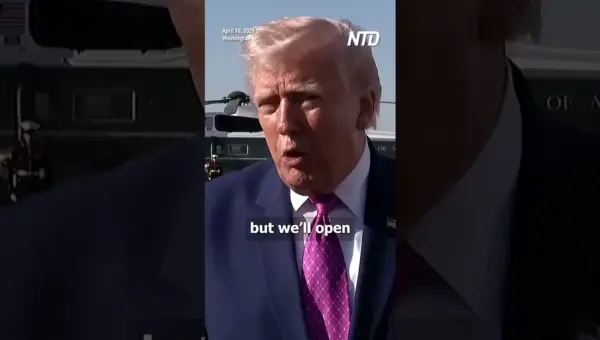
Trump Promises Strait of Hormuz Will Reopen Soon
Former President Donald Trump predicts the Strait of Hormuz will reopen soon, linking it to the absence of nuclear weapons. This crucial global oil transit point's stability impacts economies worldwide. Trump expressed confidence in U.S. military strength to ensure passage.

Trump’s Iran War Fuels Inflation, Strains Alliances
Donald Trump's recent military actions in Iran are being blamed for a significant rise in U.S. inflation and increased gas prices, impacting consumer confidence. The conflict has also strained relationships with key international allies, leading to diplomatic friction and questions about the future of alliances like NATO.
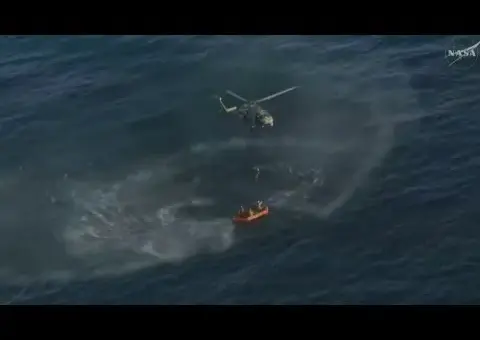
Artemis II Splashdown Signals US Space Race Dominance
The Artemis II mission's precise splashdown highlights NASA's space exploration leadership and the U.S. commitment to returning to the Moon. This success reinforces America's position in a renewed global space race.