Iran Conflict: US Faces Limited Options Beyond Air War
U.S. military options against Iran are limited, with experts suggesting air campaigns alone are insufficient and other strategies require long-term patience. The President's short timelines clash with these expert recommendations, raising concerns about economic stability, regional credibility, and the fate of the Iranian people.


Iran Conflict: US Faces Limited Options Beyond Air War
The United States faces a complex challenge in its approach to Iran, with military experts and former officials suggesting that traditional air campaigns may not be enough to pressure the Iranian regime. The discussion highlights a difficult strategic situation where direct infrastructure attacks risk escalating into war crimes, while other options require significant patience and advanced capabilities.
Limited Military Choices
General Wesley Clark, former NATO Supreme Allied Commander, explained that options beyond air strikes are difficult. Iran has buried missile cities deep underground and hidden coastal missile sites in caves. To counter this, the U.S. would need underwater reconnaissance in the Strait of Hormuz and the ability to destroy cruise missiles on ships and buried in caves. This requires different technology and a patient, sustained approach, possibly lasting weeks or months, not just a few weeks.
Clark also noted that naval gunfire support would require taking out Iran’s area denial and access denial missiles, which protect not only the Gulf but also areas outside it. He cautioned against sending ground troops, stating that while they might land and engage in firefights, sustaining a troop presence without casualties and achieving a strategic goal would be extremely difficult. He questioned what taking territory like Kharg Island would achieve, suggesting the current Iranian regime believes it is winning and is unlikely to negotiate seriously.
A suggested strategy involves taking out leadership, continuing patient pressure, working with resistance groups, and designating a provisional government. This approach emphasizes a long-term effort rather than immediate, large-scale action.
Presidential Timelines and Diplomacy
The discussion points to a significant disconnect between the prolonged military strategy suggested by experts and the President’s perceived desire for quick results. The President has repeatedly spoken of timelines measured in weeks, not months. This short-term focus makes a patient, strategic approach challenging.
Aaron David Miller, a former Middle East peace negotiator, expressed confusion about who is negotiating in good faith. He cited the President’s recent letter and statements from Iran indicating a refusal to accept a cease-fire, questioning the basis for believing negotiations are happening constructively.
Economic and Global Implications
The potential for oil prices to skyrocket is a major concern, especially as summer driving season approaches. Experts noted that if the Strait of Hormuz were shut down, oil prices could reach $575 a barrel. This would significantly impact the global economy and the U.S. economy specifically.
The reliance on Saudi oil exports through the Red Sea pipeline, which could be affected, further highlights the fragility of global energy markets. The potential disruption of these routes could create a double choke point, exacerbating price increases.
Domestic Constraints and Presidential Power
The analysis suggests a lack of significant constraints on the President’s decision-making. Allies are seen as having little influence, and domestic opposition is limited. Republicans offer little resistance, while Democrats lack the votes to override a presidential veto. Public demonstrations over gas prices are not currently anticipated.
The President’s own statements, like calling the only constraint on his actions his own morality, suggest a highly centralized decision-making process. This makes it difficult to reach a consensus or influence his strategy.
Impact on the Iranian People
There is concern about the fate of the Iranian people if the U.S. withdraws without achieving its objectives. Experts worry that the regime might punish its own population more severely after a U.S. departure, especially if America’s promises of support are seen as broken.
The destruction of dual-use infrastructure, such as steel production facilities, could have unintended consequences. While some steel might be used for missiles, it is also essential for industries like food processing and container manufacturing, which provide jobs and export revenue. Similarly, petrochemicals are used for both missiles and everyday products like plastics.
Confused messaging about U.S. actions, like hitting a bridge in Tehran while allowing Iranian oil tankers to export to China, can be misinterpreted by ordinary Iranians. If the U.S. appears constrained by gasoline prices at home, the Iranian regime may interpret this as a sign of weakness and simply wait for U.S. forces to leave.
Future Scenarios and Credibility
One fear is that if the U.S. withdraws without securing the Strait of Hormuz, it could validate the Iranian regime’s narrative that the U.S. only cared about oil and could not be trusted. This could lead to a loss of optimism among the Iranian population and damage American credibility in the region.
General Clark emphasized that if the U.S. pulls back and the Strait of Hormuz remains under Iranian control, it would have significant repercussions on the American economy, the value of the dollar, and U.S. global standing. The current situation is described as unprecedented, with a lack of clear exit strategy or anticipation of consequences before actions are taken.
Source: How does war play out if US doesn’t attack Iran’s infrastructure? | CUOMO (YouTube)

Related Articles

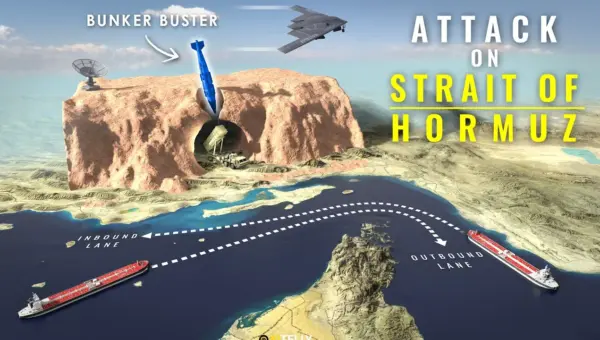
Iran’s Strait of Hormuz Trap: How the US Fights Back
Iran's strategy to control the Strait of Hormuz involves using islands as bases for anti-ship missiles and launching swarm attacks with small boats. The US counters with advanced defense systems, surveillance drones, and powerful bunker-buster bombs, highlighting the ongoing tension in this vital global shipping lane.
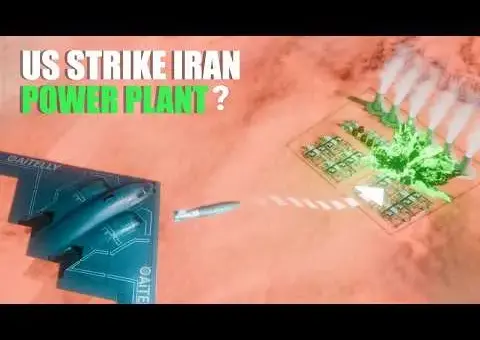
US Aims to Cripple Iran’s Power Grid to Secure Strait of Hormuz
A new US strategy reportedly targets Iran's power grid, including major plants like Damavand, to force open the Strait of Hormuz. The plan involves multi-stage air attacks using advanced bombers and precision munitions to cripple energy infrastructure and cause cascading failures.

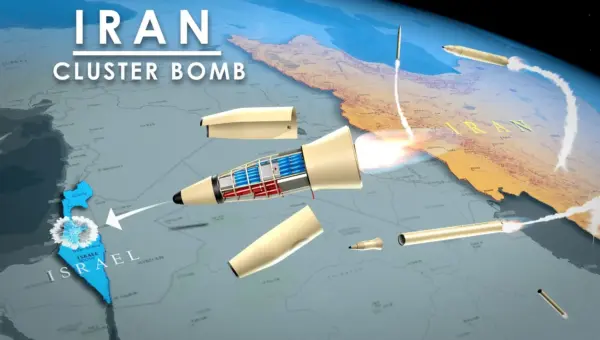
Iran’s Cluster Bombs: A Calculated Gamble to Overwhelm Defenses
Iran's use of cluster bombs against Israel was a deliberate tactic to overwhelm advanced missile defenses. These weapons scatter numerous smaller explosives, making interception difficult. While tactically advantageous, they raise serious humanitarian concerns due to their indiscriminate nature and unexploded ordnance.