Iran Conflict Threatens German Training Mission in Iraq
Germany's military training mission for Kurdish Peshmerga forces in Iraq is under threat due to escalating Iran-Iraq tensions. Iranian strikes targeting Kurdish opposition groups have placed German troops in a precarious position, raising concerns about the mission's future despite its focus on combating ISIS.

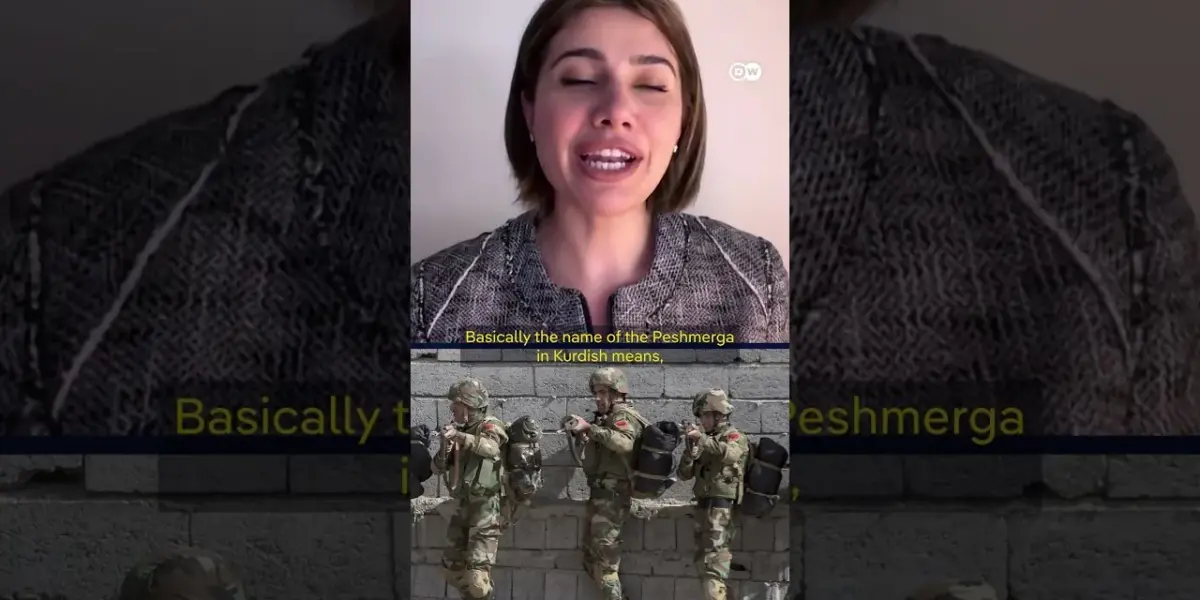
German Military Faces New Risks in Iraq Amid Iran Tensions
Germany’s long-standing military training mission in Iraq, focused on combating ISIS, is facing unprecedented challenges due to escalating tensions between Iran and the United States. For over a decade, the German Bundeswehr has been instrumental in equipping and training the Peshmerga, the internal security forces of the Kurdistan Region of Iraq. However, recent Iranian missile and drone strikes targeting Kurdish opposition groups within Iraq have placed German forces in a precarious position, raising questions about the future of the mission.
Background: Germany’s Role in Iraq
The German military’s involvement in Iraq began in 2014 as part of the US-led global coalition against the Islamic State of Iraq and Syria (ISIS). The Peshmerga forces proved crucial in the fight against the extremist group, which had rapidly seized large swathes of territory in Iraq and Syria. Recognizing their importance, Berlin has supplied thousands of weapons to the Peshmerga, including advanced anti-tank missile systems, and has established training programs in Erbil and Baghdad.
The name “Peshmerga” itself translates from Kurdish to “those who face death,” underscoring the dangerous nature of their role as internal security forces. The German mission, initially focused on bolstering the Peshmerga’s capabilities against ISIS, was officially extended by the German parliament until 2027, with its mandate strictly defined as preventing the resurgence of the terrorist group.
Iran’s Escalation and the ‘Crossfire’
The recent surge in Iran-Iraq tensions has introduced a new and volatile dimension to the region. Iran has significantly increased its missile and drone strikes in northern Iraq, explicitly targeting Kurdish opposition groups it hosts within its borders. These groups are often accused by Tehran of being linked to intelligence agencies like Israel’s Mossad, with Iran asserting these strikes are aimed at improving its own security by dismantling perceived threats.
“They uh were always like targeting Ariel because they called there is like Musad there, there is like um Israel base there. They want to bring the security down.”
These Iranian actions have inadvertently put German military personnel in a dangerous proximity to the conflict. While the Bundeswehr’s mandate remains solely focused on counter-terrorism training against ISIS, the Iranian strikes have created a complex geopolitical landscape. The report highlights that Iran’s targets are not always precise, leading to the potential for unintended consequences for international forces operating in the area. The German government has acknowledged the evolving situation by initiating a reduction in its troop numbers within Iraq, a move that signals growing concern over the safety of its personnel.
US Policy Shifts and Kurdish Ambitions
Adding another layer of complexity is the shifting stance of the United States. Initially, U.S. President Donald Trump reportedly encouraged Kurdish actors in the region to support U.S. efforts against Iran, hinting at potential American backing for Kurdish groups opposing the Iranian government. However, Trump has since appeared to backtrack, expressing a desire to avoid further entanglement in regional conflicts and stating that the war was complicated enough without involving the Kurds.
This fluctuation in U.S. policy leaves regional players, including the Peshmerga, in a state of uncertainty. The Kurdish forces, while instrumental in fighting ISIS, also harbor their own political aspirations and face a delicate balancing act between various regional powers, including Iran, Turkey, and the Iraqi central government, as well as international coalitions.
Impact on the German Mission
The core question remains: how will the intensified Iran conflict affect Germany’s mission in Iraq? A spokesperson for Germany’s operational command affirmed to DW that the deployment continues under its existing mandate, emphasizing the exclusive focus on training Iraqi and Kurdish forces to combat ISIS. The parliamentary extension until 2027 further underscores Germany’s commitment to this specific objective.
However, the reality on the ground presents a significant challenge. The increased Iranian hostilities create an environment where German trainers could potentially be caught in the crossfire, despite their non-combatant role. The reduction in troop numbers, while perhaps a precautionary measure, could also be interpreted as a sign that the mission’s operational stability is being compromised. The broader implications are significant: if regional instability prevents the effective continuation of training, the very goal of preventing ISIS’s resurgence could be jeopardized.
Looking Ahead
As Iran continues its regional assertiveness and the US navigates its complex relationship with Tehran and its allies, the German mission in Iraq faces an uncertain future. The international community will be closely watching whether Germany can maintain its training operations amidst escalating geopolitical tensions, and whether the mandate to combat ISIS can be sustained without being overshadowed by the wider Iran conflict. The safety of German personnel and the long-term effectiveness of the Bundeswehr’s contribution to regional stability remain paramount concerns.
Source: Iran conflict rattles Germany’s Iraq mission | DW News (YouTube)

Related Articles
GOP Congressman Questions Missile Blame, Eyes Iran’s Nuclear Future
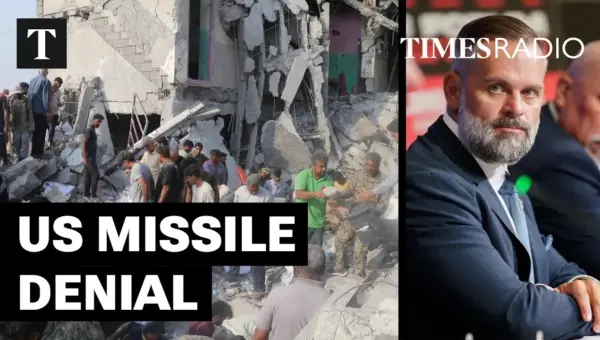
Republican Congressman Cory Mills has questioned the validity of claims that a U.S. missile struck a school in Iran, demanding concrete evidence. The discussion also covered Iran's degraded military capabilities, its nuclear program, and the potential for a transitional government, with Mills emphasizing the need for thorough investigation and accountability.


Hegseth’s Iran Response Criticized as ‘Disturbing in its Weakness’
Defense Secretary Pete Hegseth's responses regarding U.S. forces in Iran have been widely criticized as "disturbing in its weakness" and lacking strategic clarity. Observers pointed to his body language and ambiguous statements as indicators of a lack of transparency and gravitas.

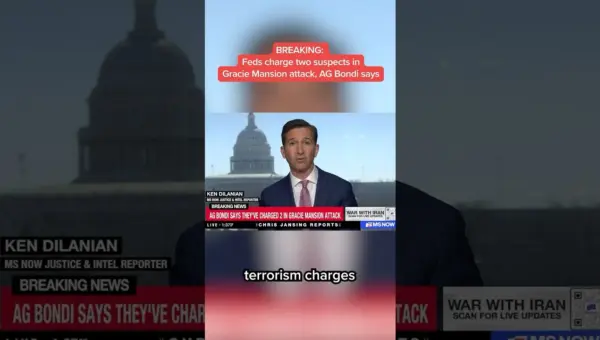
Feds Charge Two Suspects in Gracie Mansion Attack Tied to ISIS
Federal authorities have charged two men with terrorism offenses for their alleged role in a clash outside Gracie Mansion, according to Florida Attorney General Pam Bondi. The suspects are accused of pledging allegiance to ISIS and one allegedly threw an explosive device during a protest.