Iran Conflict Sparks UK Energy Crisis Fears: “Genie Out Of Bottle”
Escalating Middle East tensions are fueling fears of a UK energy crisis, with "genie out of the bottle" warnings from government insiders. Rising global gas prices are expected to drive up household energy bills, leaving the government scrambling for solutions. Meanwhile, the UK's traditional steel industry faces historic closure as blast furnaces are set to shut down.

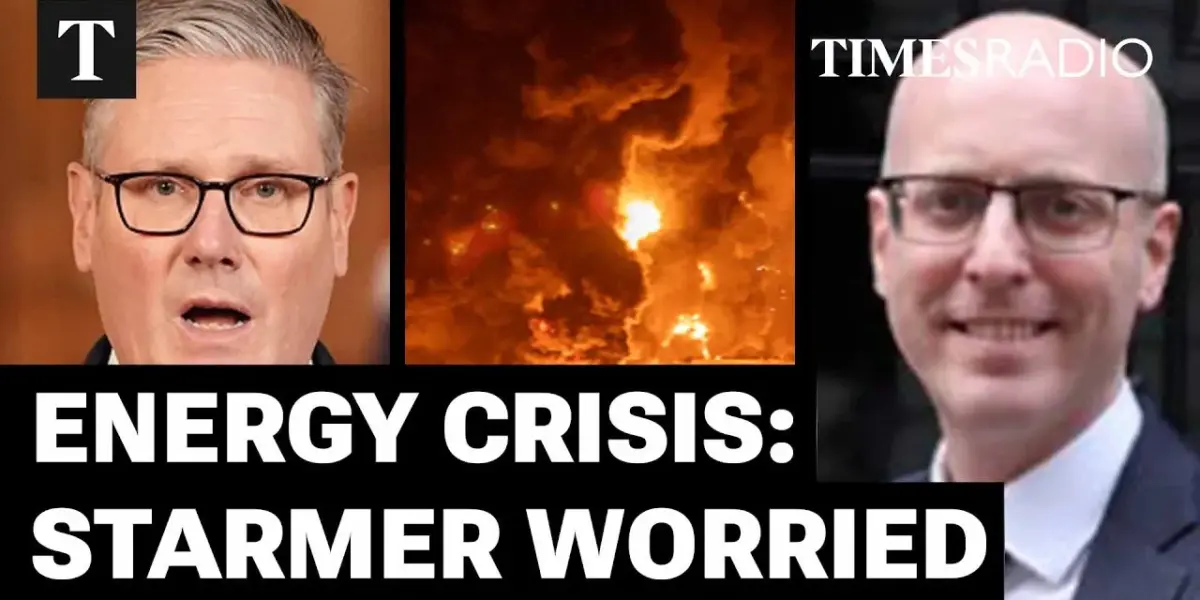
UK Government Faces Growing Energy Crisis Amidst Iran Conflict
The UK government is facing mounting anxiety over a potential energy crisis, fueled by escalating tensions in the Middle East. Senior officials who were previously calm about the situation are now expressing extreme worry about rising energy bills. Political Editor for The Times, Steven Swinford, described the mood as “far from relaxed,” emphasizing that the “genie is out of the bottle” regarding the conflict’s impact on global energy markets.
Middle East Tensions Drive Up Global Gas Prices
The core of the concern stems from Iran’s involvement in attacks on major gas fields and Israel’s independent actions, creating significant global uncertainty. While the UK does not directly import much gas from Qatar, these international events cause a ripple effect, driving up the global price of gas. This increase directly impacts the UK, which relies on gas for its energy needs, leading to fears of significantly higher energy bills for households.
Government Grapples with Unclear Scale of the Problem
The government is reportedly still trying to understand the full extent of the problem. “The government still doesn’t know what to do about it because it doesn’t know the scale of the problem yet,” Swinford stated. This uncertainty complicates efforts to prepare effective responses. Officials are exploring various contingency plans, ranging from large-scale financial support for households to more targeted aid for the poorest families. However, the lack of clarity on the crisis’s magnitude makes planning difficult.
Summer Months Offer Temporary Respite, Long-Term Worries Remain
A small silver lining for the government is the timing of the crisis. The current energy price cap is set to expire in June, and the transition into summer typically sees reduced energy consumption. This seasonal dip in demand for gas and electricity could offer some temporary relief. However, Swinford cautioned that the long-term effects will persist for months. The Bank of England is also expected to hold off on cutting interest rates, and may even consider raising them, further impacting household finances and the broader economy.
Broader Economic Consequences and Public Concern
The economic fallout is expected to be significant. Rising energy prices are a major contributor to inflation, a concern that has been amplified by the current geopolitical situation. Experts fear that inflation could rise substantially, potentially exceeding initial predictions. This contrasts with the situation during the Russia-Ukraine crisis, where interest rates were at historic lows. Now, with higher starting interest rates, the Bank of England faces a difficult decision on how to manage inflation without stifling economic growth.
Angela Rayner Emerges as a Political Force
Beyond the energy crisis, the political landscape is also seeing significant shifts. Angela Rayner, a prominent figure in the Labour party, has made a notable move by criticizing the government’s immigration policy in a recent speech. This criticism, directed at a policy co-signed by Labour leader Keir Starmer, is seen as a direct challenge to Prime Minister Rishi Sunak. Rayner’s actions, coupled with union leader Sharon Graham’s predictions of Labour’s electoral struggles and potential leadership challenges, suggest growing internal party dynamics and a potential shift in the opposition’s direction.
Rayner Courts Business Leaders with Private Calls
Further demonstrating her political maneuvering, Angela Rayner has reportedly engaged in private calls with city investors, reportedly charging a five-figure sum for these sessions. During these calls, she has questioned the Office for Budget Responsibility’s costings for increased public spending. Businesses, described as pragmatic, are seeking to understand her views and potentially influence her policies, anticipating she could be the next Labour leader. This strategic engagement highlights Rayner’s efforts to build support and shape future economic policy.
UK Steel Industry Faces Historic Closure
In a significant and historic development, Britain’s last remaining blast furnaces for traditional steel production are set to close. This decision marks the end of an era for an industry that was central to the UK’s industrial revolution. Parliament was recalled just a year ago to pass emergency legislation to keep these furnaces operational, making the current decision to close them particularly striking. While the move is framed as a transition to more renewable forms of steelmaking, it is expected to result in fewer jobs and a reduced capacity to produce certain grades of steel. The closure signifies a broader trend of the UK moving away from traditional heavy manufacturing, acknowledging that traditional methods are no longer economically competitive on a global scale.
Source: Iran War Energy Crisis Panics Government: ‘The Genie Is Out Of The Bottle’ | Steven Swinford (YouTube)

Related Articles


Iran War Claims Ring Hollow as US Troops Injured in New Attack
Days after Donald Trump claimed "we've won" the war with Iran, a new attack injured approximately a dozen U.S. troops and damaged aircraft. This incident contradicts Trump's assertions of victory and raises serious questions about the strategy and reality of the ongoing conflict.

US Weighs Shifting Ukraine Weapons to Iran Amid Missile Shortage
The U.S. is reportedly considering diverting weapons destined for Ukraine to support operations against Iran, driven by rapidly depleted missile stocks. This potential shift raises concerns about Ukraine's defense capabilities and highlights the complex interplay between global conflicts.


Tiger Woods Arrested for DUI After Crash
Golf legend Tiger Woods was arrested for DUI in Florida following a dramatic rollover crash. Meanwhile, a government shutdown continues as House Republicans block a Senate deal, leading to airport chaos and TSA worker pay issues. The stock market also plummeted into correction territory amid fears of a prolonged Iran conflict.