Iran Conflict Echoes Six-Day War, Experts Warn of Bloody Unrest
Geopolitical experts warn that the escalating tensions between Iran, the US, and Israel could lead to a prolonged and bloody civil conflict, drawing parallels to historic regional wars. The uncertainty surrounding the conflict's objectives and the UK's role as a potential bystander are key concerns.

Middle East on Edge: Experts Draw Parallels to Historic Conflicts Amidst Iran Tensions
The escalating conflict involving Iran, the United States, and Israel has ignited fears of a protracted and potentially devastating confrontation, with geopolitical analysts drawing parallels to historic wars like the Six-Day War and the Gulf War. The situation remains highly uncertain, with experts warning that any military engagement could devolve into a bloody civil conflict with an unpredictable outcome, rather than a swift resolution.
Uncertainty and Potential for Escalation
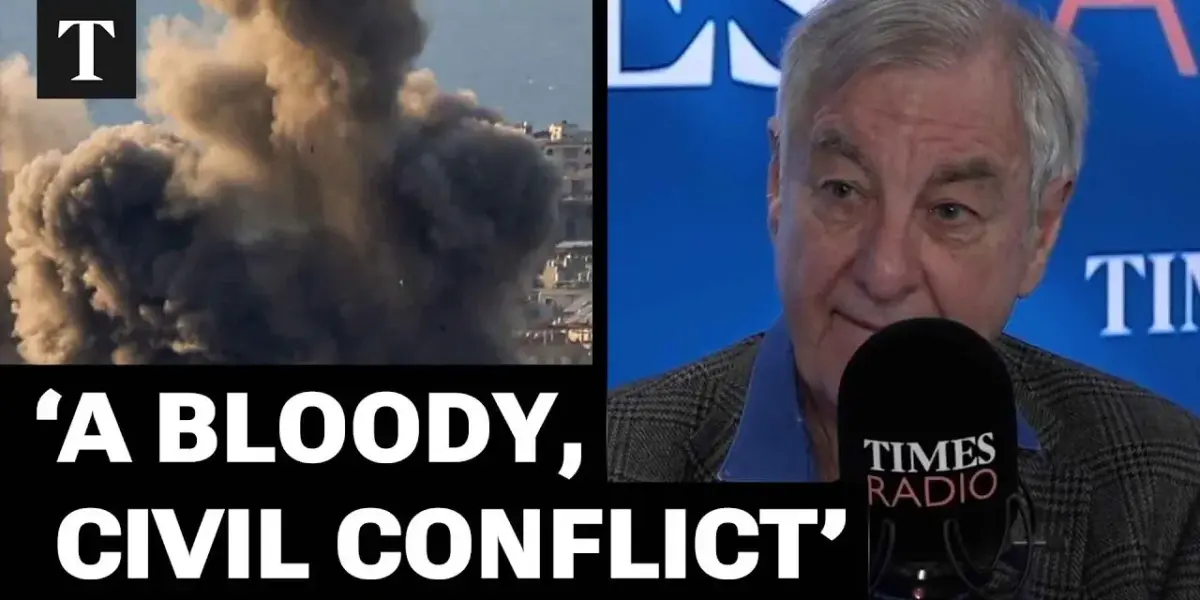
Michael Binyon, a leader writer and former diplomatic editor for The Times, described the current climate as “pretty uncertain.” He highlighted the vast scale of Iran, a nation of 93 million people, suggesting that any conflict could be significantly more bloody than previous, smaller-scale engagements in the region. Binyon noted the speed of modern precision strikes but cautioned that the immediate success of initial aims does not preclude a prolonged and tumultuous aftermath. “In theory, it could be another Six-Day War, you know, all over regime collapses, peace and harmony spread out from Tehran. It won’t be like that. It will be a bloody civil conflict, struggle for power, uncertainty. Nobody knows what’s going to happen,” he stated, comparing the potential scenario to the complexities of the last Gulf War.
Defining Objectives: A Fog of War
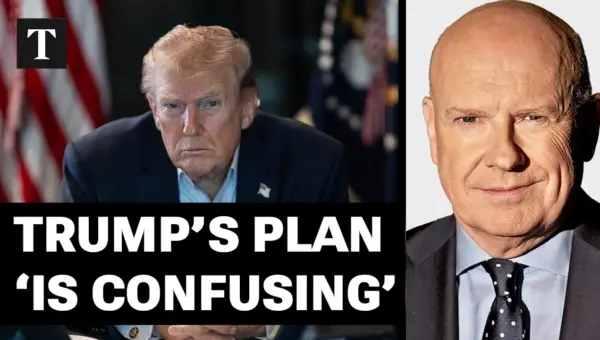
A key challenge in predicting the conflict’s trajectory lies in the ambiguity of its objectives. Binyon pointed out the difficulty in discerning whether the primary goal is to prevent Iran from developing nuclear weapons, to achieve regime change, or to foster a democratic and stable Iran. He noted that diplomatic efforts to curb Iran’s nuclear program have faltered, particularly after the United States withdrew from the Obama-era deal. The aspiration for regime change, while increasingly voiced, remains a contentious and complex objective. “So, we don’t really know what the aims are and they seem to overlap and conflict with each other. Uh, and that’s why it’s a very confusing and difficult war to predict,” Binyon explained.
The British Position: A Bystander’s Dilemma
The role of Britain in the escalating tensions has come under scrutiny. An editorial in The Times suggested that the UK must move beyond a passive stance and make a more substantial contribution to both war and peace efforts, questioning whether Britain risks becoming a bystander. Binyon acknowledged the delicate balancing act for the UK, which has historically aligned with the United States but has also, at times, taken independent stances, citing Greenland as an example. He emphasized the importance of a nation’s voice being heard, referencing Harold Wilson’s decision not to send British troops to Vietnam. Public opinion in Britain, Binyon noted, does not favor involvement in a war with Iran, a sentiment that governments must consider, even while making difficult decisions.
“My own paper takes a very strong line saying we’re either with the Americans or we’re not with the Americans but the problem is we’ve been sort of half with the Americans over a number of things and in some things we’ve stood up uh to the Americans.”
US-UK Relations Under Strain
Former US President Donald Trump has been critical of the current UK government, suggesting that the “special relationship” is not what it once was and that Prime Minister Rishi Sunak has not been helpful. This sentiment was echoed by former foreign office adviser Ben Judah, who described the United States under Trump as “profoundly erratic, unpredictable, and emotional.” Judah argued that Trump’s approach to foreign policy has become more about “foreign politics,” targeting progressive leaders and leveraging rhetoric used by the global right. He suggested that Britain’s position, caught between supporting American actions and upholding international law, is more complicated than that of countries like Spain or Canada, given the UK’s significant presence and alliances in the Gulf region.
The European Dimension and the Path Forward
Judah also pointed out the challenges in pivoting towards Europe for stronger geopolitical alignment, noting the lack of a unified European voice on the current conflict. While some European nations, like Spain, have adopted a more critical stance on military action, others are leaning towards supporting the US campaign. Judah advocated for Britain to play a role in fostering a stronger European voice and reinforcing its relationship with France and the European Union. He stressed that the UK’s geopolitical objective should be to avoid direct involvement in regime change while safeguarding its people and allies in the Gulf.
Iran’s Regional Strategy and Public Sentiment
Michael Binyon elaborated on Iran’s motivations for its regional actions, suggesting they are intended to demonstrate the reach of its influence and to stir opposition to the war among neighboring countries. He noted that these nations had warned the US about potential Iranian tactics. While acknowledging that large-scale destruction in cities like Dubai is unlikely, Binyon stated that rogue strikes have resulted in casualties and are building public opinion in the Gulf. This sentiment is divided, with some questioning Iran’s actions and others understanding them as a response to perceived provocations from Israel and the US.
The Specter of Ground Invasion and Historical Grievances
The possibility of deploying ground troops has been raised, a move Binyon described as a potential “recipe for endless untold prolonged chaos” and a slide towards an “Iraq situation.” He cautioned that a land invasion of Iran, a proud and populous nation, could galvanize nationalistic sentiment and historical grievances, potentially uniting the population against foreign forces. Binyon recalled the 1953 British-backed coup that reinstated the Shah, a historical event that continues to fuel resentment.
Navigating a Precarious Geopolitical Landscape
As the conflict continues, the international community watches closely. The United States’ commitment to a prolonged military engagement, despite the immense costs and potential for unforeseen consequences, remains a central point of concern. The effectiveness of diplomatic channels and the possibility of de-escalation are now paramount. The UK’s ability to maintain its delicate diplomatic balance, and the broader European response, will be critical in shaping the future of the region. The coming weeks will likely reveal whether the current tensions will lead to a contained conflict or a wider, more devastating conflagration.
Source: Iran Latest: Times Expert Explains Why The Israel-US-Iran Conflict Could Be The Next Six Day War (YouTube)

Related Articles

Canada Pivots East, Threatening US Energy Dominance
Canada's strategic pivot towards India, driven by perceived US instability, signals a potential end to American energy dominance. This shift could lead to higher energy costs for Americans and a broader recalibration of global economic power.

GOP’s War Rationale Crumbles Amidst Public Scrutiny
MAGA Republicans face mounting criticism for their justifications of potential military action against Iran, revealing a perceived conflict between "America First" rhetoric and a foreign policy driven by allied interests. The debate highlights constitutional questions and the historical echoes of past interventions.
Trump’s Iran Message Sparks GOP Unease Amid Regional Tensions
Republicans are reportedly uneasy with President Trump's unclear messaging on the escalating conflict with Iran, questioning the objectives and timing of recent military actions. Despite public support, private doubts are surfacing over the administration's justification for strikes and the lack of a cohesive strategy.