Iran Claims Nuclear Deal Was Close Before US-Israeli Strikes
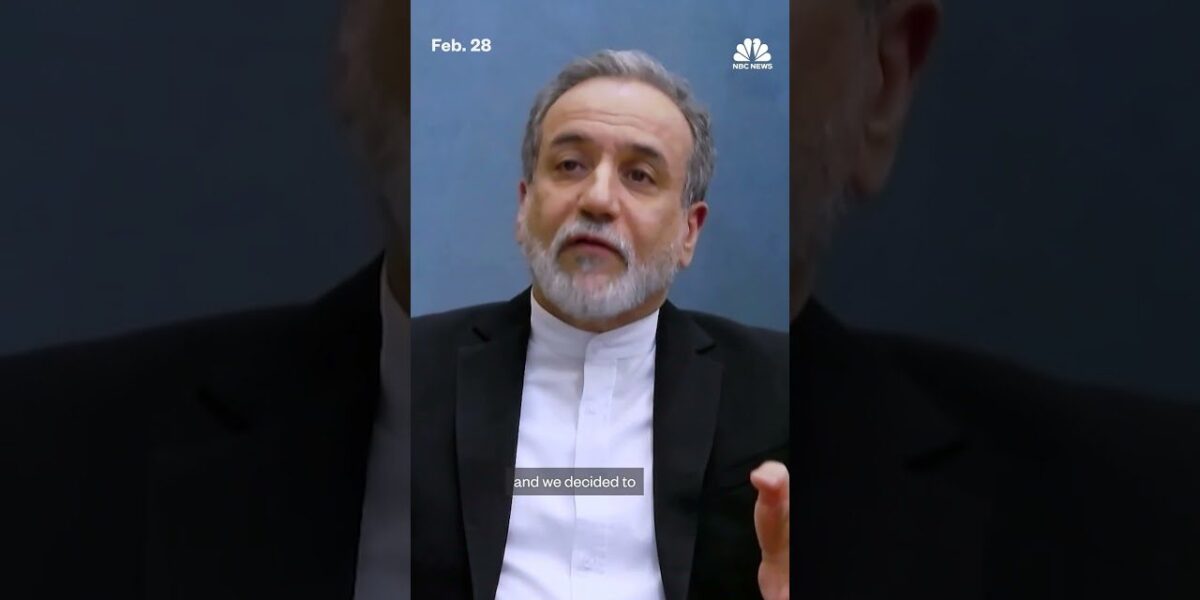
Iran's Foreign Minister claims a nuclear deal was within reach before recent U.S.-Israeli strikes disrupted progress. He alleges the U.S. administration's actions have repeatedly sabotaged negotiations, questioning their commitment to the process amidst claims of external influence.

Iran Claims Nuclear Deal Was Close Before US-Israeli Strikes
Tehran, Iran – Iran’s Foreign Minister has voiced strong criticism of the United States, asserting that a significant nuclear deal was within reach before recent strikes, which he alleges were orchestrated by Israel, disrupted the progress. The official stated that the U.S. administration’s actions have repeatedly sabotaged negotiations, creating an environment of mistrust and hindering diplomatic efforts.
Negotiations Reach Critical Juncture
According to the Iranian Foreign Minister, recent talks held in Geneva showed substantial progress. He detailed a meeting on Thursday involving key figures, including Steve Vitkov and Jared Kushner, where significant hurdles concerning Iran’s nuclear program were addressed. While acknowledging that differences persisted, the minister highlighted that several critical issues had been resolved, paving the way for further discussions.
“We were able to address serious questions related to Iran’s nuclear program. We obviously have differences but we resolved some of those differences and we decided to continue in order to resolve the rest of questions.”
The positive momentum from these discussions was further underscored by a decision to instruct the technical team to proceed to Vienna for meetings with the International Atomic Energy Agency (IAEA). The objective was to find technical solutions to ongoing issues, a move that reportedly garnered satisfaction from all parties involved.
Oman’s Mediation and Diplomatic Approval
The mediation efforts of Oman played a crucial role in facilitating these talks. His Excellency Bad al-Bused, the Foreign Minister of Oman, who has been instrumental in bridging the gap between Iran and other parties, shared his assessment via a tweet. He reported significant progress, noting that his assessment was made after consulting with both delegations, who expressed their contentment.
“Today we made significant progress and before he post his tweet he consulted with both delegations and both were happy.”
This shared sense of accomplishment and mutual agreement, as described by the Omani Foreign Minister, suggests that a diplomatic breakthrough was genuinely imminent. The satisfaction expressed by both sides indicates a potential willingness to compromise and move towards a mutually acceptable agreement.
Allegations of External Interference
Despite the apparent headway, the Iranian Foreign Minister questioned the U.S. administration’s decision to launch strikes amidst ongoing negotiations. He drew parallels to a similar incident in June, suggesting a pattern of disruptive actions. The minister posited that external actors, possibly including Israel, may have influenced the U.S. to engage in these actions for their own strategic benefits, thereby derailing the diplomatic process.
“So I don’t know why while we were progressing in our talks and we had made good you know uh achievement and a deal was at our reach why they decided to attack us perhaps you know it was others who dragged the United States for for their own benefits into this you know conflict.”
This assertion points to a deep-seated mistrust regarding the U.S.’s commitment to the negotiation process and raises concerns about the influence of third-party interests in international diplomacy. The implication is that the U.S. may not be acting independently but is being drawn into actions that serve the agendas of other nations.
Broader Implications for Nuclear Diplomacy
The situation highlights the precarious nature of international negotiations, particularly concerning sensitive issues like nuclear programs. The alleged disruption of a deal that was “at our reach” could have significant repercussions for regional stability and global non-proliferation efforts. It underscores the challenges in achieving lasting agreements when trust is eroded and external pressures are perceived to be at play.
The incident also raises questions about the U.S.’s strategic objectives and its ability to manage complex diplomatic relationships while simultaneously engaging in actions that could be perceived as adversarial. The accusation of being “dragged” into conflict suggests a potential lack of strategic autonomy or a divergence between stated diplomatic goals and actual policy implementation.
What’s Next in Diplomatic Efforts?
Moving forward, the focus will likely remain on whether diplomatic channels can be reopened and trust can be rebuilt between Iran and the parties involved in the nuclear talks. The U.S. administration’s response to these allegations and its future actions will be critical in determining the trajectory of negotiations. Observers will be closely watching for signs of de-escalation and renewed commitment to dialogue, as well as any further actions that could either advance or impede a potential nuclear agreement.
Source: Iranian foreign minister: 'A deal was at our reach' before U.S.-Israeli strikes (YouTube)

Related Articles

Gulf States Caught in US-Iran Crossfire, Seek Stability
Gulf states are caught in the escalating US-Iran conflict, facing violations of sovereignty and national security threats. Leaders express a strong desire for stability and economic prosperity, contrasting with the unfolding scenes of regional instability.

Trump Threatens “Unseen” Force on Iran After Leader’s Death
Following the assassination of Supreme Leader Ayatollah Ali Khamenei, U.S. President Donald Trump has vowed to unleash unprecedented force on Iran. While outlining ambitious goals including regime change, experts express skepticism about the effectiveness of airstrikes and the potential for popular uprising against a resilient Iranian government.
US Strikes Iran: What’s Next for Trump’s Regime Change Strategy?
The U.S. has launched significant strikes against Iran, targeting its leadership and military capabilities. While President Trump claims progress, experts question the long-term strategy, potential diplomatic engagement, and support for the Iranian people amidst a leadership vacuum.