Iran Ceasefire: US Halts Attacks, Strait of Hormuz Reopens
The U.S. and Iran have agreed to a two-week ceasefire, halting hostilities and potentially reopening the critical Strait of Hormuz. The deal, mediated by Pakistan, aims to de-escalate tensions following a period of intense conflict. Key details about Iran's nuclear program and the terms for reopening the Strait remain under scrutiny.


US and Iran Agree to Two-Week Ceasefire, Strait of Hormuz to Reopen
In a dramatic turn of events, President Trump announced a two-week ceasefire with Iran, halting U.S. military actions in exchange for Iran’s agreement to immediately reopen the Strait of Hormuz to global shipping. This breakthrough comes just hours before a self-imposed deadline by the President, who had threatened to “take Iran off the map” if a deal wasn’t reached.
Pakistan’s Mediation Key to De-escalation
The White House revealed that the agreement was reached following talks with Pakistan’s Prime Minister. President Trump stated on his social media platform, Truth Social, that he would suspend bombings in Iran for two weeks. He described this as a “double-sided ceasefire” and indicated that the U.S. had received a 10-point proposal from Iran, which he believes offers a “workable basis on which to negotiate.” Iran’s new Supreme Leader, Ayatollah Moaba Ham, has reportedly agreed to the proposal.
This development offers a critical “offramp” from a major escalation that had gripped the region. The deadline for Iran to agree to a deal and reopen the Strait of Hormuz was set for 8:00 p.m. Eastern time.
White House Cites Military Objectives Met
White House Press Secretary had previously stated that the President had reviewed Pakistan’s ceasefire proposal and would respond soon. President Trump’s decision to agree to the ceasefire was attributed to having “already met and exceeded all military objectives.” He also expressed optimism about reaching a “definitive agreement concerning long-term peace with Iran, and peace in the Middle East.”
Despite the agreement, significant questions remain. Details of the 10-point Iranian proposal are still unclear, particularly concerning Iran’s nuclear program and the specifics of how the Strait of Hormuz will be reopened to tankers. The true test of this agreement will lie in the actions taken in the coming hours and days, and whether both sides uphold their commitments.
Expert Analysis: A Tenuous Peace?
Retired General Wesley Clark, former Supreme Allied Commander of NATO, noted the critical nature of the Strait of Hormuz, an international waterway that should not be controlled by any single nation. He expressed concern over Iran’s statement that the Strait’s opening would be “via coordination with Iran’s armed forces,” suggesting this could be a way for Iran to maintain control.
Retired Brigadier General John Tikkert, former assistant deputy undersecretary of the Air Force, emphasized the need to link military objectives with strategic goals. He stated that while U.S. military objectives, such as destroying Iran’s ability to project power, may have been met, the strategic objectives, including securing the Strait and addressing the nuclear program, require further scrutiny of the 10-point plan.
Mick Mulaney, former White House Chief of Staff, highlighted the domestic political benefits of lower oil prices and a potential stock market rebound. However, he cautioned that the agreement is essentially a “two-week reprieve” and expressed doubt that Iran would voluntarily give up its nuclear program permanently. He also pointed out that Iran could still pose a threat by simply closing the Strait again in the future, emphasizing the need for an enforceable agreement.
Economic and Geopolitical Implications
The potential reopening of the Strait of Hormuz is crucial for global oil supplies. The conflict had caused oil prices to surge, impacting economies worldwide. A stable flow of oil through the Strait is vital for international commerce and energy security.
The transcript also mentions a potential last-minute intervention by China, which reportedly asked Iran to show flexibility. China’s heavy reliance on energy flows from the region likely motivated its involvement in seeking greater stability.
A key point of contention in the 10-point proposal, as reported by The New York Times, is the lifting of sanctions imposed on Iran by all U.S. administrations since George W. Bush. Analysts question whether the West would relinquish this economic leverage without significant, enforceable concessions on Iran’s nuclear program.
Concerns Over Nuclear Program and Strait Control
A central focus of the conflict has been Iran’s nuclear program. While some assessments suggest Iran is far from developing a nuclear weapon, the issue remains a significant concern for regional and international security. The details of any agreement regarding uranium enrichment are critical but were not explicitly mentioned in President Trump’s initial statement.
The control of the Strait of Hormuz remains a contentious issue. Iran’s assertion that passage requires coordination with its armed forces is viewed by some as a potential violation of international maritime law and a strategic gain for Tehran.
Fragile Dynamics and Future Scenarios
The situation remains highly fluid. Reports indicate that Iran’s Supreme National Security Council stated, “Our fingers are on the trigger, and as soon as the enemy makes the slightest mistake, it will be answered with full force.” This highlights the inherent fragility of the ceasefire.
The transcript also notes that at the very moment President Trump announced the ceasefire, missiles were reportedly fired toward Israel from Iran, underscoring the ongoing tensions and the challenge of ensuring compliance. The coming hours and days will determine if the ceasefire holds and if the Strait of Hormuz truly reopens without Iranian-imposed conditions.
The potential future scenarios range from a stable de-escalation leading to broader diplomatic talks, to a collapse of the ceasefire, returning the region to a state of heightened conflict. The success of this two-week period hinges on clear communication, verifiable actions, and a mutual commitment to de-escalate tensions, addressing both immediate security concerns and long-term strategic objectives.
Source: US and Iran agree to two-week ceasefire | Vargas Reports Full Episode 4/7 (YouTube)

Related Articles


Trump’s Wild Rants Expose a Presidency Adrift
Donald Trump's recent 'batshit crazy' outbursts, attacking former allies and reacting erratically to the Iran crisis, signal a leader adrift. Professor Scott Lucas argues this isn't diplomacy but desperate shouting, as geopolitical tensions escalate and traditional allies seek new paths.
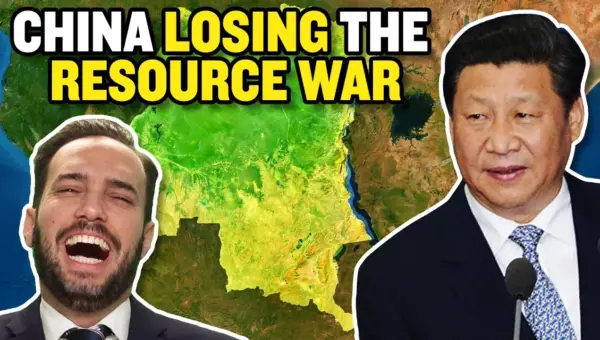
China Courts US Oil Amid Iran Deal, Rare Earth Race Heats Up
China is now importing US oil amid a complex geopolitical landscape, including brokering an Iran ceasefire and facing challenges in its rare earths dominance. Meanwhile, regional disputes over strategic islands and airspace add to global tensions.
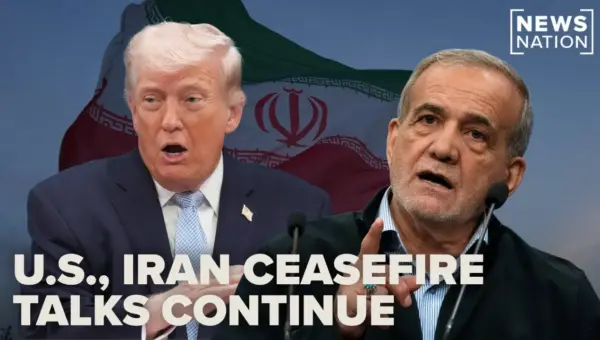
Iran Threatens Strait of Hormuz Amid Lebanon Strikes
Iran threatens to close the vital Strait of Hormuz in response to ongoing strikes in Lebanon. The US is trying to de-escalate, but actions on the ground remain a concern, potentially impacting global oil markets and future negotiations.