Iran-Backed Houthis Target Israel; US Troops Surge in Middle East
The Houthis, backed by Iran, launched a missile at Israel, escalating regional tensions. Meanwhile, over 3,500 US troops have arrived in the Middle East. Separately, a new White House task force is tackling widespread government fraud, with expert Michael Bustler highlighting the significant financial and trust implications. The report also touches on the ongoing DHS funding debate and sports news.

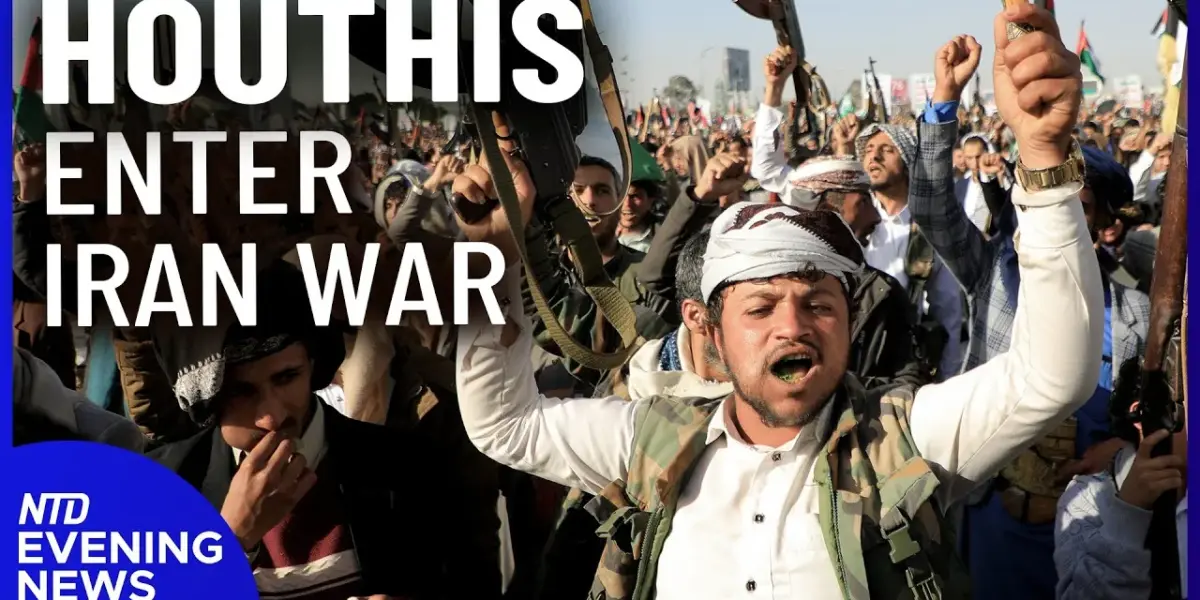
Middle East Tensions Escalate as Houthis Attack Israel
The conflict in the Middle East has intensified with the Houthi militant group, which is supported by Iran, launching a missile attack against Israel. A spokesperson for the group confirmed they are now entering the wider regional conflict. They stated that Houthi forces attacked what they called “sensitive Israeli military sites” in southern Israel. Israel’s military reported that the single missile launched was intercepted. This action by the Houthis comes as a US-Israel coalition has reportedly targeted over 15,000 sites in Iran. The Israeli Defense Forces also claim to have destroyed or disabled more than 330 of Iran’s approximately 470 ballistic missile launchers.
China’s Role Questioned Amidst Regional Instability
Iran has reportedly rejected attempts by Beijing to mediate the ongoing conflict. Insiders suggest that the war is negatively impacting the global ambitions of the Chinese Communist Party (CCP). One source, who spoke anonymously to The Epoch Times, indicated that the CCP had planned to use its relationship with Iran to gain influence over developing countries. Furthermore, Iranian leaders allegedly turned down a Chinese request for safe passage for cargo ships through the Strait of Hormuz. Iran could only guarantee the safety of some ships heading to Iran itself. This blockage is reportedly driving up prices within China, and the war is taking a heavy toll on the Chinese economy, particularly its export sector, with many shipping containers stuck at ports.
Former Iranian Crown Prince Speaks at CPAC, Vows to Rebuild Iran
Reza Pahlavi, the former crown prince of Iran, spoke at the Conservative Political Action Conference (CPAC) this week. Amid speculation about a possible return to Iran as leader after nearly 50 years in exile, Pahlavi expressed his desire to help his former country. He strongly condemned the Iranian regime’s recent actions, highlighting the killing of thousands of protesters. Pahlavi described horrific abuses, stating that wounded protesters were hunted down, even in hospitals, and that men and women were raped in secret prisons. He also mentioned that medical staff who helped protesters faced torture, rape, and death. Families were forced to identify their children from unmarked body bags, and were even charged for the bullets used to kill them. Pahlavi declared his intention to “make Iran great again,” echoing a similar sentiment previously expressed by former President Donald Trump.
US Military Reinforces Presence in Middle East
In response to the escalating tensions, the United States is increasing its military presence in the Middle East. Over 3,500 US sailors and Marines have arrived in the region aboard the USS Tripoli. The US Central Command confirmed this deployment, stating that the Tripoli carries transport aircraft, strike fighters, and amphibious assault capabilities. This move signifies the Pentagon’s ongoing effort to bolster its forces in the volatile region.
Government Shutdown Disrupts Homeland Security Operations
Funding for the Department of Homeland Security (DHS) remains uncertain due to deep divisions in Congress. A recent late-night vote highlighted the stark differences between the House and Senate. The partial government shutdown, now in its 43rd day at the time of reporting, has created significant problems. President Trump signed an executive order to ensure TSA agents receive their paychecks, as they were directly impacted by the shutdown. However, the broader funding issues persist.
House and Senate Clash Over DHS Funding
House lawmakers rejected a Senate proposal, passing instead a short-term measure to fund the entire DHS for an additional eight weeks. Senate Democrats immediately dismissed this plan, calling it unacceptable. Meanwhile, Senate Republicans had proposed delaying funding for Immigration and Customs Enforcement (ICE) until later in the year, a plan that Democrats initially welcomed. However, President Trump aligned himself with House Republicans, deeming the Senate’s plan to delay ICE funding inappropriate. He argued that Democrats want to allow criminals and undocumented immigrants into the country, while his administration is trying to remove them.
Debate Over ICE Agent Protections and Warrants
A key point of contention is the White House’s proposal, which met most Democratic demands except for the removal of agent masks and judicial warrant requirements for certain operations. Democrats believe ICE agents should operate like other law enforcement officers in the country. Republicans, however, have drawn a firm line, insisting that masks protect agents from doxing and that judicial warrants would hinder immigration enforcement. They argue that these tools help agents arrest more criminals and national security threats.
Shutdown’s Impact on Critical Services
Beyond TSA agents, other parts of the DHS are facing operational challenges due to the funding lapse. A hearing this week revealed the escalating impact, with estimates suggesting that for every day the shutdown continues, it will take two and a half days to recover. FEMA’s ability to assist Americans before, during, and after disasters is at risk. The department’s cybersecurity division also warned that the shutdown endangers preparations for major upcoming events, including the FIFA World Cup, and weakens the ability to mitigate cyber risks and support physical security.
Ethics Allegations Against Representative Sheila Sherilis McCormack
In other news, an ethics committee investigation found that Democratic Representative Sheila Sherilis McCormack committed dozens of ethics violations. The bipartisan ethics subcommittee’s findings suggest she used millions of dollars in improperly paid federal disaster funds to finance her campaign. Two Democrats have called for her resignation, and lawmakers are expected to decide on recommended sanctions after their upcoming recess.
Task Force Tackles Decades-Long Fraud Problem
Vice President JD Vance convened the first meeting of the White House anti-fraud task force. The group’s primary goal is to address what they describe as a massive, decades-long problem of fraud that drains taxpayer dollars and erodes public trust in government. Economist and public policy analyst Michael Bustler joined the discussion to provide insights.
The Scale of Fraud and its Impact on Trust
The task force was partly formed in response to a significant fraud case in Minnesota, involving the Somali community, where a US attorney estimated losses to Medicaid services exceeded $9 billion since 2018. Vice President Vance emphasized that taxpayer money meant to help citizens is instead going to fraudsters. This diverts resources from families needing services, particularly for vulnerable groups like autistic children. Bustler explained that such mismanagement severely damages social trust. When people work hard for their money, only to see it wasted or stolen through fraud, their confidence in the government plummets. He highlighted that the US public debt is around $39 trillion, with annual deficits of about $2 trillion, a significant portion of which is attributed to waste, fraud, and abuse. Estimates suggest that $250 to $500 billion dollars could be lost annually to fraud in healthcare programs alone.
Systemic Issues Enabling Fraud
Steven Miller pointed out that many citizens assume robust verification processes are in place for federal benefits, but this is often not the case. He suggested that in some areas, programs operate largely on the honor system, with little verification before benefits are received. Bustler elaborated that in certain regions, government officials may use the distribution of funds to gain political influence. He cited examples like the Minnesota case, where funds allegedly went to organizations that don’t exist, in exchange for votes. He also mentioned a large number of fraudulent hospice facilities found in a small area of Los Angeles, questioning how such schemes can proliferate. Bustler believes that a lack of profit motive in government operations can lead to inefficiency and higher costs compared to private sector initiatives. This makes close monitoring essential to prevent fraud.
Addressing Fraud for Future Sustainability
Bustler stressed the critical importance of tackling fraud for the nation’s future, especially as the country approaches its 250th anniversary. He described unchecked fraud as a “cancer” that grows worse over time. He believes that unlike previous administrations that may have ignored the problem, President Trump’s business-oriented approach aims to address these issues directly and efficiently. Bustler hopes that the task force can achieve significant results quickly, allowing Americans to celebrate the anniversary with a renewed sense of confidence in their government and its use of taxpayer money. He emphasized that the US, as a global leader, should not be seeking to overrun other countries but rather promote freedom and democracy, which in turn enhances national security.
Sports News: March Madness Heats Up, UConn Coach Criticizes Tournament Format
The NCAA Men’s Basketball Tournament, March Madness, is down to its final eight teams competing for a spot in the Final Four. Two games were scheduled for the Elite Eight round: Iowa versus Illinois and Arizona versus Purdue. The winners will advance to the Final Four, set to begin the following Saturday. Analyst Dave Martin offered predictions for the upcoming games.
Women’s Tournament Format Under Scrutiny
In women’s college basketball, UConn head coach Geno Auriemma criticized the NCAA’s decision to use only two regional sites for the tournament, a change from the previous four-site format. He argued that this consolidation leads to a cramped schedule, limiting practice and shootaround times for the competing teams. Despite this, Auriemma’s UConn Huskies, the number one team in the country at 37-0, are strong favorites to advance to the Final Four.
Tiger Woods Arrested on Suspicion of DUI
Professional golfer Tiger Woods was arrested on suspicion of Driving Under the Influence (DUI) near his home in Jupiter Island, Florida. According to the county sheriff, the incident occurred around 2:00 p.m. local time. Woods’ vehicle reportedly flipped onto its side after clipping a trailer. Woods was able to exit the car and, along with the other driver, was uninjured. Investigators at the scene determined Woods showed signs of impairment. While his breathalyzer test did not indicate alcohol, Woods refused a urine analysis for other drugs. This arrest follows Woods’ recent return to competitive golf just three days prior at the TGL finals, marking his first professional play in nearly 20 months after a series of injuries, including a ruptured Achilles and multiple back surgeries.
Audience Reactions to Shen Yun Performing Arts
Shen Yun Performing Arts is currently performing 18 shows in New York City as part of its 20th-anniversary tour. Audience members at the opening night at Lincoln Center shared their positive reactions to the performance.
Source: Houthis Launch Missile at Israel; 3,500+ U.S. Troops Reach Middle East | NTD Evening News (Mar. 28) (YouTube)

Related Articles


Protests Erupt Nationwide Amidst Airport Chaos and Mideast Tensions
Millions protested President Trump's agenda nationwide amid escalating Mideast tensions and severe airport disruptions caused by the government shutdown. Meanwhile, future doctors celebrated "Match Day," and economic analysts warned of significant risks from the ongoing global conflicts.
US Deploys Marines to Middle East Amid Rising Tensions
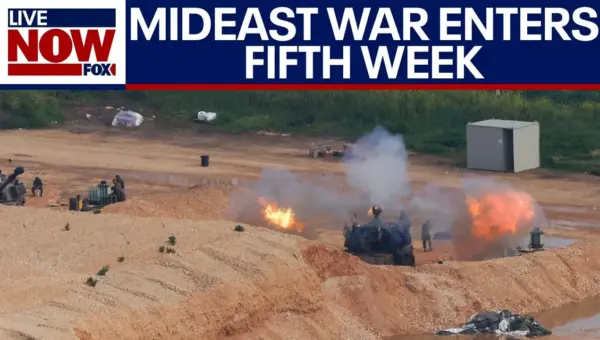
The U.S. has deployed a Marine Expeditionary Unit to the Middle East aboard the USS Tripoli amid escalating regional tensions. The move brings specialized amphibious capabilities to counter Iran. Meanwhile, exiled Iranian prince Reza Pahlavi expressed readiness to lead a transition, while damage to U.S. assets in Saudi Arabia and Houthi missile claims add to the instability.

Iran Tightens Strait Grip Amid Escalating US Conflict
Iran is tightening its control over the Strait of Hormuz amid escalating attacks against U.S. forces and allies. Despite U.S. claims of ongoing negotiations, Iran denies talks and demonstrates its power by regulating ship passage. New fronts are opening, with Houthi rebels in Yemen striking Israel, further complicating the volatile regional conflict.