Iran Apologizes to Neighbors Amid Escalating Regional Conflict
Iran's President Masoud Pezeshkian has apologized to Gulf neighbors for recent attacks amid escalating conflict with the US and Israel. Despite the apology, questions linger about Iran's internal command structure and the reliability of its assurances as the region faces heightened instability.

Middle East Engulfed in Conflict as Iran Apologizes to Gulf Neighbors
The Middle East is witnessing a dramatic escalation in conflict, with the United States and Israel engaged in a week-long war with Iran. The escalating violence has resulted in a rising death toll, with officials reporting approximately 1,300 fatalities in Iran, over 200 in Lebanon, and around a dozen in Israel. Overnight air strikes have targeted key infrastructure, including Tehran’s Mehrabad airport, as the conflict intensifies.
Shifting War Aims and Unconditional Demands
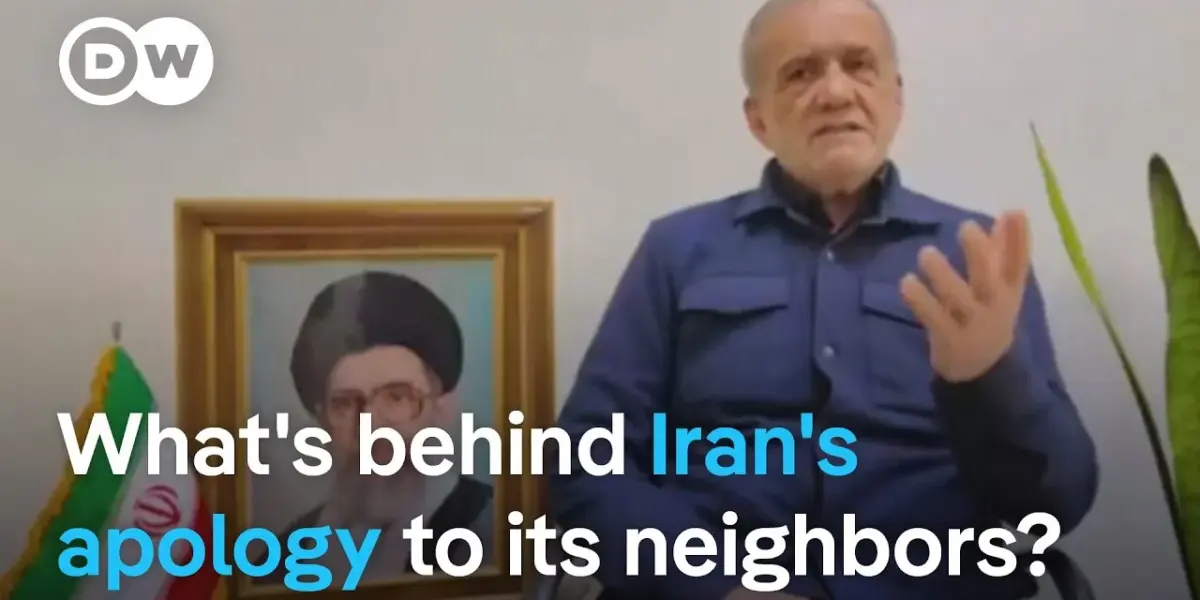
In a significant development, U.S. President Donald Trump has reportedly shifted his war aims, expressing no interest in a negotiated settlement and instead demanding Iran’s unconditional surrender. This stance was met with a defiant response from Iran’s President Masoud Pezeshkian, who vowed that Iran would never surrender. However, President Pezeshkian also extended an olive branch to Iran’s Gulf neighbors, offering an apology for recent Iranian attacks on their territories.
“I should apologize to the neighboring countries that were attacked by Iran on my own behalf. What happened was that our commanders and our leader lost their lives following this barbaric aggression. And our armed forces, the champions that are sacrificing their lives to defend our territorial integrity, fired at will because their commanders were absent and they did whatever was necessary. They proudly and powerfully defended our homeland.”
Ambiguity and Authority in Iran’s Apology
The sincerity and scope of President Pezeshkian’s apology have been met with skepticism and questions regarding internal authority within Iran. Geopolitical analyst Ha Helier noted that it remains unclear if the apology was specifically directed at Gulf States, as attacks were also reported in Azerbaijan and Turkey. Crucially, an attack on DHA occurred shortly after the apology was broadcast, raising doubts about the Iranian president’s ability to control such actions.
Helier elaborated on the regional dynamics, stating, “I I think the Gulf is in the situation of a wondering if they can trust what comes out of visav these sorts of attacks, but also who’s really in charge? Is it the case that the political leadership i.e. the president and the foreign minister really do speak for authorities in Iran? or is there another node of authority that is controlling this and I think I think probably it’s the latter.” This uncertainty leaves Gulf nations questioning the reliability of Iran’s assurances.
Gulf States’ Reliance on Western Partners Questioned
The ongoing conflict has also highlighted the complex relationship between Gulf states and their Western security partners. Despite cultivating deep security ties with the United States, Gulf nations have experienced a slow response to recent attacks compared to the swift support offered to Israel. This disparity has not gone unnoticed by the Gulf states.
Furthermore, the U.S. role in initiating the conflict, in coordination with Israel, has created a difficult position for Gulf countries, many of whom view Israel as a destabilizing force in the region. Helier observed, “the US has actually set off this conflict over the past week and in direct coordination with the state of Israel which most of the Gulf if not all of the Gulf and much of the Arab world views as an incredibly destabilizing actor to regional security architecture. So none of this sits particularly well with Gulf countries.”
Israel’s Actions in Lebanon and Escalating Concerns
Meanwhile, Israel’s military has issued evacuation orders for residents in southern Beirut and parts of southern Lebanon, targeting what it claims is Hezbollah military infrastructure. The Israeli military has warned of turning parts of Lebanon into conditions similar to Gaza, a statement described as “disgraceful” by analysts, given the devastating impact of Israel’s actions in Gaza.
Clarifying the situation in Lebanon, Helier stated, “it’s not the beginning of an Israeli occupation of southern Lebanon because there’s already an Israeli occupation of southern Lebanon. You already have positions within southern Lebanon that the Israelis refused to leave from, to withdraw from.” The warnings from Israel have heightened concerns about a potential wider conflict and a protracted Israeli military presence in the region.
Risks of Fragmentation and Calls for De-escalation
The broader regional implications of the conflict are deeply concerning. There are suggestions that the U.S. and Israel are exploring options to support Iranian Kurdish forces to incite an uprising within Iran, a move described as “opening a Pandora’s box” by Helier. Such an action could lead to the fragmentation of Iran and further internal conflict, not only within Iran but also potentially spilling over into Iraq.
“I think this is really opening a Pandora’s box. I think that the fragmentation of Iran would become much more likely and also interning conflict within Iraq itself as well because all Iraqi populations would be interested in that. So none of this looks good. I think this is a very risky time. Um I think it’s a very dangerous moment and I think the European countries and the region really need to step up in order to deescalate immediately,” Helier warned.
Looking Ahead: A Volatile Region
As the conflict continues to unfold, the coming days will be critical in determining whether de-escalation efforts can gain traction or if the region will be plunged into further instability. The conflicting messages from Tehran, the wavering trust between regional players and their international allies, and the potential for wider fragmentation pose significant challenges to peace and security in the Middle East.
Source: Iran's President Pezeshkian apologizes for strikes on neighbors as attacks continue | DW News (YouTube)

Related Articles


Oil Prices Surge as Strait of Hormuz Blockade Hits China
Disruptions in the Strait of Hormuz have sent oil prices soaring, with traffic down 70% and over 150 ships stalled. Analysts link the blockade to a U.S. strategy to curb China's economic rise, potentially pushing oil prices above $100 per barrel.


US Mideast War Fuels Putin’s European Energy Chokehold
A US-led conflict in the Middle East has closed the Strait of Hormuz, creating an energy crisis that empowers Vladimir Putin to put Europe in a chokehold. Despite claims of decoupling, Europe's continued reliance on Russian LNG, coupled with limited alternatives, leaves it vulnerable to escalating prices and potential de-industrialization.

Iran’s Regime Change: Experts Doubt Uprising’s Success
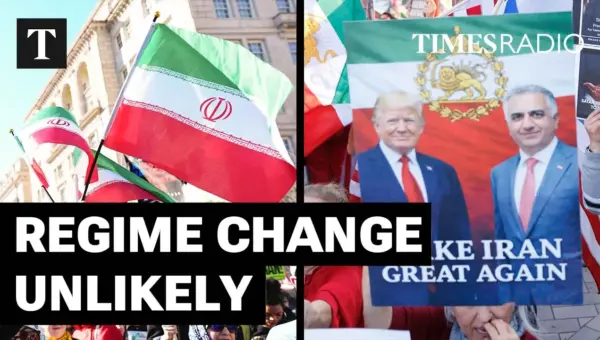
Experts believe a large-scale uprising for regime change in Iran is unlikely due to a lack of organization and a coherent political alternative. While 80% of Iranians desire change, the path forward remains challenging, with internal organization being key.