Iran ‘Already Defeated’ Militarily by Israel, Ex-MI6 Chief Claims
Iran has been militarily defeated by Israel and is in a weak position, unable to destabilize the Middle East, according to former MI6 chief Sir Richard Dearlove. Experts express concern over the unpredictable power vacuum created by the elimination of key Iranian figures, drawing parallels to past interventions that led to chaos.

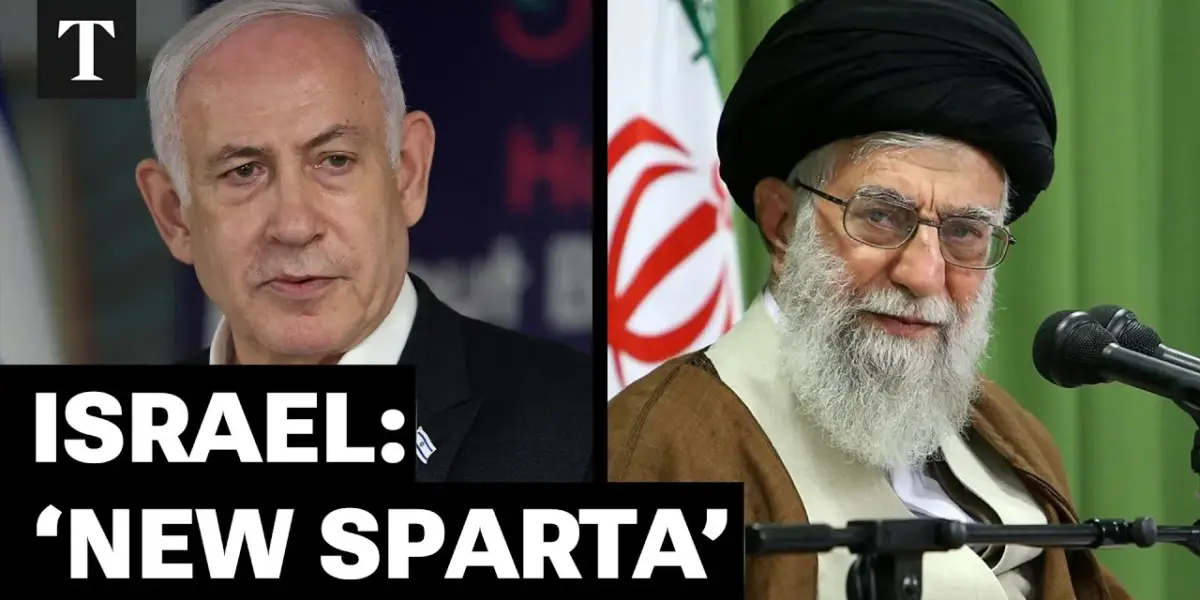
Iran Faces Military Defeat by Israel, Weakened Geopolitically: Ex-MI6 Head
LONDON – Iran has been effectively militarily defeated by Israel and is in a significantly weakened position, unable to destabilize the wider Middle East, according to Sir Richard Dearlove, the former head of Britain’s Secret Intelligence Service (MI6). The assessment comes amid heightened tensions and a recent series of targeted strikes that have eliminated key Iranian figures, leaving a volatile vacuum and uncertain future for the nation.
Unpredictable Future Amidst Power Vacuum
The demise of Iran’s Supreme Leader and other senior military and intelligence officials has created a precarious situation, with experts questioning the existence of a coherent plan to fill the resulting power vacuum. Christina Lamb, Chief Foreign Correspondent for The Times, highlighted the historical parallels with interventions in Afghanistan, Iraq, and Libya, where the swift removal of regimes by superior Western military power often led to prolonged chaos.
“I think we’re in very dangerous times as many people are saying because I don’t think anyone very many people anyway are shedding tears over the demise of of the Ayatollah and also several other senior figures military and intelligence that have been killed,” Lamb stated. “But what happens next? Is there a plan?”
Lamb expressed concern over the potential for a more hostile entity to emerge, noting that Iran is a large country with a deeply entrenched elite and a formidable Revolutionary Guard. The lack of a clear strategy from the current U.S. administration, particularly regarding potential ground forces, adds to the unpredictability.
The Plight of Iranian Protesters
The idea of the Iranian people rising up to complete the process initiated by external strikes is met with skepticism. Lamb pointed out the regime’s brutal efficiency in suppressing dissent, referencing the thousands killed in recent months. “The problem with asking people to come out on the streets like this is they are unarmed. Whereas the people running the place are extremely well-armed,” she explained, underscoring the immense risk faced by unarmed civilians against a heavily armed state apparatus.
Shifting Alliances and Strategic Ambiguity
Sir Richard Dearlove criticized the British government’s shifting stance on supporting potential U.S. strikes against Iran. “I can’t believe that the government didn’t take a clearer position right from the start. And to change their mind within 24 hours and engage in this sophistry as to what the difference is between offense and defense, I just don’t get it,” he remarked, suggesting that the government may have been influenced by concerns over potential Iranian retaliation impacting British assets.
Dearlove elaborated on Iran’s limited options for retaliation, suggesting a predictable pattern of regional destabilization and targeting of soft assets, especially given the destruction of some of its capabilities. He noted that Iran’s strikes in places like Saudi Arabia, a Sunni-majority country, could be seen as a manifestation of the broader Sunni-Shia Islamic conflict, with Iran in survival mode lashing out at any available Sunni target.
International Law and Moral Justification
The discussion touched upon the relevance of international law in the context of the conflict. Sir Richard expressed cynicism regarding its practical application, arguing that it often bends to the will of the powerful. However, he also presented a moral argument for the recent actions against Iran, citing the regime’s long history of brutality, suppression of its own population, and its stated aim to destroy Israel.
“So I think there is a moral issue here. And you could argue that this conflict that’s just started is the latest chapter in a war which let’s say commenced on the uh 7th of October 23 when Hamus attacked uh Israel. So you you know if if it’s a chapter in an ongoing war it isn’t a violation of of of international law.”
He posited that the conflict could be framed as a legitimate response to a regime devoted to destruction and opposition to the West. “I think there is such a thing in this instance as a moral stand against a ghastly bloody regime,” Dearlove concluded, acknowledging the geopolitical risks taken by the U.S. administration.
Assessing the Risks and Rewards
When questioned about the U.S. administration’s planning, Dearlove acknowledged the inherent difficulty in foreseeing all outcomes in such a complex scenario. He outlined two primary possibilities: either a more compliant Iranian regime emerges willing to negotiate, or a revolution from within leads to a completely transformed Iran. He leaned towards the former, with political change occurring over a longer timeframe.
The third, more concerning possibility, is a more belligerent and theocratic regime, which Dearlove believes would lead to a continuation of the conflict, with Israel remaining resolute. However, he reiterated his core assessment: “Israel, the new Sparta, have effectively already defeated Iran militarily. and Iran is in a very weak position.” In this scenario, Iran would be a beleaguered nation, unable to exert significant regional influence.
Strategic Opportunity or Calculated Risk?
Addressing whether the recent events presented an opportunity too good to pass up, Dearlove suggested that the situation was not merely opportunistic but the result of months of planning by Israel and the United States. He also highlighted the role of Admiral Brad Cooper, commanding the U.S. operation, implying a level of strategic calculation beneath the surface that might be underestimated.
In a broader geopolitical context, Dearlove also noted that the assertive U.S. stance had placed Russian President Putin in a more vulnerable position, as American deterrence appeared to be reasserting itself on the world stage.
Looking Ahead
The coming weeks will be crucial in determining the trajectory of Iran’s internal political landscape and its future role in the Middle East. The international community will be closely watching for signs of stability or further escalation, as well as the effectiveness of any new leadership that emerges within Iran.
Source: Iran ‘Already Defeated’ By Israel And Can’t Destabilise Middle East | Former MI6 Chief (YouTube)

Related Articles

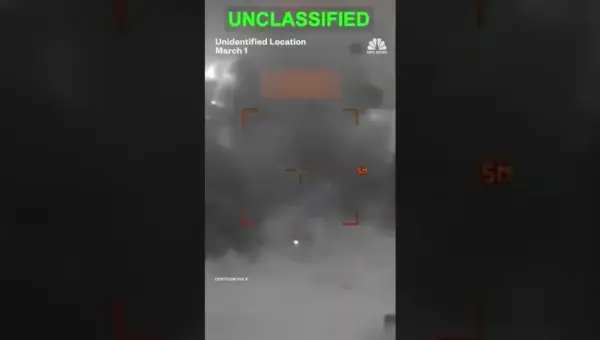
US Strikes Iran-Linked Targets Amid Escalating Tensions
The U.S. military has released footage of airstrikes on facilities in Iraq and Syria linked to Iran and its affiliated militias. These strikes are a response to repeated attacks on U.S. forces in the region amid escalating Middle East tensions.


Israel Strikes Lebanon After Hezbollah Missile Barrage
Israel launched airstrikes into southern Lebanon on Wednesday following a significant missile barrage from Hezbollah. The tit-for-tat attacks mark a dangerous escalation in cross-border hostilities, raising concerns of a wider regional conflict.
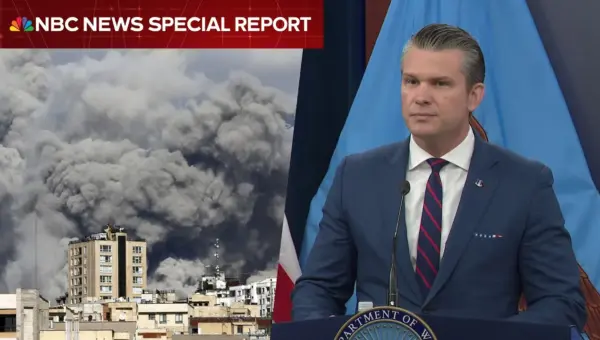
Pentagon Briefs on ‘Operation Epic Fury’ Amid Global Tensions
Pentagon officials held a live briefing today to provide an update on the significant military initiative, 'Operation Epic Fury.' The operation signals the U.S.'s commitment to global security amidst rising international tensions. Details remain undisclosed, but the initiative is expected to play a key role in deterrence and regional stability.