Iran Air Strikes: Tehran Residents ‘Terrified’ Amid Civilian Toll
Tehran residents are living in fear amid constant air strikes, with the entire city now considered a front line. International journalists report devastating civilian casualties and a pervasive sense of vulnerability, as families grapple with loss and confusion.

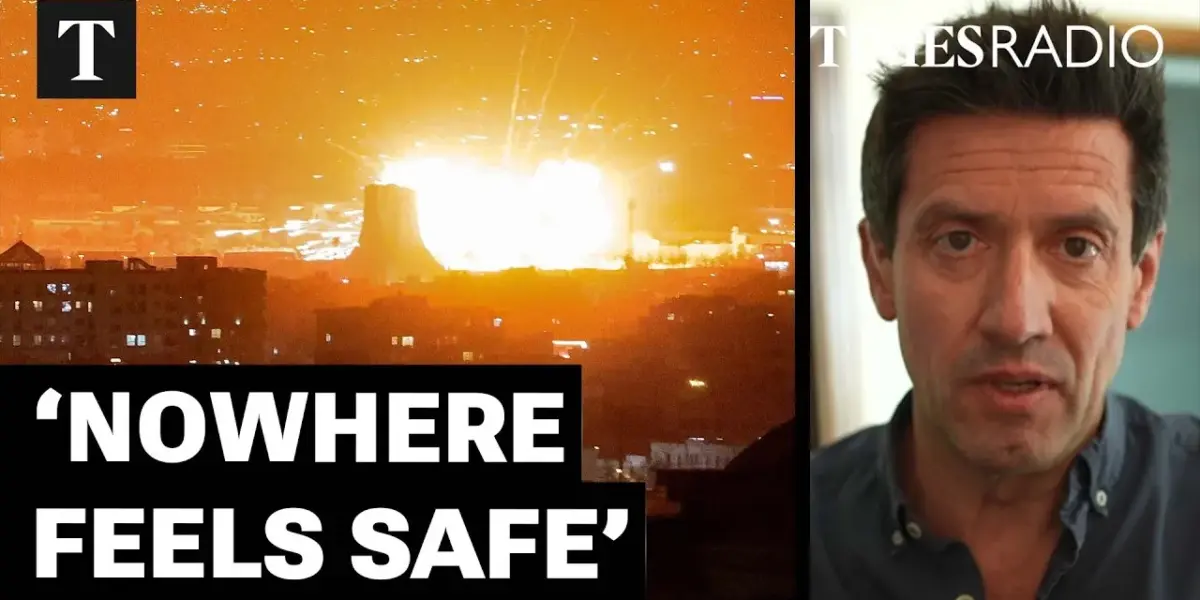
Tehran Under Siege: A City on the Front Lines
Tehran, Iran – The capital city of Iran is living under the constant threat of aerial bombardment, with residents describing a pervasive sense of fear and vulnerability. Unlike traditional warfare where front lines offer a degree of safety, in Tehran, the entire city is considered a front line. This means the possibility of an incoming missile strike is a daily reality, leaving civilians in a state of constant anxiety.
The Iranian health ministry reports a devastating toll: nearly 1,500 people killed and over 18,000 injured in the ongoing air strikes. International journalists have faced significant access restrictions, but Sky News International Editor Dominic Waghorn was among the few granted entry into Iran. His firsthand account reveals the profound impact of the conflict on ordinary citizens.
A Glimpse Inside: A Children’s Hospital and Heartbreak
Waghorn’s visit included a sobering tour of a children’s hospital treating victims of the air strikes. The scenes were deeply moving, particularly an encounter with a mother named Zebar. Her four-year-old daughter was severely injured, a victim of what she described as an air campaign by America and Israel.
“Why did this happen to us? To innocent people, my innocent four-year-old girl who was only going downstairs to come to me. Why do it to ordinary people like us? We were sitting at home together. They’ve taken away our safety, our happiness, and the health of our children.”
Zebar’s words encapsulate the bewilderment and anguish felt by many Iranians caught in the crossfire. The attacks, which Iran claims are carried out by America and Israel, have struck residential areas, causing widespread damage and civilian casualties.
Access and Perception: Reporting from Tehran
Waghorn, speaking from Van, Turkey, after his departure from Iran, highlighted the difficulty of obtaining access for international news teams. Sky News was the second British news team allowed into the country since the conflict began, following CNN. The journey itself was arduous, involving a 48-hour trip from London to Tehran via Armenia due to a closed airspace.
Once in Tehran, Waghorn noted the pervasive sound of explosions, stating that rarely an hour passed without the sound of incoming missiles. The bombs used are substantial, with some weighing 2,000 pounds, and they are reportedly hitting populated areas. While the U.S. and Israeli forces claim precision targeting, the collateral damage is significant, leading to tragic civilian injuries and deaths.
Anger and Blame: Who Do Iranians Hold Responsible?
A crucial aspect of Waghorn’s reporting involved understanding where the anger of ordinary Iranians is directed. Despite the immense suffering, he found that most individuals he spoke with did not blame their own government or leadership for the attacks.
While many were reluctant to speak on camera, off-camera conversations revealed a desire for change. Some described the government as “extreme,” echoing sentiments that fueled massive protests earlier in the year, which were met with a harsh crackdown. This underlying tension adds to the palpable atmosphere in the city.
However, the primary anger seems directed at Israel and America. Many Iranians view the attacks not just as assaults on their government but on the country itself. The bombing of a major gas field, shared with Qatar, was particularly baffling to one Iranian who stated, “That’s not the regime’s possession. That is ours.” This sentiment suggests that the attacks may inadvertently be fostering a sense of national unity and support for the government, as people feel the conflict is aimed directly at them.
Navigating Restrictions: The Journalist’s Dilemma
Waghorn addressed the delicate balance journalists face when granted access by a government that may benefit from the narrative presented. He acknowledged that Iran controls where journalists can film, but emphasized that within those approved locations, they are free to speak with people. This freedom, however, is often met with reluctance from individuals to appear on camera due to fear.
He drew parallels to reporting in other conflict zones, noting that restrictions are common. For instance, international journalists are largely barred from Gaza without embedding with the Israeli Defense Forces. The key, Waghorn believes, is to focus on the voices of those directly affected by the war, allowing audiences to connect with their experiences.
The decision to deny access to a cemetery where victims were to be buried highlighted the unpredictable nature of these permissions. Despite these challenges, Waghorn stressed the importance of bringing these ordinary Iranian voices to the world’s attention.
The Message Gap: Iran’s Struggle for Airtime
Looking ahead, Waghorn expressed a desire to return to Iran and apply for another visa. He noted a puzzling aspect of the current situation: Iran’s apparent struggle to effectively communicate its official message and the plight of its ordinary citizens on the international stage.
While news teams from outlets like the Financial Times, Al Jazeera, Reuters, and AFP are present, Waghorn feels Iran is not getting the same level of international media coverage as its adversaries. This “message gap” is baffling, especially given Iran’s potential to share its story more widely.
Despite the hardships, Waghorn spoke warmly of the Iranian people, describing them as incredibly friendly, polite, and courteous, even when expressing strong emotions about the conflict. He observed that Iran is a country facing significant economic challenges due to mismanagement and heavy sanctions. However, he believes the potential of its people is immense and largely unseen in the West.
Waghorn concluded by reiterating his passion for reporting on under-covered regions and his hope to return to Iran to continue telling these important stories.
Source: Iran Strikes Leave Civilians ‘Terrified’ As ‘Massive Explosions’ Hit Tehran | Dominic Waghorn (YouTube)

Related Articles

Iran Targets US With Cyberattacks, Escalating Digital Warfare
Iran is increasingly using cyberattacks to challenge the U.S., as seen in a recent hack of the FBI director's account. Experts say this is a strategic shift due to Iran's limitations in conventional warfare. The U.S. needs to strengthen its digital defenses, focusing on encryption and cloud computing, rather than solely relying on traditional security measures.

Iran Hacks FBI Chief, Exposing U.S. Cyber Vulnerabilities
A recent hack of FBI Director Kash Patel's personal email by an Iran-linked group highlights Iran's growing cyber threat to the U.S. Experts explain how simple security oversights are exploited, emphasizing the need for basic defenses like two-factor authentication to protect against propaganda and potential infrastructure attacks.


Trump Halts Iran Strikes Amid Stalled Diplomacy
President Trump announced a pause on planned strikes against Iran, citing productive talks, though Iran denies negotiations occurred. Reports also suggest a potential U.S. ground operation on Iran's Hark Island. The situation raises concerns about international support for Ukraine and potential shifts in U.S. foreign policy.