Iran Accused of Spying on UK Jewish Interests
Four men have been arrested in North London on suspicion of spying for Iran, with authorities revealing the investigation focuses on alleged surveillance of Jewish community interests. The arrests highlight concerns over Iran's asymmetric warfare tactics and foreign intelligence activities on British soil. The incident raises questions about national security and the protection of minority groups.

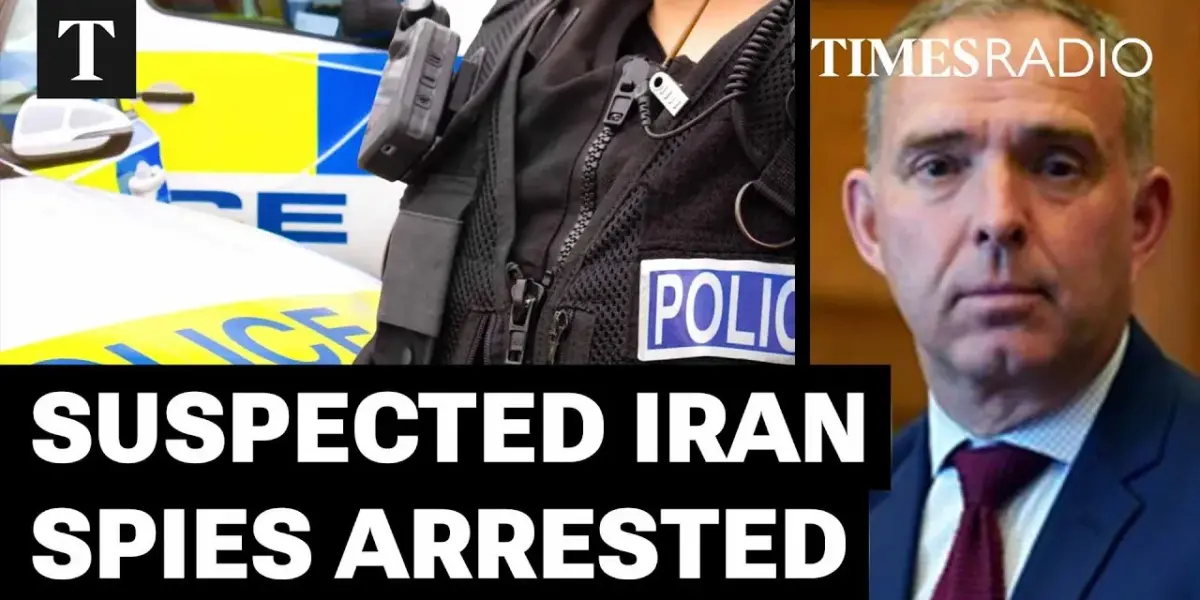
Four Arrested in UK on Suspicion of Spying for Iran, Targeting Jewish Community
Four men have been arrested in North London on suspicion of spying for Iran, with authorities revealing that the investigation centers on alleged surveillance of Jewish community interests within the United Kingdom. The arrests, made by counterterrorism police, mark a significant escalation in concerns over Iranian intelligence activities on British soil.
Details of the Arrests and Investigation
The arrests took place early Friday morning, March 6th, at addresses in Barnet and Watford. The individuals detained include one Iranian national and three dual British-Iranian nationals. They are being held on suspicion of assisting a foreign intelligence service, a serious offense under the National Security Act 2023.
Detectives from Counter Terrorism Policing London, who are leading the investigation, confirmed that the country to which the intelligence relates is Iran. The operation was pre-planned and executed shortly after 1:00 a.m.
Concerns Over Targeting of Jewish Interests
A particularly worrying aspect of the alleged operation, as highlighted by former UK National Security Adviser Lord Sedwill, is the apparent targeting of Jewish interests. Lord Sedwill noted that Iran has a history of targeting Jewish entities, such as synagogues, in other countries, citing incidents in Argentina and elsewhere.
“The worrisome element of it is that they appeared to be targeting um Jewish um interests here in the UK. The Iranians have done this before elsewhere. They’ve attacked uh Jewish um um uh uh um entities, synagogues, etc. around the world, Argentina, elsewhere. And so I think this could be an indication of that kind of asymmetric uh use of terrorist proxies, use of others in order to try to inflict pain on uh the United States um western allies and in particular targeting Jewish interests and that’s a that’s clearly a very worrisome development.”
This suggests a potential strategy by Iran to inflict pain on Western allies and their interests through asymmetric warfare, utilizing proxies and intelligence services to achieve its objectives rather than direct conventional confrontation.
Broader Context: Iran’s Asymmetric Warfare Doctrine
Lord Sedwill elaborated on Iran’s strategic approach, describing it as an “asymmetric war of resistance.” He explained that Iran does not typically engage in conventional military campaigns against adversaries like the United States, which possess overwhelming force. Instead, Iran relies on a doctrine that includes the use of drones, missiles, and, crucially, proxies such as Hezbollah and the Houthis, alongside its intelligence services.
“Iran is not trying to fight back against the United States and Israel through conventional means,” Lord Sedwill stated. “They’re deploying, of course, drones and missiles and so on, but not really at the United States itself. Of course, they’re trying Israel, but they’re they’re firing around the region. And what they essentially try to do their their doctrine is to fight an asymmetric war of resistance.”
UK-US Relations and Diplomatic Tensions
The arrests also come amidst ongoing diplomatic tensions and discussions surrounding recent military actions in the Middle East, particularly those involving the United States and Iran. Lord Sedwill commented on the broader geopolitical landscape, noting that while the UK-US relationship is deep and resilient, recent actions by the Trump administration have put pressure on alliances.
He suggested that the US might regret its approach of applying leverage and tariffs on allies who do not provide sufficient support. The interview also touched upon President Trump’s public remarks about UK leadership, which have been characterized by rhetoric that can be difficult to navigate for allies.
National Security vs. International Law
The discussion also delved into the tension faced by governments between adhering to international law and fulfilling national security imperatives. Lord Sedwill emphasized that decisions regarding national security are fundamentally political choices for ministers, rather than legal determinations.
“Decisions on national security are political. They are not uh legal. They’re decisions for ministers in the National Security Council, not legal decisions for lawyers,” he explained. He argued that while military actions must be lawful, the decision to allow the use of UK bases or to engage in military campaigns is a political judgment based on perceived national security interests, citing the UK’s 2018 action against Syria’s chemical weapons program as an example of such a political choice.
Implications for UK Security
The arrests underscore the multifaceted nature of national security threats facing the UK. Beyond conventional military concerns, the alleged espionage highlights the persistent threat posed by foreign intelligence services seeking to destabilize or gather intelligence within the UK, particularly targeting vulnerable communities.
The incident adds another layer to the complex security considerations for the UK government, which must balance international relations, domestic safety, and the potential for foreign interference. The focus on the Jewish community raises specific concerns about the protection of minority groups from targeted surveillance and potential hostile acts.
Looking Ahead
As the investigation into the four arrested men progresses, further details are expected to emerge regarding the extent of the alleged spying operation and its specific targets. The incident will likely prompt a review of security measures and intelligence-gathering capabilities related to foreign espionage, particularly concerning Iran. The ongoing geopolitical tensions in the Middle East and the complex dynamics of international alliances will continue to shape the UK’s national security landscape in the coming months.
Source: Four Men Arrested On Suspicion Of Spying For Iran | Lord Sedwill (YouTube)

Related Articles


Iran Spies Arrested: UK Boosts Security for Jewish Community
Four individuals have been arrested in London on suspicion of spying for Iran, specifically targeting the Jewish community. The operation raises significant security concerns and intensifies calls for the UK to proscribe Iran's Revolutionary Guard.


Iran Accused of Spying on UK Jewish Community
Four individuals have been arrested in the UK on suspicion of spying for Iran, with intelligence suggesting a focus on the Jewish community. This development occurs amid a concerning global rise in antisemitism, which experts link to the conflation of pro-Palestinian sentiment with anti-Jewish hatred.


UK Faces Terror Threat After US-Israel Iran Strikes
The UK faces a heightened risk of Iranian cyber and terror attacks following US-led strikes, warns former National Security Adviser Sir Mark Lyall Grant. Amidst escalating conflict and US service member deaths, Britain maintains a stance of non-involvement in offensive actions while defending allies.