iPhone Air: Thinness Comes With Compromises
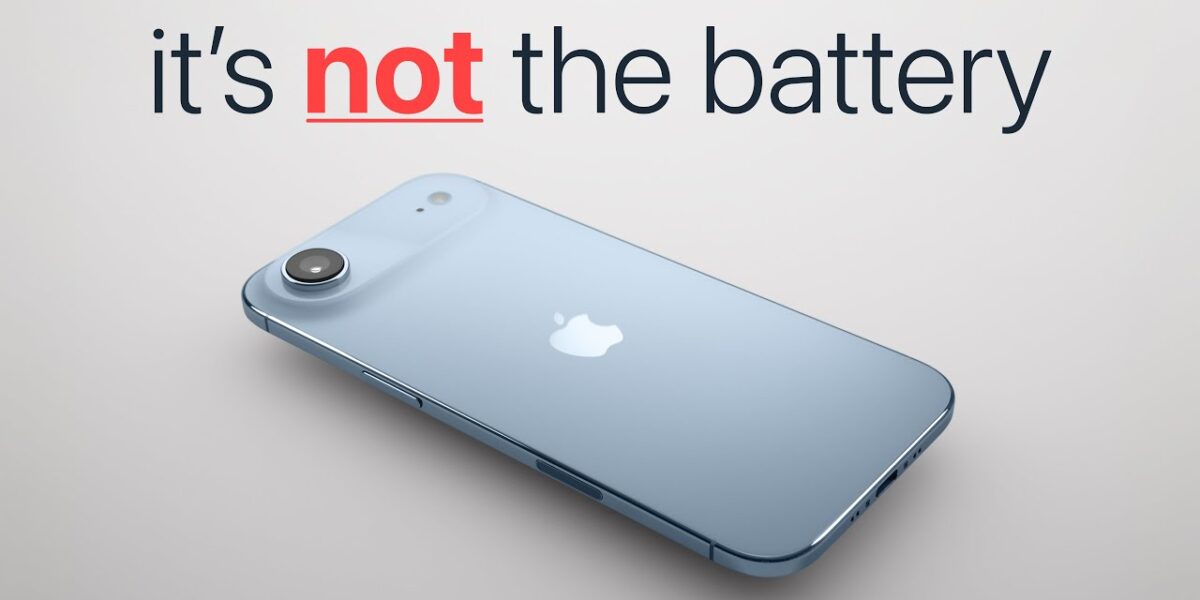
Apple's new iPhone Air prioritizes extreme thinness, but this design choice comes with notable compromises in battery life, speaker volume, and sustained performance. While it excels for light users, power users may find its limitations a dealbreaker.

iPhone Air: Thinness Comes With Compromises
The allure of ultra-thin technology is undeniable. For those who prioritize a sleek, minimalist aesthetic and a feather-light feel, the latest iPhone Air might seem like the ultimate device. Apple’s new offering boasts a design that is not only visually striking but also remarkably durable, requiring significant force to bend, according to early stress tests. It feels great in hand and represents arguably Apple’s most intriguing phone in years. However, beneath its svelte exterior lie several pain points that, while not universally deal-breakers, warrant serious consideration before you commit.
Battery Life: A Full Day for Most, Not for Power Users
One of the primary concerns with any thin device is battery life. In a market saturated with smartphones offering marathon endurance, the iPhone Air’s battery life might initially seem disappointing when compared to larger, flagship devices. However, when viewed against the backdrop of typical 3-4 year old phones that many consumers upgrade from, the Air delivers a legitimate full day of use. Apple’s focus on efficiency means that for regular tasks – browsing, messaging, light social media – it comfortably lasts from morning to night. The caveat? Power users, especially gamers, will likely find themselves reaching for a charger by midday. The optional Apple MagSafe battery pack offers a solution, but attaching it negates the phone’s ultra-thin profile, turning it into a more conventionally thick device. While a full MagSafe pack can provide around 65% charge, the inefficiency of wireless charging means some power is lost to heat.
Camera: Simplicity for the Everyday Photographer
The iPhone Air features a single-lens camera system, a move that might concern some. Yet, in practice, the reviewer found little to miss in their day-to-day photography. The main shooter performs admirably, excelling in low-light conditions and delivering excellent video quality, as expected from an iPhone. For many users, the absence of telephoto or ultra-wide lenses isn’t a significant drawback, as casual camera roll analysis often reveals a predominance of shots taken with the main lens. The decision hinges on your personal photography habits. If you frequently travel or attend events like concerts where different focal lengths are essential, you might feel the limitations. However, for the majority of everyday shots, the Air’s camera is more than capable. The front-facing camera, shared across all new iPhone models this year, is a significant improvement.
Performance and Thermals: Built for Light Loads
Equipped with 12GB of RAM and the Pro chip, the iPhone Air packs a punch. However, its thin chassis and glass back, combined with a titanium frame, don’t dissipate heat as effectively as the Pro models with their vapor chambers and aluminum construction. Under sustained heavy loads, such as intensive 3D gaming or video editing within apps like CapCut, the Air is prone to performance throttling due to heat. While casual users are unlikely to notice these limitations, demanding tasks will reveal that the Air is not designed for prolonged high-performance output. The Pro model, in contrast, is engineered to handle such sustained demands.
The Speaker Issue: A Quiet Concern
Perhaps the most significant pain point, and the one identified as a potential deal-breaker, is the iPhone Air’s single mono speaker. It’s been eight years since a mainstream phone shipped with such a setup, and the compromise is palpable. In portrait mode, the mono sound emanates from the top, but in landscape, it’s confined to one side. The thin driver struggles to produce meaningful bass, leading to a generally underwhelming audio experience for media consumption or gaming. However, the real issue lies in volume. Measurements reveal a staggering 10dB difference – perceived as nearly double the volume – compared to the iPhone 17. While you can hear basic notifications and calls, the Air is significantly quieter than most modern smartphones. This became starkly apparent during a FaceTime call in a mildly noisy backyard, where no one could hear the caller without moving indoors. A similar experience occurred while cooking, requiring the user to turn off kitchen appliances just to hold a conversation. For individuals who frequently use FaceTime or speakerphone in environments with ambient noise, especially with multiple people, this deficiency will be a major drawback compared to virtually any other phone on the market with stereo speakers.
The Novelty Wears Off: Is Thinness Worth It?
While the iPhone Air’s extreme thinness is initially impressive and a conversation starter, its novelty tends to fade. After a couple of weeks, the wow factor diminishes, and the practical implications of its design choices come to the forefront. The question becomes whether the compromises in battery life, potential performance throttling, camera limitations for specific scenarios, and especially the quiet speakers, are worth the trade-off for a sleeker device. If any of the discussed issues, particularly the speaker volume in noisy environments, present a significant inconvenience to your usage patterns, it might be wiser to opt for a different model. However, for users who prioritize extreme portability, charge their phone frequently, rarely use their camera’s additional lenses, don’t engage in demanding tasks, and primarily use their phone in quiet settings, the iPhone Air could still be a compelling choice.
Specs & Key Features
- Design: Ultra-thin chassis with glass back and titanium frame
- Durability: High resistance to bending
- Processor: Pro chip
- RAM: 12GB
- Rear Camera: Single lens system (main)
- Front Camera: Improved, shared across all 2025 iPhones
- Speaker: Single mono speaker
- Battery: Full-day for light to moderate use; requires charging for heavy use
- Connectivity: MagSafe compatible
- Optional Accessory: MagSafe battery pack
Who Should Consider the iPhone Air?
The iPhone Air is best suited for users who:
- Prioritize an extremely thin and light form factor above all else.
- Have predictable charging habits (e.g., charging at work or overnight) and don’t push their phone to its limits.
- Primarily use the main camera lens and don’t require telephoto or ultra-wide capabilities.
- Tend to use their phone in quiet environments where speaker volume is less critical.
- Are not heavy mobile gamers or video editors.
Who Should Look Elsewhere?
Potential buyers should reconsider if they:
- Rely on their phone for extended gaming sessions or demanding productivity tasks.
- Frequently take photos or videos requiring ultra-wide or telephoto lenses.
- Often use speakerphone or FaceTime in noisy environments.
- Expect flagship-level battery endurance under heavy usage.
- Desire a rich stereo audio experience from their phone’s speakers.
Ultimately, the iPhone Air is a device that makes bold design choices. While it succeeds in being exceptionally thin and light, these advantages come with tangible compromises that potential buyers must weigh carefully against their own usage patterns and priorities.
Source: My Biggest Issue With The iPhone Air (YouTube)

Related Articles


Apple Taps Google for AI Power Amidst Internal Struggles
Apple is reportedly set to pay Google $1 billion annually to integrate a custom version of its Gemini AI into Siri, signaling a significant shift amidst internal AI development struggles. This move raises questions about the AI arms race and consumer demand for smartphone AI.

Samsung’s S26: A Stagnant Flagship Dilemma
Samsung's Galaxy S26 lineup presents a mixed bag. While the Ultra introduces an innovative privacy screen, the base and Plus models suffer from stagnant camera hardware, increased prices, and feature omissions, raising questions about Samsung's priorities in its flagship smartphone series.
Galaxy S26 Ultra: Privacy Display Steals the Show
Samsung's Galaxy S26 Ultra introduces a revolutionary built-in privacy display, offering unparalleled on-the-go security. This pixel-level control shields your screen from side views, with customizable options for apps and notifications. Enhanced cameras and a refined design round out this compelling flagship.