Invisible War: How US Blinds and Deceives Enemy Defenses
The US military employs sophisticated electronic warfare tactics to disable enemy radar and communications. Aircraft like the EA-18G Growler create digital illusions and blind defenses, allowing other forces to operate safely. This invisible war is crucial for modern military strategy.

Invisible War: How US Blinds and Deceives Enemy Defenses
The United States military has developed sophisticated ways to fight wars without firing a single shot, using what’s known as electronic warfare. This strategy involves using technology to disrupt or disable enemy radar, communications, and other electronic systems. It’s like playing a high-tech game of hide-and-seek, but with much higher stakes.
The EA-18G Growler: A Digital Ghost Maker
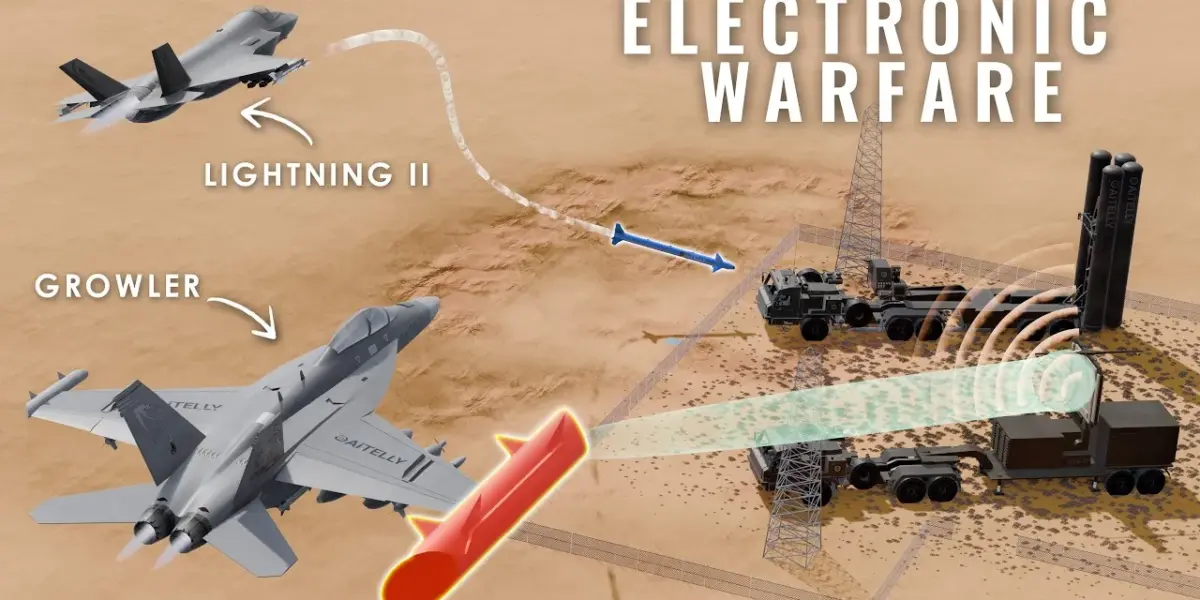
A key player in this invisible war is the EA-18G Growler, a specialized jet designed for electronic attack. Before sending in fighter jets, the Growler acts as the first line of defense. Its mission is to blind enemy sensors and create confusion, making it safer for other aircraft to operate.
The Growler uses several tricks. One is spot jamming, where it focuses a powerful beam of energy directly at an enemy radar. This is like shining a super-bright flashlight into a camera lens, completely overwhelming the sensor and making it useless. It can also create a digital duplicate of itself. This fake signal tricks enemy missiles into locking onto a phantom target, leaving the real jet free to escape. Another tactic is to beam fleets of fake jets onto enemy radar screens, making it look like a much larger force is attacking.
The secret to these tactics is detailed intelligence. For months before a mission, US spy planes and satellites map enemy radar systems. They gather information on frequencies and how the systems work. This data is loaded into the Growler’s targeting pods. The electronic warfare officer, or ECMO, in the back seat, controls these jamming systems in real time. They decide which jamming techniques to use, focusing over 10 kilowatts of power to burn through enemy defenses.
Psychological Warfare in the Skies
Electronic warfare isn’t just about disabling systems; it’s also about psychological warfare. The Growler can catch an incoming radar pulse, scramble the data, and send it back. This creates a phantom fleet on enemy screens, causing panic. When enemy missiles are fired at these ghost targets, they detonate in empty sky.
A more advanced trick is the bait and switch. If a missile locks onto a real US jet, the Growler creates a digital clone of that jet. It mimics the speed and location perfectly. The enemy’s tracking system follows the fake signal, which the Growler slowly lures away. This allows the real aircraft to escape.
The Danger Zone and Precision Planning
However, jamming isn’t foolproof. If a US jet gets too close to an enemy radar, usually within 20 to 60 miles, the radar’s power can overcome the jamming. This is called the danger zone or burn-through range. The Growler must perform a careful, high-stakes dance, staying just outside this threat zone.
The entire process is a highly choreographed operation. Before any planes launch, intelligence gathering has been ongoing for weeks. Spy planes and satellites identify enemy electronic systems, creating a digital target list. This information is loaded into the Growlers. Planners create detailed flight paths, calculating threat zones around enemy missile systems and identifying safe areas, or orbit points, where the Growlers can jam without being detected.
When a strike package launches, it includes Growlers for electronic attack, fighter jets with bombs, and specialized aircraft carrying radar-killing missiles. Every aircraft has a precise role, location, altitude, and timeline. There is no room for error.
A Multi-Layered Assault
The mission unfolds in stages. Growlers reach their standoff positions, about 50 to 100 miles out, and unleash a wave of broadband noise. This creates an electronic fog, blinding the enemy’s early warning systems. As strike fighters approach, the Growlers move closer, shifting from broad jamming to more precise tactics. They inject fake targets and scramble radar readings, making it impossible for operators to distinguish real aircraft from digital ghosts.
This creates a terrible choice for the enemy. If they increase their radar’s power to see through the jamming, they reveal their location, making them a target for radar-killing missiles. If they turn off their radar, they become blind and vulnerable. The Growlers also jam communication networks, isolating missile batteries and preventing them from coordinating or warning allies. This turns a powerful air defense network into a collection of confused, isolated units.
Even as strike jets escape, the Growlers continue their work, maintaining the electronic screen until all aircraft are safely away. This sophisticated approach, combining electronic warfare and cyber operations, can dismantle an entire air defense network, as seen in operations against Iranian and Venezuelan systems.
Beyond Air Combat: Non-Lethal Electronic Weapons
Electronic warfare also extends to non-lethal tactics. High-power microwave devices, potentially mounted on helicopters, can create focused beams of energy. These beams can heat brain tissue and inner ear fluid, causing internal pressure waves. The target hears sounds like clicks or buzzing, experiences vertigo, and can suffer internal trauma like nosebleeds. This technology can incapacitate enemy personnel without traditional weapons.
Another possibility is the use of weaponized infrasonic pulse emitters. These devices fire high-intensity, low-frequency sound waves that can cause internal organs to vibrate. This can lead to severe nausea and incapacitate individuals, allowing a small team to advance with minimal resistance.
Why This Matters
The US military’s mastery of electronic warfare represents a significant shift in modern conflict. It allows for the suppression or destruction of enemy defenses with minimal direct engagement, reducing risk to friendly forces. The ability to create illusions on radar, disrupt communications, and even incapacitate personnel without firing a shot demonstrates a new era of warfare. This strategy highlights the growing importance of the electromagnetic spectrum as a battlefield. As technology advances, the line between physical and digital conflict continues to blur, making electronic warfare a critical component of national security.
Historical Context and Future Outlook
Electronic warfare has roots dating back to World War I, with early attempts to jam enemy radio communications. Over decades, it evolved significantly with radar technology. During the Cold War, both the US and the Soviet Union invested heavily in electronic countermeasures and electronic support measures. The development of sophisticated jamming pods, decoys, and cyber warfare capabilities has accelerated in recent years.
The future of electronic warfare will likely involve even more advanced AI-driven systems that can adapt in real time to enemy electronic defenses. Swarms of drones equipped with electronic warfare capabilities, integration with space-based assets, and directed energy weapons will play an increasingly important role. The ongoing competition to control the electromagnetic spectrum ensures that electronic warfare will remain a vital and evolving aspect of military strategy for the foreseeable future.
Source: US Electronic Warfare Strategy | Explained (YouTube)

Related Articles
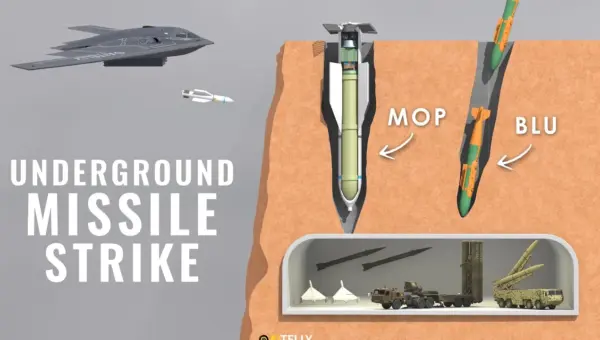
Stealth Bombers Unleash Fury on Iran’s Hidden Missile Arsenal
The B-2 Spirit stealth bomber executed a critical mission, striking Iran's deeply buried ballistic missile sites. This operation highlights advanced warfare tactics and the specialized technology needed to neutralize hidden threats.


Ukraine Strikes Russian Oil Ports, Crippling Exports
Ukraine's targeted strikes on Russian oil export terminals are crippling its war machine and reducing vital revenue. Retired General David Petraeus highlights Ukraine's advanced drone technology and its growing role as a global defense innovator.


Drones Devastate Russian Forces in Record Losses
Russia experienced its deadliest month of the war in March, with over 35,000 casualties, largely due to Ukraine's advanced drone warfare. Ukraine is also targeting Russian oil exports to cripple its economy. This marks a significant shift in military tactics and economic strategy.