Investors Buy $500M in Real Estate Amidst Uncertainty
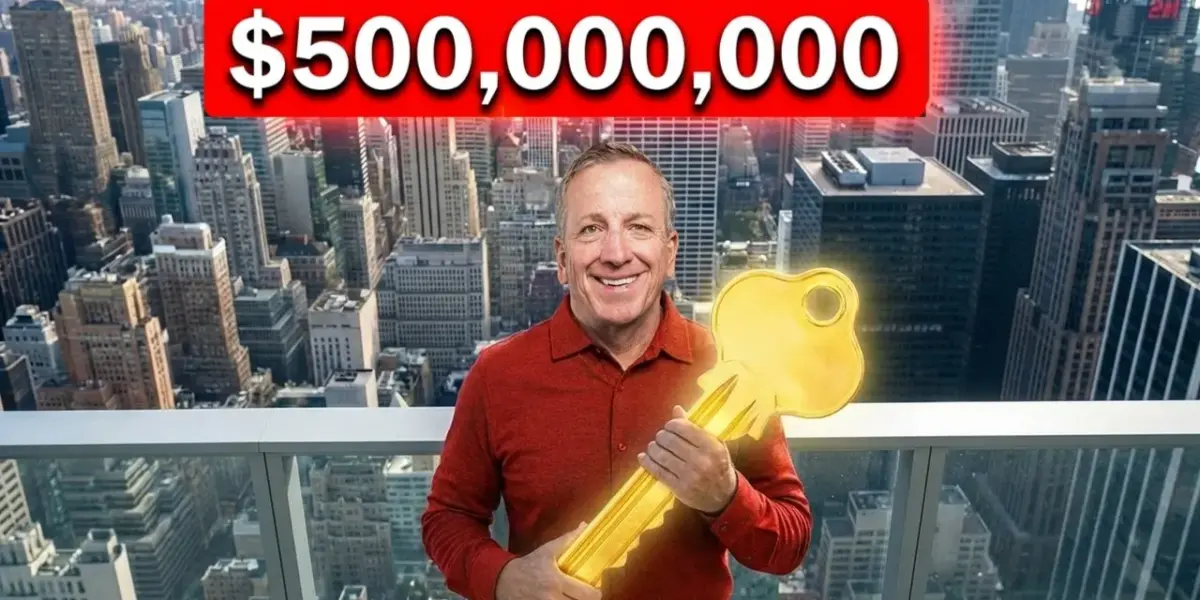
Investors deployed over $500 million in real estate transactions during 2025, focusing on value-add opportunities, irreplaceable assets, and strategic new developments. Despite market uncertainty and higher interest rates, the approach centered on identifying distressed sellers and properties with clear paths to increased income.

Investors Buy $500M in Real Estate Amidst Uncertainty
While many waited for a housing market crash, a select group of investors actively spent over half a billion dollars in 2025. They focused on specific properties others overlooked. This strategy involved buying assets with clear potential for improvement or those in highly desirable, hard-to-replicate locations. The key was identifying opportunities when others felt fear.
Value-Add Opportunity in Phoenix
One notable purchase was Boulder Creek in Phoenix, Arizona, costing around $20 million. This property was owned outright by an out-of-state landlord who had maintained the exterior but neglected the interiors for nearly 40 years. The investment team saw this as a classic value-add play. The strategy is to spend between $5,000 and $10,000 per unit on renovations to upgrade kitchens and bathrooms. These improvements are expected to allow for rent increases of $50 to $150 per unit monthly. This approach relies on the principle of spending money to make money over time. Crucially, market research confirmed that tenants would pay higher rents for updated units before the purchase was finalized. The takeaway is to look for owners who are tired of managing properties, especially those who are out of state or retired and have no existing debt on the property.
Trophy Asset in Scottsdale
Another significant acquisition was ‘The Core’ in Scottsdale, Arizona, for approximately $100 million. Scottsdale presents a unique challenge for new construction due to strict city regulations and limited available land for apartment buildings. This makes existing properties in prime locations highly valuable and difficult to replicate. This property is considered a long-term hold due to its irreplaceable location. The core principle here is supply constraint: when new development is nearly impossible, existing properties tend to increase in value. While the $100 million price tag represents a large investment, the focus remains on fundamental financial metrics. These include the cost of equity and debt, and whether the property generates positive cash flow. The purchase was made below the cost of building a similar property today. The asset also had immediate potential for improvement through increased occupancy and rents, and by reducing operational expenses. After taking over, occupancy rose to 95-96%, and net operating income (NOI) began to grow. This deal highlights how opportunities arise from market inefficiencies, such as lower-than-market rents or higher expenses that can be corrected.
New Construction in Tucson
The firm also invested around $90 million in a new build project called Mason Ranch in Tucson, Arizona. This 312-unit development is expected to open in 12 to 18 months. The strategy is to deliver a brand-new property into a market with limited new supply. This positioning aims to capture premium rents upon opening, appearing as the most modern option available. The developers had pursued this specific parcel of land for over seven years, demonstrating a long-term commitment. They chose to begin construction when competitors were pausing, viewing fear in the market as an entry point. Controlling the design, layout, and amenities allows them to create a product that meets current demand. By delivering when the development pipeline is less crowded, they anticipate facing less competition. This project targets workforce renters who are priced out of homeownership, a segment facing a significant housing shortage. The lesson for developers is to build for future demand, entering markets during periods of uncertainty and delivering during anticipated recovery phases. This approach creates wealth by controlling supply rather than chasing existing demand.
Recapitalization of Existing Portfolio
A substantial portion of the $500 million in transactions, over $200 million, involved recapitalizing existing properties in Tucson, Phoenix, and Plano, Texas. This meant bringing in new capital and partners for five apartment complexes they already owned. The need for recapitalization arose because these older properties required significant capital for ongoing maintenance and upgrades, such as new roofs, paint, parking lots, and interior renovations. Instead of funding these costs from cash flow or taking on new debt at high interest rates, a recapitalization was pursued. This process involves bringing in a new equity partner. The original investors could then pull out their equity, potentially reinvesting it into new projects or developments. In this case, the firm acted as both the seller and buyer of their own assets. They reinvested some proceeds back into the existing properties while also using a 1031 exchange to roll capital into new acquisitions or developments. This strategy allowed them to avoid immediate capital gains taxes and maintain control of well-performing assets. The goal was to refresh aging properties with new capital, benefiting from the expertise of a new partner while still managing the assets they know intimately. This avoids selling prime assets and incurring significant taxes, instead revitalizing them for continued cash flow.
Market Outlook and Strategy
The overall investment philosophy in 2025 was to deploy capital despite uncertain interest rates. Looking ahead to 2026, the focus is on properties with upcoming loan maturities. These properties have likely seen a decrease in value, potentially falling below the outstanding loan amount. The strategy involves negotiating with lenders and brokers to acquire these distressed assets, even if they aren’t currently cash-flowing. This approach targets situations where original equity or debt holders are taking a financial hit. Such market distress, whether from management issues, market conditions, capital costs, or debt problems, creates opportunities for buyers with available capital. The belief is that these situations offer significant upside potential for those prepared to enter during times of market difficulty.
Source: I Spent $500,000,000 on Real Estate in 2025 (Here’s what we bought) (YouTube)

Related Articles

Peace Dividend Fuels Market Rally: Experts See Opportunity
A 'peace dividend' is signaling a potential market rally as geopolitical tensions ease, drawing parallels to the 1990s. Experts highlight opportunities in consumer staples, industrial sectors, and key resources like copper, driven by U.S. economic expansion and supply-side policies.


Vacation Rentals: Own or Rent for Profit?
The dream of owning a vacation rental that pays for itself is appealing, but is it the smartest investment? This article explores the financial realities, comparing direct ownership with strategies focused on generating flexible passive income.


AI Sparks Job Losses: Real Estate Offers Shelter
As AI rapidly automates jobs, particularly in white-collar sectors, real estate is emerging as a potential refuge for financial stability. Experts warn of significant job displacement, making traditional career paths uncertain. However, strategic investment in housing offers a way to build passive income and financial independence.