Intelligence Expert Slams Trump’s Iran Bombing Claim
Intelligence expert Denver Riggleman has strongly refuted former President Donald Trump's claim that Iran was responsible for a deadly school bombing in Iran, stating that U.S. intelligence would have easily determined the true perpetrators. Riggleman, a former Air Force intelligence officer, called Trump's accusation "ludicrous" and highlighted a pattern of disinformation.

Intelligence Expert Disputes Trump’s Iran Bombing Accusation
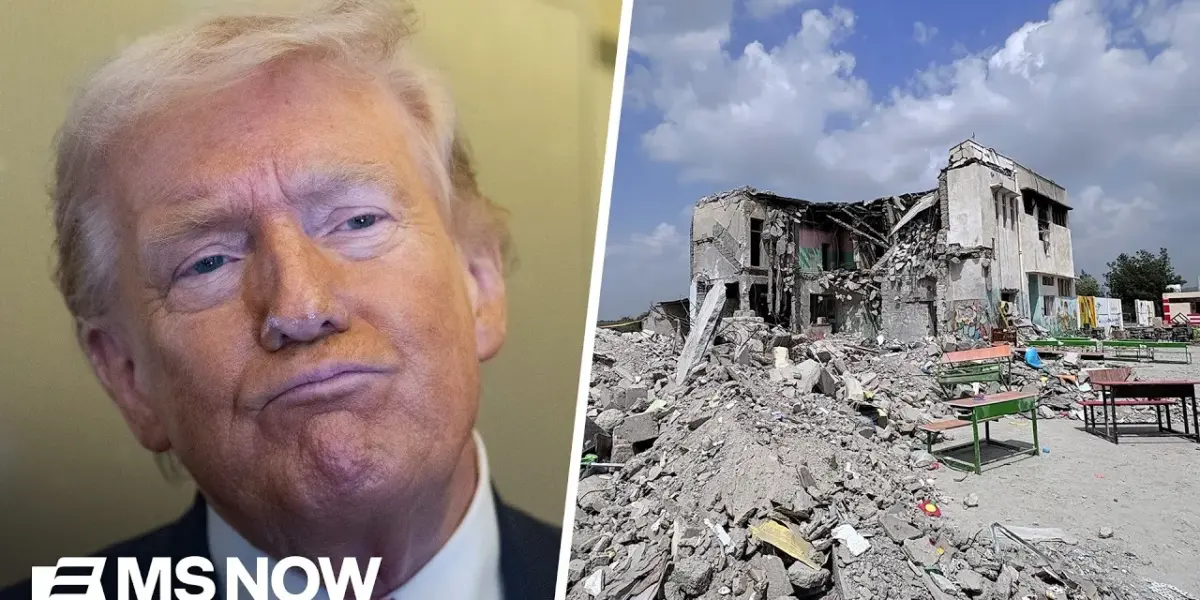
In a sharp rebuke of former President Donald Trump’s recent claims, a former U.S. Air Force intelligence officer and advisor to the House January 6th Committee, Denver Riggleman, has strongly contested Trump’s assertion that Iran was responsible for the bombing of a girls’ school in southern Iran. The incident, which reportedly occurred on the first day of a conflict, resulted in the deaths of at least 165 people, many of them children. Riggleman, speaking on a news program, stated unequivocally that intelligence and military officials would have known Iran was not responsible for the attack, labeling Trump’s claims as “ludicrous” and highlighting a pattern of disinformation.
Analysis Points to U.S. Airstrikes, Not Iranian Fault
The controversy ignited after several media outlets reported that explosions at the school were likely the result of U.S. airstrikes. The scale of the tragedy, involving young girls, has been described by Riggleman as potentially the “single worst incident of innocent people being killed” in over two decades of Middle East involvement. “It’s just so easy to see time over target for our aircraft, what kind of munitions they had, with the collateral damage is all of that,” Riggleman explained, emphasizing the straightforward nature of determining responsibility through military operational data such as air tasking orders.
The intelligence expert further elaborated on the ease with which such incidents are typically investigated within military operations. “I did this for a living. That’s what I did as a mission planner. I was looking at weapons, looking at collateral damage, looking at targets. And it is incredibly simple to know who pickled that weapon, what that weapon was, and to go back, look at time over targets through the air tasking orders and to see who did it.” The absence of immediate U.S. attribution to Iran, Riggleman argues, further supports the conclusion that Iran was not the perpetrator.
Pattern of Disinformation and Propaganda
Riggleman drew parallels between Trump’s current statements and his past behavior, citing the former president’s retweet of a conspiracy theory about Osama bin Laden being a body double in 2020. “This guy has been an inveterate liar. He doesn’t worry about propaganda, what he’s putting out to the American public,” Riggleman asserted. He suggested that individuals like Pete Hegseth, who reportedly stated the U.S. was “certainly investigating,” would have been aware of the president’s departure from factual reporting at that point.
The expert characterized the alleged dissemination of false information as a deliberate tactic. “Inconsistency is part of conspiratorial thinking and it’s also part of propaganda, but it’s also a feature, not a bug in this administration,” he stated. Riggleman anticipates that if U.S. involvement is confirmed, apologies would be unlikely. Instead, he predicts a deflection, such as claiming the munitions were correct, but Iranians moved the girls to the site, a tactic he described as a “flanking maneuver” or “side swipe.”
“It is incredibly simple to know who pickled that weapon, what that weapon was, and to go back, look at time over targets through the air tasking orders and to see who did it.” – Denver Riggleman
Incompetence and Outdated Intelligence
The possibility of outdated target information being used in the strike was also raised, with Riggleman acknowledging that such occurrences are not unprecedented. He recalled the challenges following 9/11, where military planners had to sift through “old targeting decks” to determine accuracy. “So this is not something that’s uncommon. There’s nothing new,” he commented, suggesting that “incompetency” within the administration could lead to such errors.
Riggleman also criticized the Trump administration’s approach to announcing potential military operations. He referenced a report about the U.S. considering sending special forces to seize Iran’s nuclear stockpile, a move that was reportedly discussed publicly beforehand. “It’s insane that they would announce this literally insane,” Riggleman exclaimed. He questioned the strategic rationale behind such announcements, suggesting they are driven by a desire to gauge public reaction and polling data, rather than by what is best for national security or American interests. This approach, he argued, prioritizes electoral considerations and narrative-building over sound policy.
Concerns Over Soldier Safety and Accountability
The premature disclosure of sensitive military operations, such as special forces deployments, raises significant concerns about the safety of U.S. personnel. Riggleman, drawing on his military background, expressed strong disapproval, stating, “If you did do it, what are you actually doing because of the incompetence of this administration? You’re putting our soldiers in harm’s way.” He conveyed that as a former military member, he would be “absolutely livid” and would escalate such concerns through the command structure, deeming such actions by a commander-in-chief as “criminal.”
Looking Ahead: Accountability and Future Operations
The incident and the subsequent commentary highlight critical issues surrounding the use of intelligence, the dissemination of information by political figures, and the potential consequences of military missteps. As investigations into the school bombing continue, the focus will likely remain on whether the U.S. Defense Department will acknowledge any fault and offer an apology, a prospect Riggleman views as unlikely under the current political climate. Furthermore, the debate over transparency in military operations versus operational security is likely to persist, particularly in light of concerns about decisions being influenced by electoral politics rather than strategic necessity. The accountability of leaders for both operational errors and the spread of disinformation will be a key area to watch.
Source: ‘They know Iran didn’t do it’: Intelligence expert blasts Trump over Iranian school bombing claim (YouTube)

Related Articles

Supreme Court’s Delay Tactics Could Derail Trump’s Election Ambitions
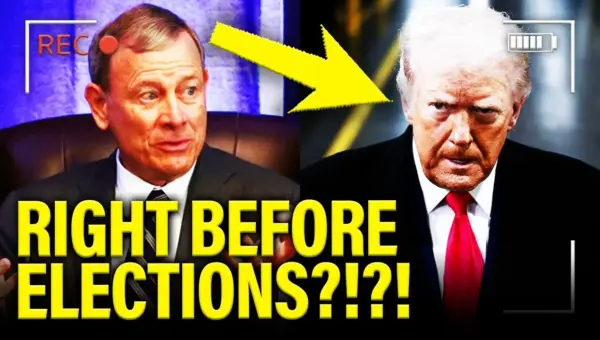
The Supreme Court's prolonged deliberation on a key voting rights case may have inadvertently thwarted Donald Trump's strategy to reshape congressional maps for electoral advantage. The calendar's constraints and potential voter backlash add further complexity.
Kharg Island: Trump’s Secret Weapon to Cripple Iran’s Economy?
Kharg Island, Iran's primary oil export hub, could be a key target for U.S. pressure, potentially crippling the nation's economy. Despite historical considerations and immense strategic value, seizing the island presents significant military risks and the possibility of sabotage by a desperate Iranian regime.

Fox News Manipulates Footage to Shield Trump’s Image
Fox News faces accusations of intentionally airing outdated footage of Donald Trump to mask his disrespectful conduct at a ceremony honoring fallen soldiers. The alleged deception and subsequent admission raise serious concerns about media integrity and public trust.