Intel Chief Questions Iran War Rationale Amidst Conflicting Statements
Top Democrat Jim Himes has challenged the Trump administration's rationale for war with Iran, stating there was "no imminent threat." The conflict's justification is further questioned by conflicting reports on Israeli strikes and divergent U.S.-Israeli goals, all occurring amidst a worsening global oil crisis.

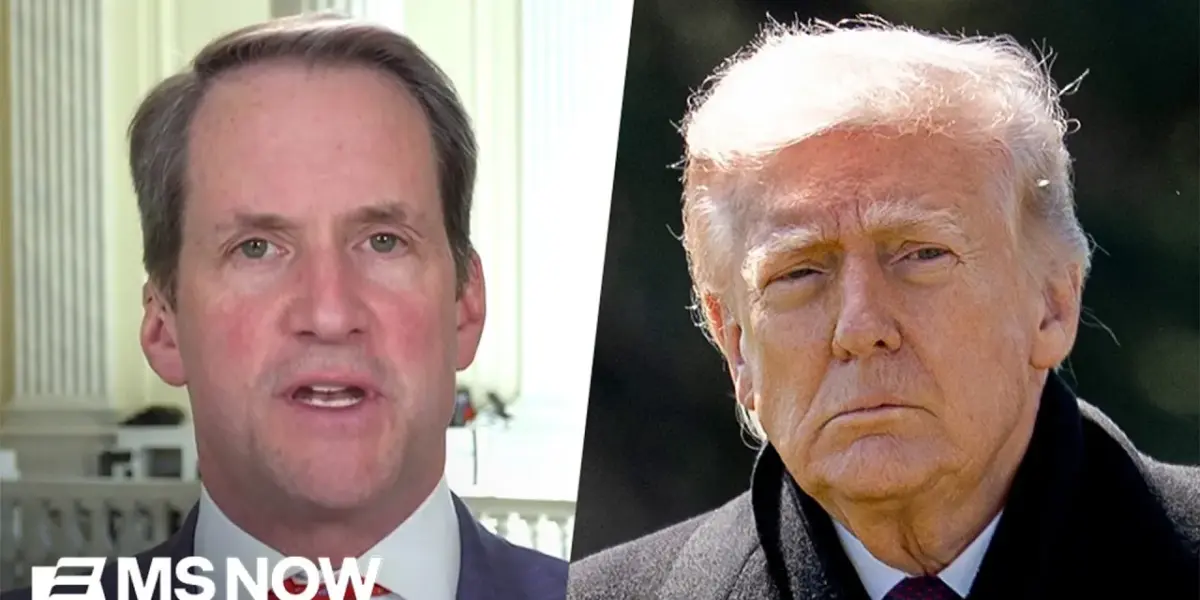
Top Democrat Blasts Trump’s Iran War Rationale
House Intelligence Committee Ranking Member, Congressman Jim Himes, has sharply criticized the stated reasons for the ongoing conflict with Iran. Speaking on a recent broadcast, Himes stated directly that there was “no imminent threat from Iran.” This assertion directly challenges the Trump administration’s justification for military action, casting doubt on the urgency and necessity of the war.
Intelligence Community Divided on “Imminent Threat”
The core of the controversy lies in the definition and existence of an “imminent threat.” While Director of National Intelligence Tulsi Gabbard suggested that the imminence of a threat is determined by the President, former deputy Joe Kent offered a starkly different view. Kent, speaking plainly, stated that intelligence reports did not show Iran planning an immediate attack. He emphasized that there was “no intelligence that said, hey, on whatever day it was, March 1st, the Iranians are going to launch this big sneak attack.” This lack of concrete evidence for an immediate danger raises significant questions about the administration’s decision-making process.
Divergent Goals: US vs. Israel
Further complicating the situation are the differing objectives between the United States and its ally, Israel. According to Gabbard, Israel’s focus has been on disabling Iranian leadership, including targeting the Ayatollah. In contrast, the President’s stated goals are to destroy Iran’s ballistic missile capability, production, and its navy. These divergent aims highlight potential strategic disagreements and raise concerns about coordinated action. Congressman Himes also noted that while U.S. and Israeli interests often align, they can diverge, and the Israeli Prime Minister may not always follow the U.S. President’s directives.
Oil Crisis Worsens Amidst Israeli Strikes
The conflict has exacerbated a global oil supply crisis. Retaliatory strikes by Iran on oil and gas facilities have intensified fears of deepening energy shortages. This comes at a time when former Treasury Secretary Scott Besant has reportedly suggested lifting sanctions on Iranian oil. The situation is further complicated by recent Israeli strikes on Iranian gas fields. The New York Times reported that while President Trump claimed not to know about these strikes in advance, three Israeli officials indicated coordination with the Trump administration. Trump himself made conflicting statements, initially saying he told the Prime Minister not to attack oil and gas fields, but then admitting that sometimes Israel does things he doesn’t like and that it is coordinated.
“The argument that there was an imminent threat, as in Iran was planning to attack us immediately, that just simply did not exist. There was no intelligence that said, hey, on whatever day it was, March 1st, the Iranians are going to launch this big sneak attack.”
— Former Deputy Joe Kent
Economic Repercussions and Global Fears
Damage to oil infrastructure could have long-lasting effects, according to The New York Times. Economists fear that serious damage would be more impactful than a conflict ending, leading to lasting global economic instability. As crude oil prices rise, so do gasoline, diesel, and jet fuel costs. These increases are eventually passed on to consumers, affecting the prices of everyday goods. The ongoing crisis and the uncertainty surrounding it create a challenging economic outlook worldwide.
Questions Over Trump’s Motivation
Congressman Himes suggested that President Trump may not be a long-term strategic thinker. Instead, Himes believes Trump saw the conflict as his moment to make a historical mark by taking action against Iran. He dismissed the idea that regime change is the primary goal of the U.S., noting that changing a regime typically requires significant military assets on the ground, which he doesn’t believe is the current objective. However, he acknowledged the dilemma: if the same regime remains in power, it can continue to disrupt vital shipping routes like the Strait of Hormuz, especially if led by a more extreme figure.
The Specter of “Mission Creep”
Concerns are mounting about the potential for “mission creep,” where the military mission gradually expands beyond its initial scope. While the war was initially presented as a brief operation, administration officials have not ruled out sending troops to Iran. Himes expressed alarm at this possibility, noting that it is being kept open without congressional approval, deliberation, or broad support from allies or the American public. The stated missions for potential troops are vague, possibly involving securing areas to prevent missile attacks or retrieving uranium, which Himes described as “completely bananas.” The administration’s reluctance to foreclose the option of troops on the ground suggests a willingness to escalate, despite the lack of a clear, agreed-upon objective beyond addressing an undefined threat.
Looking Ahead
The coming weeks will be crucial in determining the direction of U.S. policy toward Iran. Key questions remain about the true rationale for the conflict, the extent of coordination between the U.S. and Israel, and the potential for further military escalation. Public and congressional scrutiny will likely intensify as more information emerges, potentially forcing greater transparency from the administration regarding its strategy and objectives in the Middle East.
Source: ‘There was no imminent threat from Iran’: Top Intel Democrat blasts Trump’s rational for Iran War (YouTube)

Related Articles


Senate Passes DHS Funding, Easing Airport Chaos Amid Shutdown
The Senate has passed a bill to fund the Department of Homeland Security, offering relief to TSA officers facing missed paychecks and aiming to ease airport chaos. Meanwhile, a near-miss incident involving a passenger plane and helicopter in Los Angeles is under investigation. TODAY's Savannah Guthrie shared her enduring faith and hope amidst her mother's disappearance, announcing her return to the show on April 6th.

Advisors Shield Trump From War Truths, Fueling Danger
President Trump is reportedly being fed a diet of manipulated information regarding the war with Iran. Advisors allegedly curate video updates to show only U.S. successes, while downplaying or hiding setbacks. This deliberate 'cocoon of ignorance' prevents Trump from seeing the full picture, leading to potentially dangerous decisions and a distorted view of reality.

Iran War: No Clear Path Forward After Costly Escalation
Representative Adam Smith argues that the war in Iran, launched without a clear endgame, has incurred high costs with questionable strategic gains. He criticizes the lack of transparency and the potential for prolonged, costly engagement, questioning the effectiveness of military action against a deeply entrenched regime.