Intel Chief Hints at Deception in Trump’s Iran War Stance
Director of National Intelligence Tulsi Gabbard's recent testimony suggests a significant disagreement with President Trump's decisions regarding Iran, hinting at a lack of solid intelligence backing the administration's claims. This raises concerns about the basis for military action and its economic consequences, including rising gas prices and global energy instability.

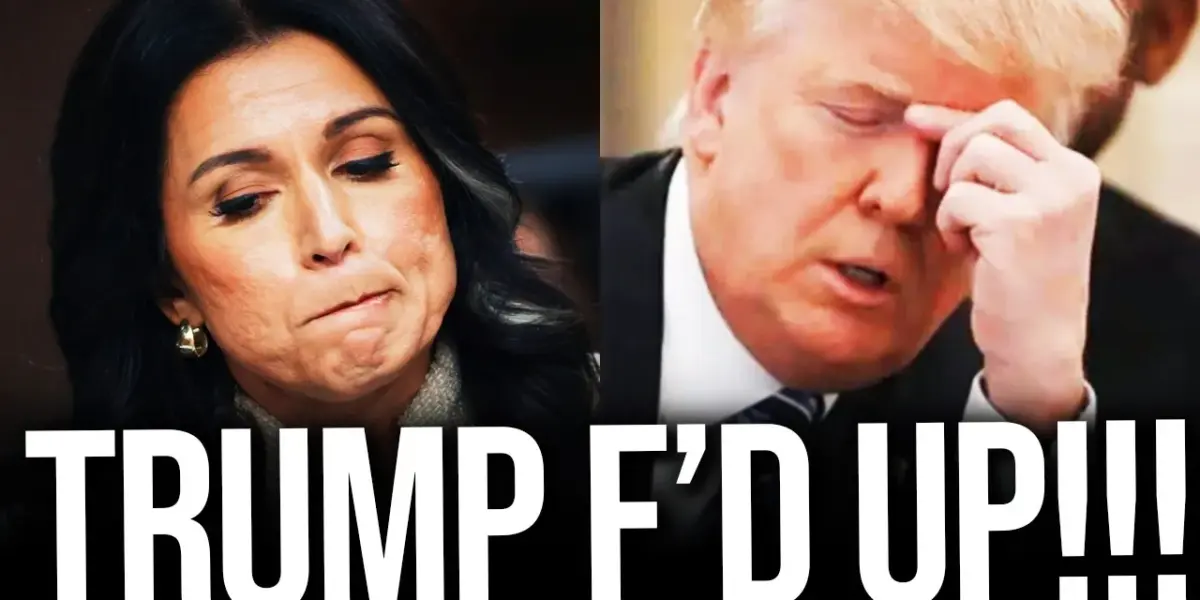
Intel Chief Hints at Deception in Trump’s Iran War Stance
The United States is facing a critical moment regarding its involvement in the Middle East, with questions arising about the intelligence used to justify military actions. Recent testimony from Director of National Intelligence, Tulsi Gabbard, suggests a significant disagreement within the administration about the threat posed by Iran. This situation highlights a potential disconnect between the President’s decisions and the intelligence gathered by his own agencies.
Intelligence vs. Presidential Instinct
During a recent hearing, Tulsi Gabbard appeared to signal her disagreement with President Trump’s decision to engage in conflict with Iran. She also indicated that the administration might not possess the solid intelligence to support its public claims. This comes at a time when the American people are increasingly questioning the justifications for war, especially given past experiences in the Middle East. The public, it seems, is more aware of the situation than the administration believes.
The annual worldwide threat assessment hearing is meant to provide a clear picture of global dangers. However, Gabbard’s testimony hinted that there wasn’t an immediate threat from Iran. This puts her in a difficult position, caught between her duty to provide accurate intelligence and the President’s directives. Her deputy, Joe Kent, the director of counterterrorism, even resigned recently, reportedly citing a lack of intelligence to back the administration’s stance and suggesting that Israel played a role in pulling the U.S. into conflict.
“The very simple fact of the matter right now is that we are smarter than this administration thinks we are.”
When officials like Gabbard testify, there’s an unspoken pressure to align their statements with the President’s views. This dynamic was evident in past testimonies from figures like Pam Bondi and Christine Nome, who seemed to be speaking directly to Donald Trump. Gabbard, therefore, is walking a fine line, trying to convey the intelligence community’s findings without directly contradicting the President in a way that would cause severe repercussions.
Economic Fallout: Rising Gas Prices and Energy Disruption
The consequences of this escalating tension are already being felt at home. The national average price for gasoline has climbed significantly, reaching close to $3.90 per gallon, with diesel also seeing a sharp increase. Experts predict gas prices could soon hit $4 a gallon and continue to rise. This surge in energy costs affects nearly every aspect of the economy, as Trump himself has often pointed out the link between energy prices and the cost of goods.
However, the promised benefit of increased domestic drilling, which Trump championed as a way to lower prices, has not materialized. Instead, tariffs and ongoing inflation have driven costs up. The situation is further complicated by Iran’s recent strikes, which have crippled 17% of Qatar’s natural gas export capacity. Repairs are expected to take years, and this single strike removed a significant portion of global liquefied natural gas (LNG) capacity. The conflict between Iran and Israel targeting energy facilities has created a massive escalation, causing visible concern for the President.
Questions of Imminence and Presidential Authority
During the hearing, Representative Gomez questioned Gabbard about the discrepancy between intelligence assessments and the President’s actions. He asked if she stood by the statement that only the President can determine what constitutes an imminent threat. Gabbard affirmed this, but the exchange highlighted a larger concern: the President’s ability to act independently of intelligence findings. This led to a debate about the role of intelligence agencies if their assessments can be disregarded.
The argument suggests that presidents should not make decisions that contradict intelligence reports. However, Donald Trump has a history of relying on his instincts, often stating he has known something for decades, even when intelligence suggests otherwise. This approach has led to negative outcomes in the past. The question arises whether the nation should prioritize the carefully considered scenarios from intelligence agencies over the President’s personal hunches, especially when those hunches are based on questionable reasoning, like the belief that windmills cause cancer.
Global Energy Crisis and Force Majeure
The strikes on energy infrastructure, particularly the one targeting Qatar’s natural gas exports, have profound global implications. The facility destroyed was a major producer of global LNG, and its damage, along with the ongoing conflict, could permanently alter the world’s energy market. The strike was reportedly in retaliation for an Israeli attack on Iran’s South Pars gas field, which is part of the world’s largest natural gas reservoir.
The damage is so severe that Qatar’s energy CEO has stated they may have to declare force majeure on long-term contracts for up to five years. Force majeure is a legal clause that excuses a party from fulfilling contractual obligations due to extraordinary circumstances like war. This declaration would mean Qatar cannot guarantee gas supplies for years, a situation described as a worst-case scenario. This disruption is directly linked to the conflict initiated by President Trump.
Lack of Transparency and Communication
Further questioning revealed a lack of clarity regarding Israel’s stance on a potential deal with Iran and its decision to strike energy infrastructure despite President Trump’s alleged directive to keep them off-limits. Gabbard stated she was not privy to Israel’s deliberations or the reasons behind their actions. When pressed on what intelligence agencies know about these events, the responses were evasive, leading to speculation that intelligence agencies may not be effectively communicating with the President and his inner circle.
The implication is that the administration might be operating on instinct rather than solid intelligence. Tulsi Gabbard’s careful wording and hesitant answers suggest she is indirectly signaling that the President’s decisions are not fully aligned with the intelligence assessments. She is hinting at a disconnect, indicating that intelligence was provided, but the decision to proceed with actions that led to this crisis was made regardless, possibly influenced by external factors like Israel’s actions and the President’s own impulses.
Why This Matters
This situation is crucial because it questions the integrity of the decision-making process for engaging in conflict and its economic repercussions. When the intelligence guiding foreign policy appears to be either ignored or manipulated, it erodes public trust and can lead to disastrous outcomes. The rising cost of living, directly impacted by energy prices, affects every American household. The potential for long-term global energy instability due to damaged infrastructure is a serious concern. Furthermore, the apparent lack of alignment between intelligence agencies and the executive branch raises fundamental questions about accountability and the rule of law in matters of national security.
Historical Context and Future Outlook
The Middle East has been a complex and volatile region for decades, with U.S. involvement often following justifications that later proved questionable. The lead-up to the Iraq War, for instance, was heavily criticized for relying on flawed intelligence. This current situation echoes some of those concerns, suggesting a pattern of potential overreliance on presidential instinct or external pressures over comprehensive intelligence analysis. The long-term consequences of damaging critical energy infrastructure could lead to prolonged global energy shortages and price hikes, potentially destabilizing economies worldwide for years to come.
The future outlook depends heavily on whether transparency and evidence-based decision-making can be restored. If administrations continue to operate on gut feelings or political expediency rather than objective intelligence, the risk of engaging in ill-advised conflicts and economic self-harm will remain high. The actions of intelligence officials like Tulsi Gabbard, who appear to be subtly pushing back against a narrative that lacks full intelligence backing, may be a sign of internal resistance and a call for greater accountability. The American people deserve clear, honest explanations for why their country is involved in conflicts and how those decisions impact their daily lives and the global stage.
Source: Trump THROWN UNDER THE BUS by his OWN Officials (YouTube)

Related Articles


Trump Derails Bipartisan Deal, Halts Government Funding
Senate Republicans united on a funding bill for the Department of Homeland Security, but Donald Trump's opposition led House Speaker Mike Johnson to kill the deal. This political maneuver left TSA workers unpaid and highlighted the influence of personal directives over legislative progress.
Saudi Prince Pushes Trump Toward Iran War Escalation
Saudi Crown Prince Mohammed bin Salman is reportedly urging President Trump to escalate attacks on Iran, pushing for strikes on its energy infrastructure. This strategy would likely harm ordinary Iranians while benefiting Saudi economic interests and the U.S. military-industrial complex. The situation highlights concerns over foreign influence on U.S. foreign policy and the human cost of conflict.
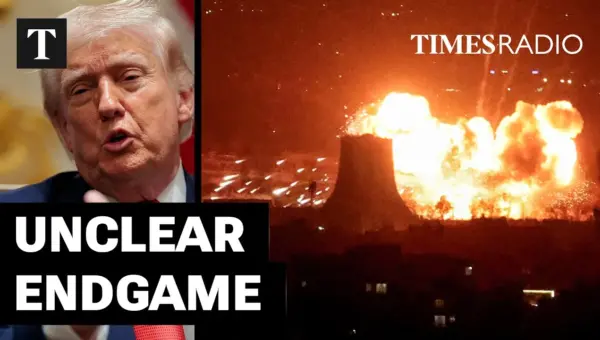
US Military Aims Achievable, Iran Political Future ‘Fuzzy,’ Says Ex-Advisor
Former Trump advisor Joel Rayburn stated that while US military objectives in Iran are achievable, the political outcome remains uncertain. Rayburn noted that Iran's regime is under immense pressure and could be nearing collapse. The potential closure of the Strait of Hormuz remains a key concern, with military assets being deployed to ensure its openness.